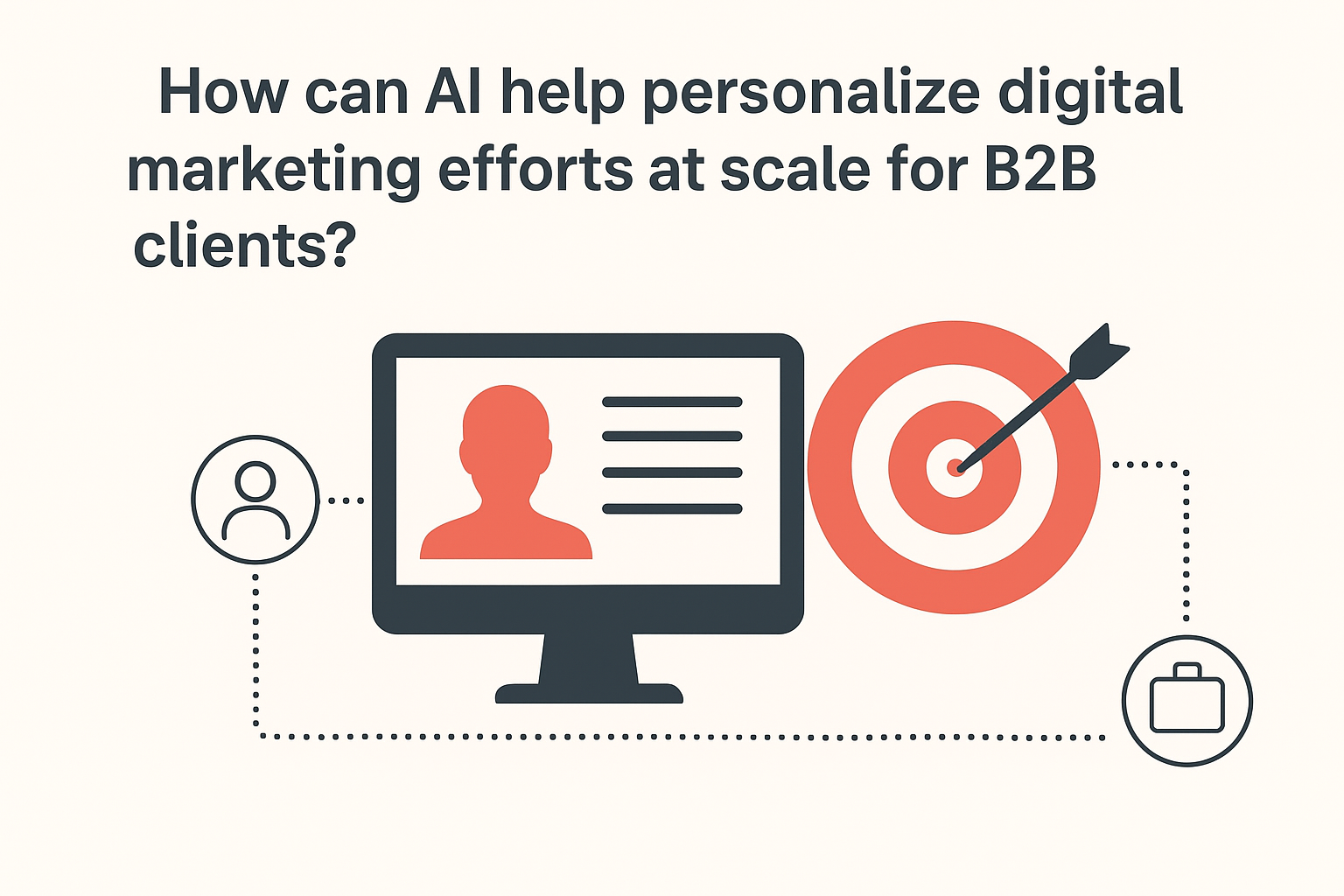
How can AI help personalize digital marketing efforts at scale for B2B clients?
In B2B marketing, personalization is no longer a luxury—it’s a necessity. Decision-makers expect experiences tailored to their industry, role, and stage in the buyer’s journey. But delivering that level of precision to thousands of accounts simultaneously? That’s where AI becomes the ultimate force multiplier.
AI enables personalization at scale by turning vast amounts of data into meaningful, conversion-ready engagement for every B2B client. Here’s how:
1. Dynamic Audience Segmentation
AI analyzes CRM, behavioral, and firmographic data to automatically group audiences into micro-segments. It identifies nuanced patterns—like similar buying journeys or content preferences—that human marketers might miss.
2. Predictive Content Delivery
Instead of guessing what a buyer wants, AI predicts which type of content—case study, product demo, or ROI calculator—will resonate most with each segment based on past engagement and intent signals.
3. Real-Time Personalization Across Channels
AI personalizes websites, emails, and ads dynamically. For instance, when a procurement manager visits your site, they might see ROI-focused messaging, while a technical lead sees integration details—all driven by AI content recommendation systems.
4. Natural Language & Chat Personalization
AI chatbots and conversational assistants tailor real-time responses to each visitor’s intent. A returning visitor might be greeted with, “Welcome back, would you like to continue your demo from last week?”—instantly improving engagement quality.
5. Account-Level Customization for ABM
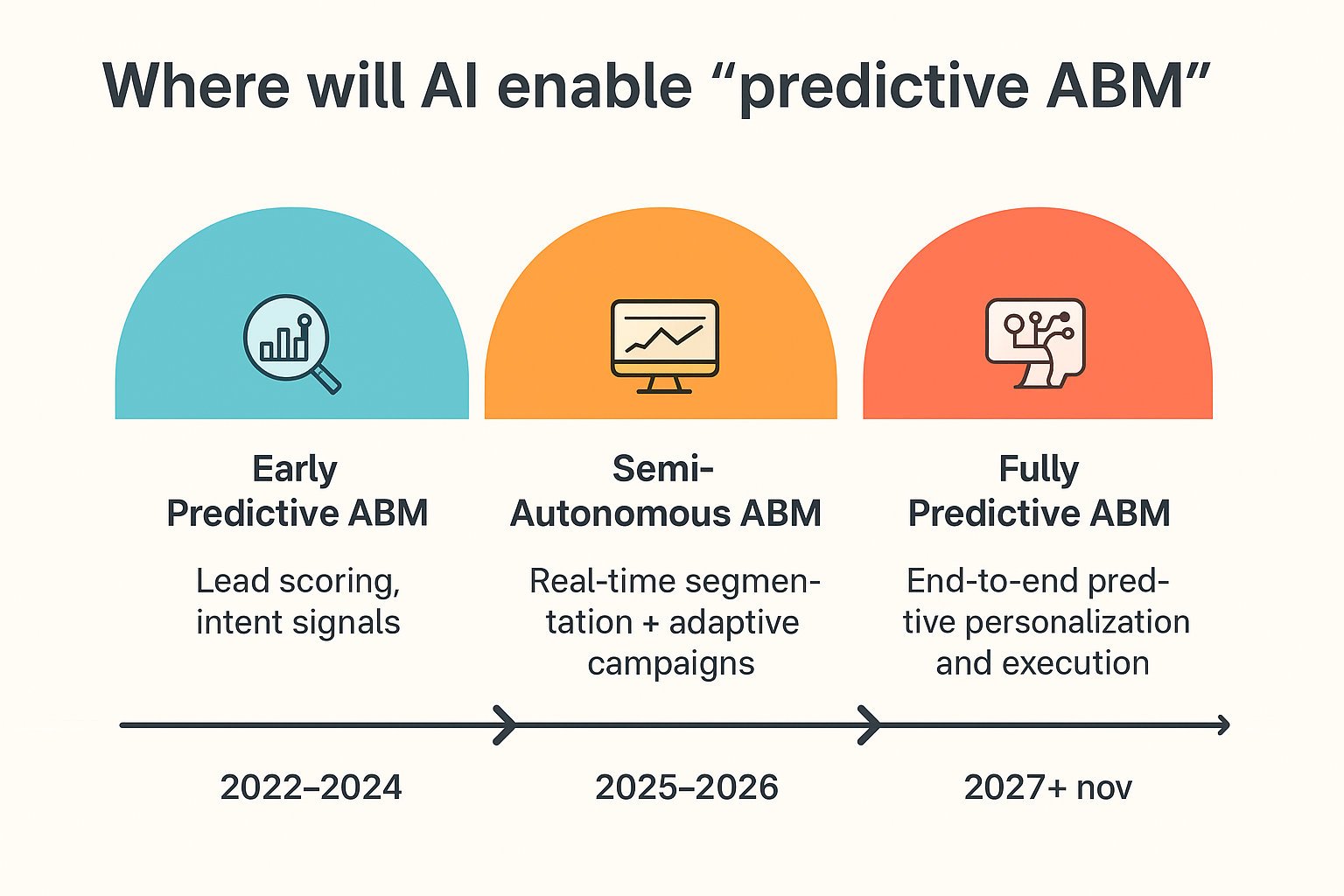
AI scales personalization for Account-Based Marketing (ABM). By combining behavioral, intent, and firmographic insights, it builds hyper-relevant campaigns for each target company’s unique challenges.
6. Continuous Optimization Through Machine Learning
AI learns from every interaction—clicks, scrolls, opens—and continuously optimizes campaigns automatically. Personalization becomes smarter over time, without constant manual input.
The Bottom Line:
AI allows B2B marketers to move from reactive engagement to predictive personalization. Instead of mass messaging, companies can now deliver one-to-one relevance at global scale—bridging the gap between data, creativity, and intent. The result is higher engagement, shorter sales cycles, and a customer experience that feels deeply human, powered by intelligent automation.
Read More: https://intentamplify.com/lead-generation/
In B2B marketing, personalization is no longer a luxury—it’s a necessity. Decision-makers expect experiences tailored to their industry, role, and stage in the buyer’s journey. But delivering that level of precision to thousands of accounts simultaneously? That’s where AI becomes the ultimate force multiplier.
AI enables personalization at scale by turning vast amounts of data into meaningful, conversion-ready engagement for every B2B client. Here’s how:
1. Dynamic Audience Segmentation
AI analyzes CRM, behavioral, and firmographic data to automatically group audiences into micro-segments. It identifies nuanced patterns—like similar buying journeys or content preferences—that human marketers might miss.
2. Predictive Content Delivery
Instead of guessing what a buyer wants, AI predicts which type of content—case study, product demo, or ROI calculator—will resonate most with each segment based on past engagement and intent signals.
3. Real-Time Personalization Across Channels
AI personalizes websites, emails, and ads dynamically. For instance, when a procurement manager visits your site, they might see ROI-focused messaging, while a technical lead sees integration details—all driven by AI content recommendation systems.
4. Natural Language & Chat Personalization
AI chatbots and conversational assistants tailor real-time responses to each visitor’s intent. A returning visitor might be greeted with, “Welcome back, would you like to continue your demo from last week?”—instantly improving engagement quality.
5. Account-Level Customization for ABM
AI scales personalization for Account-Based Marketing (ABM). By combining behavioral, intent, and firmographic insights, it builds hyper-relevant campaigns for each target company’s unique challenges.
6. Continuous Optimization Through Machine Learning
AI learns from every interaction—clicks, scrolls, opens—and continuously optimizes campaigns automatically. Personalization becomes smarter over time, without constant manual input.
The Bottom Line:
AI allows B2B marketers to move from reactive engagement to predictive personalization. Instead of mass messaging, companies can now deliver one-to-one relevance at global scale—bridging the gap between data, creativity, and intent. The result is higher engagement, shorter sales cycles, and a customer experience that feels deeply human, powered by intelligent automation.
Read More: https://intentamplify.com/lead-generation/
How can AI help personalize digital marketing efforts at scale for B2B clients?
In B2B marketing, personalization is no longer a luxury—it’s a necessity. Decision-makers expect experiences tailored to their industry, role, and stage in the buyer’s journey. But delivering that level of precision to thousands of accounts simultaneously? That’s where AI becomes the ultimate force multiplier.
AI enables personalization at scale by turning vast amounts of data into meaningful, conversion-ready engagement for every B2B client. Here’s how:
1. Dynamic Audience Segmentation
AI analyzes CRM, behavioral, and firmographic data to automatically group audiences into micro-segments. It identifies nuanced patterns—like similar buying journeys or content preferences—that human marketers might miss.
2. Predictive Content Delivery
Instead of guessing what a buyer wants, AI predicts which type of content—case study, product demo, or ROI calculator—will resonate most with each segment based on past engagement and intent signals.
3. Real-Time Personalization Across Channels
AI personalizes websites, emails, and ads dynamically. For instance, when a procurement manager visits your site, they might see ROI-focused messaging, while a technical lead sees integration details—all driven by AI content recommendation systems.
4. Natural Language & Chat Personalization
AI chatbots and conversational assistants tailor real-time responses to each visitor’s intent. A returning visitor might be greeted with, “Welcome back, would you like to continue your demo from last week?”—instantly improving engagement quality.
5. Account-Level Customization for ABM
AI scales personalization for Account-Based Marketing (ABM). By combining behavioral, intent, and firmographic insights, it builds hyper-relevant campaigns for each target company’s unique challenges.
6. Continuous Optimization Through Machine Learning
AI learns from every interaction—clicks, scrolls, opens—and continuously optimizes campaigns automatically. Personalization becomes smarter over time, without constant manual input.
The Bottom Line:
AI allows B2B marketers to move from reactive engagement to predictive personalization. Instead of mass messaging, companies can now deliver one-to-one relevance at global scale—bridging the gap between data, creativity, and intent. The result is higher engagement, shorter sales cycles, and a customer experience that feels deeply human, powered by intelligent automation.
Read More: https://intentamplify.com/lead-generation/
0 Комментарии
0 Поделились