• B2B Marketing Automation: What It Is in 2025
    B2B Marketing Automation: What It Is in 2025 reflects how far digital marketing has evolved in response to complex buyer journeys, data-driven decision-making, and rising expectations for personalization. In 2025, marketing automation is no longer just about sending scheduled emails—it is a strategic system that aligns marketing, sales, and customer experience through intelligent technology.

    1. Definition of B2B Marketing Automation in 2025
    B2B marketing automation in 2025 refers to the use of AI-powered platforms and integrated tools to manage, personalize, and optimize marketing activities across multiple channels.
    It automates repetitive tasks while using real-time data and predictive analytics to deliver relevant content, nurture leads, and support revenue growth throughout the buyer lifecycle.

    2. AI-Driven Personalization at Scale
    Modern B2B buyers expect tailored experiences.
    In 2025, marketing automation platforms leverage artificial intelligence to analyze behavior, intent data, and engagement patterns. This allows marketers to deliver highly personalized messaging across email, websites, social media, and paid channels—without manual effort.

    3. Omnichannel Campaign Orchestration
    B2B marketing automation is no longer limited to email campaigns.
    Today’s platforms coordinate messaging across multiple touchpoints, including websites, webinars, mobile, CRM systems, and sales outreach. This ensures consistent and timely communication at every stage of the buyer journey.

    4. Advanced Lead Scoring and Nurturing
    In 2025, lead scoring is dynamic and predictive rather than static.
    Automation systems continuously update lead scores based on behavior, engagement, and intent signals. This helps sales teams focus on high-quality prospects while marketing automation nurtures leads with relevant content until they are ready to convert.

    5. Stronger Sales and Marketing Alignment
    B2B marketing automation now plays a central role in aligning marketing and sales teams.
    Shared dashboards, real-time alerts, and CRM integration ensure both teams have a unified view of prospects, enabling faster follow-ups and more effective conversations.

    6. Data Privacy and Compliance Built In
    With stricter data privacy regulations, automation platforms in 2025 are designed with compliance in mind.
    Consent management, secure data handling, and transparent data usage are now standard features, helping businesses build trust while maintaining regulatory compliance.


    Conclusion
    B2B Marketing Automation: What It Is in 2025 represents a shift from task-based automation to intelligent, customer-centric systems. By combining AI, data, and omnichannel execution, marketing automation has become essential for scaling B2B growth, improving efficiency, and delivering meaningful buyer experiences in a competitive digital landscape.

    know more.

    Hashtags
    #B2BMarketing
    #MarketingAutomation
    #DigitalMarketing2025
    #MarTech
    #AIinMarketing
    B2B Marketing Automation: What It Is in 2025 B2B Marketing Automation: What It Is in 2025 reflects how far digital marketing has evolved in response to complex buyer journeys, data-driven decision-making, and rising expectations for personalization. In 2025, marketing automation is no longer just about sending scheduled emails—it is a strategic system that aligns marketing, sales, and customer experience through intelligent technology. 1. Definition of B2B Marketing Automation in 2025 B2B marketing automation in 2025 refers to the use of AI-powered platforms and integrated tools to manage, personalize, and optimize marketing activities across multiple channels. It automates repetitive tasks while using real-time data and predictive analytics to deliver relevant content, nurture leads, and support revenue growth throughout the buyer lifecycle. 2. AI-Driven Personalization at Scale Modern B2B buyers expect tailored experiences. In 2025, marketing automation platforms leverage artificial intelligence to analyze behavior, intent data, and engagement patterns. This allows marketers to deliver highly personalized messaging across email, websites, social media, and paid channels—without manual effort. 3. Omnichannel Campaign Orchestration B2B marketing automation is no longer limited to email campaigns. Today’s platforms coordinate messaging across multiple touchpoints, including websites, webinars, mobile, CRM systems, and sales outreach. This ensures consistent and timely communication at every stage of the buyer journey. 4. Advanced Lead Scoring and Nurturing In 2025, lead scoring is dynamic and predictive rather than static. Automation systems continuously update lead scores based on behavior, engagement, and intent signals. This helps sales teams focus on high-quality prospects while marketing automation nurtures leads with relevant content until they are ready to convert. 5. Stronger Sales and Marketing Alignment B2B marketing automation now plays a central role in aligning marketing and sales teams. Shared dashboards, real-time alerts, and CRM integration ensure both teams have a unified view of prospects, enabling faster follow-ups and more effective conversations. 6. Data Privacy and Compliance Built In With stricter data privacy regulations, automation platforms in 2025 are designed with compliance in mind. Consent management, secure data handling, and transparent data usage are now standard features, helping businesses build trust while maintaining regulatory compliance. Conclusion B2B Marketing Automation: What It Is in 2025 represents a shift from task-based automation to intelligent, customer-centric systems. By combining AI, data, and omnichannel execution, marketing automation has become essential for scaling B2B growth, improving efficiency, and delivering meaningful buyer experiences in a competitive digital landscape. know more. Hashtags #B2BMarketing #MarketingAutomation #DigitalMarketing2025 #MarTech #AIinMarketing
    0 Комментарии 0 Поделились
  • Unlocking B2B Growth: Effective Hyper-Personalization Strategies for Success
    Hyper-personalization has become one of the most powerful growth drivers in modern B2B marketing. As buyers grow more selective and expect tailored experiences, businesses that personalize every touchpoint gain a clear competitive edge. This blog breaks down how hyper-personalization accelerates B2B growth, along with practical strategies you can implement immediately.

    Why Hyper-Personalization Matters in B2B
    B2B buyers engage with multiple channels, compare options carefully, and expect brands to understand their needs. Hyper-personalization uses real-time data, behavioral insights, and AI to deliver highly relevant messages, offers, and experiences.

    This not only increases engagement but also drives conversions, customer loyalty, and long-term growth.

    1. Leverage First-Party Data for Precision Targeting
    First-party data is the foundation of effective hyper-personalization. It includes website interactions, email engagement, product usage, and CRM information.

    Pointers:

    Collect insights from website visits, demo requests, and content downloads

    Track behavioral patterns to understand buyer intent

    Integrate CRM, marketing automation, and analytics platforms

    Use real-time data to trigger personalized campaigns

    A strong first-party data strategy ensures you’re targeting prospects accurately and tailoring messages to their journey stage.

    2. Develop Account-Based Marketing (ABM) Frameworks
    ABM elevates hyper-personalization by focusing on high-value accounts with tailored campaigns.

    Pointers:

    Identify high-potential accounts based on revenue, scalability, or strategic alignment

    Deliver personalized content for each decision-maker in the account

    Customize landing pages, email sequences, and ads

    Use intent data to time your outreach

    ABM transforms generic marketing into high-touch, relevant communication that resonates with top-tier prospects.

    3. Personalize Your Content Journey Across All Channels
    To succeed in hyper-personalization, your content must speak directly to the buyer’s challenges.

    Pointers:

    Create role-specific and industry-specific content

    Build personalized nurture tracks in email workflows

    Use dynamic content blocks on websites and landing pages

    Offer tailored lead magnets like ROI calculators or industry reports

    By aligning content to buyer personas, you strengthen engagement and guide leads through the funnel more effectively.

    4. Use AI and Automation to Deliver Real-Time Experiences
    AI-driven personalization helps deliver timely, contextual, and hyper-relevant experiences.

    Pointers:

    Deploy AI chatbots to provide instant personalized support

    Use predictive analytics to recommend products, services, or content

    Automate email workflows based on behavioral triggers

    Tailor website experiences for each returning visitor

    AI enables businesses to scale personalization without overwhelming marketing teams.

    5. Tailor Sales Outreach with Behavioral Insights
    Sales teams benefit heavily from hyper-personalization when outreach is customized using real-time insights.

    Pointers:

    Use engagement history (email opens, page views, document downloads) to guide conversations

    Personalize outreach based on buyer pain points and company updates

    Send tailored proposals and micro-demos

    Coordinate marketing and sales insights for seamless communication

    Personalized sales efforts significantly increase meeting booking rates and deal closures.


    know more.

    Hashtags
    #B2BGrowth #HyperPersonalization #ABM #MarketingStrategy #DigitalMarketing
    Unlocking B2B Growth: Effective Hyper-Personalization Strategies for Success Hyper-personalization has become one of the most powerful growth drivers in modern B2B marketing. As buyers grow more selective and expect tailored experiences, businesses that personalize every touchpoint gain a clear competitive edge. This blog breaks down how hyper-personalization accelerates B2B growth, along with practical strategies you can implement immediately. Why Hyper-Personalization Matters in B2B B2B buyers engage with multiple channels, compare options carefully, and expect brands to understand their needs. Hyper-personalization uses real-time data, behavioral insights, and AI to deliver highly relevant messages, offers, and experiences. This not only increases engagement but also drives conversions, customer loyalty, and long-term growth. 1. Leverage First-Party Data for Precision Targeting First-party data is the foundation of effective hyper-personalization. It includes website interactions, email engagement, product usage, and CRM information. Pointers: Collect insights from website visits, demo requests, and content downloads Track behavioral patterns to understand buyer intent Integrate CRM, marketing automation, and analytics platforms Use real-time data to trigger personalized campaigns A strong first-party data strategy ensures you’re targeting prospects accurately and tailoring messages to their journey stage. 2. Develop Account-Based Marketing (ABM) Frameworks ABM elevates hyper-personalization by focusing on high-value accounts with tailored campaigns. Pointers: Identify high-potential accounts based on revenue, scalability, or strategic alignment Deliver personalized content for each decision-maker in the account Customize landing pages, email sequences, and ads Use intent data to time your outreach ABM transforms generic marketing into high-touch, relevant communication that resonates with top-tier prospects. 3. Personalize Your Content Journey Across All Channels To succeed in hyper-personalization, your content must speak directly to the buyer’s challenges. Pointers: Create role-specific and industry-specific content Build personalized nurture tracks in email workflows Use dynamic content blocks on websites and landing pages Offer tailored lead magnets like ROI calculators or industry reports By aligning content to buyer personas, you strengthen engagement and guide leads through the funnel more effectively. 4. Use AI and Automation to Deliver Real-Time Experiences AI-driven personalization helps deliver timely, contextual, and hyper-relevant experiences. Pointers: Deploy AI chatbots to provide instant personalized support Use predictive analytics to recommend products, services, or content Automate email workflows based on behavioral triggers Tailor website experiences for each returning visitor AI enables businesses to scale personalization without overwhelming marketing teams. 5. Tailor Sales Outreach with Behavioral Insights Sales teams benefit heavily from hyper-personalization when outreach is customized using real-time insights. Pointers: Use engagement history (email opens, page views, document downloads) to guide conversations Personalize outreach based on buyer pain points and company updates Send tailored proposals and micro-demos Coordinate marketing and sales insights for seamless communication Personalized sales efforts significantly increase meeting booking rates and deal closures. know more. Hashtags #B2BGrowth #HyperPersonalization #ABM #MarketingStrategy #DigitalMarketing
    0 Комментарии 0 Поделились
  • From ABM to ABX: Crafting Harmonized Customer Journeys That Drive Growth

    From ABM to ABX: Crafting Harmonized Customer Journeys That Drive Growth
    For years, Account-Based Marketing (ABM) has been the gold standard for precision-driven B2B growth — aligning marketing and sales around high-value accounts. But as buyer expectations evolve, personalization alone isn’t enough. The next evolution is here: Account-Based Experience (ABX) — a holistic, customer-centric approach that integrates marketing, sales, and customer success into one unified journey.
    ABX isn’t just about targeting the right accounts. It’s about orchestrating a seamless experience across every touchpoint — from first impression to post-sale engagement.
    1. What Makes ABX Different from ABM
    While ABM focuses on acquisition and conversion, ABX expands that scope to include retention, advocacy, and long-term value.
    • ABM = Campaigns and targeting.
    • ABX = Experiences and relationships.
    ABX treats every interaction — from email outreach to onboarding — as part of a cohesive story. The goal isn’t just to close deals but to build enduring relationships that continuously generate growth.
    2. AI as the Engine of ABX
    The transition from ABM to ABX is fueled by AI and data intelligence. Today’s buyers expect hyper-relevant experiences — and AI makes that possible at scale.
    • Predictive analytics identify not just who’s in-market, but why and when they’re ready to engage.
    • Generative AI creates personalized content and messaging tailored to each stakeholder’s role and pain points.
    • Intent detection tools surface real-time signals from across the web, social platforms, and CRM data, allowing your teams to engage at the perfect moment.
    AI transforms ABX from reactive marketing to proactive engagement — anticipating buyer needs before they’re voiced.
    3. Harmonizing Teams Around the Customer Journey
    ABX works when marketing, sales, and customer success function as one continuous ecosystem.
    • Marketing creates awareness through thought leadership and targeted campaigns.
    • Sales delivers value-driven, consultative interactions aligned with buyer priorities.
    • Customer success ensures post-sale satisfaction, feeding insights back into the ABX loop.
    This alignment eliminates silos and ensures that every touchpoint reinforces the same narrative — one that centers the customer’s goals, not just your product.
    4. Personalization Beyond the Sale
    ABX doesn’t end at conversion. It’s about experience continuity — delivering consistent value throughout the customer lifecycle.
    • Use AI to tailor onboarding flows and learning resources based on customer use cases.
    • Create feedback loops that inform future campaigns and renewals.
    • Deploy sentiment analysis to detect churn risk and act before it’s too late.
    In ABX, post-sale engagement becomes as personalized and data-driven as pre-sale marketing.
    5. Measuring Success in the ABX Era
    Traditional ABM metrics (clicks, conversions, pipeline growth) now merge with experience metrics:
    • Customer lifetime value (CLV)
    • Net promoter score (NPS)
    • Engagement depth across channels
    • Expansion revenue and retention rates
    These metrics reveal not just how well you sell, but how well you serve — the ultimate driver of sustainable growth.
    The Takeaway
    The shift from ABM to ABX marks a paradigm change in B2B marketing — from transactional to transformational. By blending data, AI, and human empathy, companies can craft journeys that feel unified, personal, and purpose-driven.
    In an ABX world, growth doesn’t come from better targeting — it comes from better experiences.
    Read More: https://intentamplify.com/blog/the-symphony-of-account-based-experience-abx-tailored-targeted-transformed/
    From ABM to ABX: Crafting Harmonized Customer Journeys That Drive Growth From ABM to ABX: Crafting Harmonized Customer Journeys That Drive Growth For years, Account-Based Marketing (ABM) has been the gold standard for precision-driven B2B growth — aligning marketing and sales around high-value accounts. But as buyer expectations evolve, personalization alone isn’t enough. The next evolution is here: Account-Based Experience (ABX) — a holistic, customer-centric approach that integrates marketing, sales, and customer success into one unified journey. ABX isn’t just about targeting the right accounts. It’s about orchestrating a seamless experience across every touchpoint — from first impression to post-sale engagement. 1. What Makes ABX Different from ABM While ABM focuses on acquisition and conversion, ABX expands that scope to include retention, advocacy, and long-term value. • ABM = Campaigns and targeting. • ABX = Experiences and relationships. ABX treats every interaction — from email outreach to onboarding — as part of a cohesive story. The goal isn’t just to close deals but to build enduring relationships that continuously generate growth. 2. AI as the Engine of ABX The transition from ABM to ABX is fueled by AI and data intelligence. Today’s buyers expect hyper-relevant experiences — and AI makes that possible at scale. • Predictive analytics identify not just who’s in-market, but why and when they’re ready to engage. • Generative AI creates personalized content and messaging tailored to each stakeholder’s role and pain points. • Intent detection tools surface real-time signals from across the web, social platforms, and CRM data, allowing your teams to engage at the perfect moment. AI transforms ABX from reactive marketing to proactive engagement — anticipating buyer needs before they’re voiced. 3. Harmonizing Teams Around the Customer Journey ABX works when marketing, sales, and customer success function as one continuous ecosystem. • Marketing creates awareness through thought leadership and targeted campaigns. • Sales delivers value-driven, consultative interactions aligned with buyer priorities. • Customer success ensures post-sale satisfaction, feeding insights back into the ABX loop. This alignment eliminates silos and ensures that every touchpoint reinforces the same narrative — one that centers the customer’s goals, not just your product. 4. Personalization Beyond the Sale ABX doesn’t end at conversion. It’s about experience continuity — delivering consistent value throughout the customer lifecycle. • Use AI to tailor onboarding flows and learning resources based on customer use cases. • Create feedback loops that inform future campaigns and renewals. • Deploy sentiment analysis to detect churn risk and act before it’s too late. In ABX, post-sale engagement becomes as personalized and data-driven as pre-sale marketing. 5. Measuring Success in the ABX Era Traditional ABM metrics (clicks, conversions, pipeline growth) now merge with experience metrics: • Customer lifetime value (CLV) • Net promoter score (NPS) • Engagement depth across channels • Expansion revenue and retention rates These metrics reveal not just how well you sell, but how well you serve — the ultimate driver of sustainable growth. The Takeaway The shift from ABM to ABX marks a paradigm change in B2B marketing — from transactional to transformational. By blending data, AI, and human empathy, companies can craft journeys that feel unified, personal, and purpose-driven. In an ABX world, growth doesn’t come from better targeting — it comes from better experiences. Read More: https://intentamplify.com/blog/the-symphony-of-account-based-experience-abx-tailored-targeted-transformed/
    0 Комментарии 0 Поделились
  • What makes AI intent detection the next big differentiator in B2B prospecting?

    In today’s hyper-competitive B2B landscape, timing and relevance are everything. Traditional prospecting models often rely on guesswork—mass emailing, static lead lists, or outdated demographic filters. But modern buyers leave digital footprints everywhere: they read industry blogs, compare vendors, attend webinars, and search for specific solutions. The challenge? Turning all those scattered signals into actionable insight.
    That’s where AI-driven intent detection comes in—and it’s quickly becoming the most powerful differentiator in B2B prospecting.
    1. From Cold Outreach to Contextual Engagement
    The days of cold, spray-and-pray outreach are fading. AI intent detection uses behavioral data—like search queries, content engagement, and time spent on certain topics—to determine who’s in-market and what they’re interested in.
    Instead of targeting 1,000 random contacts, AI helps you identify the 100 who are actively exploring solutions like yours. That means:
    • More relevant messaging
    • Higher open and reply rates
    • Stronger pipeline efficiency
    You’re no longer guessing who might buy—you’re meeting buyers exactly where they are in their journey.
    2. Multi-Signal Analysis for Real Buyer Intent
    Human-led research can’t track thousands of micro-signals across multiple channels. AI can.
    Modern intent detection platforms use machine learning to analyze:
    • Content interactions: Articles, whitepapers, or webinars a lead engages with.
    • Search patterns: Keywords and queries indicating purchase readiness.
    • Social engagement: Comments, shares, and follows that reveal interest trends.
    • Website behavior: Frequency, recency, and depth of visits.
    AI doesn’t just see what someone did—it interprets why. That context transforms raw data into qualified intent.
    3. Predictive Prioritization: Knowing Who’s Ready to Talk
    Not every interested lead is ready to buy—but AI intent models can rank prospects by purchase readiness. Using historical win data, engagement sequences, and firmographics, AI predicts which accounts are most likely to convert next.
    This predictive scoring lets sales teams prioritize high-intent accounts and nurture lower-intent ones with personalized content until they’re ready—creating a smoother, more strategic pipeline flow.
    4. Hyper-Personalized Messaging that Resonates
    Once intent is detected, AI can generate hyper-targeted outreach based on specific pain points or interest areas.
    For example:
    • A prospect researching “AI-powered CRM integrations” might receive an email highlighting your platform’s seamless API connections.
    • Another exploring “data privacy compliance” could see content emphasizing your security certifications.
    This precision transforms outreach from generic to contextual, making every interaction feel timely and relevant.
    5. Shorter Sales Cycles, Smarter Conversions
    By engaging buyers at the right moment with the right message, intent-driven prospecting reduces friction and accelerates decision-making. It enables marketers to nurture leads more intelligently and equips sales teams with deeper insights before the first call.
    In short, AI intent detection replaces outdated, manual prospecting with data-backed foresight—shortening the path from interest to conversion.
    The Future: Predictive Prospecting at Scale
    As AI models continue to evolve, intent detection will move from identifying existing demand to predicting emerging opportunities—alerting teams when a company is about to enter the market for your solution. The companies that harness this power early will own the next generation of B2B growth.
    The Bottom Line
    AI intent detection is not just a marketing add-on—it’s becoming the engine of intelligent B2B prospecting. By revealing who’s ready to buy, why, and when, it gives sales and marketing teams a decisive edge in timing, personalization, and conversion. In a world where attention is scarce, knowing intent is everything.
    Read More: https://intentamplify.com/lead-generation/
    What makes AI intent detection the next big differentiator in B2B prospecting? In today’s hyper-competitive B2B landscape, timing and relevance are everything. Traditional prospecting models often rely on guesswork—mass emailing, static lead lists, or outdated demographic filters. But modern buyers leave digital footprints everywhere: they read industry blogs, compare vendors, attend webinars, and search for specific solutions. The challenge? Turning all those scattered signals into actionable insight. That’s where AI-driven intent detection comes in—and it’s quickly becoming the most powerful differentiator in B2B prospecting. 1. From Cold Outreach to Contextual Engagement The days of cold, spray-and-pray outreach are fading. AI intent detection uses behavioral data—like search queries, content engagement, and time spent on certain topics—to determine who’s in-market and what they’re interested in. Instead of targeting 1,000 random contacts, AI helps you identify the 100 who are actively exploring solutions like yours. That means: • More relevant messaging • Higher open and reply rates • Stronger pipeline efficiency You’re no longer guessing who might buy—you’re meeting buyers exactly where they are in their journey. 2. Multi-Signal Analysis for Real Buyer Intent Human-led research can’t track thousands of micro-signals across multiple channels. AI can. Modern intent detection platforms use machine learning to analyze: • Content interactions: Articles, whitepapers, or webinars a lead engages with. • Search patterns: Keywords and queries indicating purchase readiness. • Social engagement: Comments, shares, and follows that reveal interest trends. • Website behavior: Frequency, recency, and depth of visits. AI doesn’t just see what someone did—it interprets why. That context transforms raw data into qualified intent. 3. Predictive Prioritization: Knowing Who’s Ready to Talk Not every interested lead is ready to buy—but AI intent models can rank prospects by purchase readiness. Using historical win data, engagement sequences, and firmographics, AI predicts which accounts are most likely to convert next. This predictive scoring lets sales teams prioritize high-intent accounts and nurture lower-intent ones with personalized content until they’re ready—creating a smoother, more strategic pipeline flow. 4. Hyper-Personalized Messaging that Resonates Once intent is detected, AI can generate hyper-targeted outreach based on specific pain points or interest areas. For example: • A prospect researching “AI-powered CRM integrations” might receive an email highlighting your platform’s seamless API connections. • Another exploring “data privacy compliance” could see content emphasizing your security certifications. This precision transforms outreach from generic to contextual, making every interaction feel timely and relevant. 5. Shorter Sales Cycles, Smarter Conversions By engaging buyers at the right moment with the right message, intent-driven prospecting reduces friction and accelerates decision-making. It enables marketers to nurture leads more intelligently and equips sales teams with deeper insights before the first call. In short, AI intent detection replaces outdated, manual prospecting with data-backed foresight—shortening the path from interest to conversion. The Future: Predictive Prospecting at Scale As AI models continue to evolve, intent detection will move from identifying existing demand to predicting emerging opportunities—alerting teams when a company is about to enter the market for your solution. The companies that harness this power early will own the next generation of B2B growth. The Bottom Line AI intent detection is not just a marketing add-on—it’s becoming the engine of intelligent B2B prospecting. By revealing who’s ready to buy, why, and when, it gives sales and marketing teams a decisive edge in timing, personalization, and conversion. In a world where attention is scarce, knowing intent is everything. Read More: https://intentamplify.com/lead-generation/
    0 Комментарии 0 Поделились
  • When will AI enable “predictive ABM

    Account-Based Marketing (ABM) has already revolutionized B2B strategy by shifting the focus from broad lead generation to targeting high-value accounts with personalized, intent-driven engagement. But the next evolution is already on the horizon: Predictive ABM, powered by artificial intelligence. It’s not about reacting to buyer behavior—it’s about anticipating it.
    So, when will this future arrive? The answer is—it’s already beginning.
    How AI Is Setting the Stage for Predictive ABM
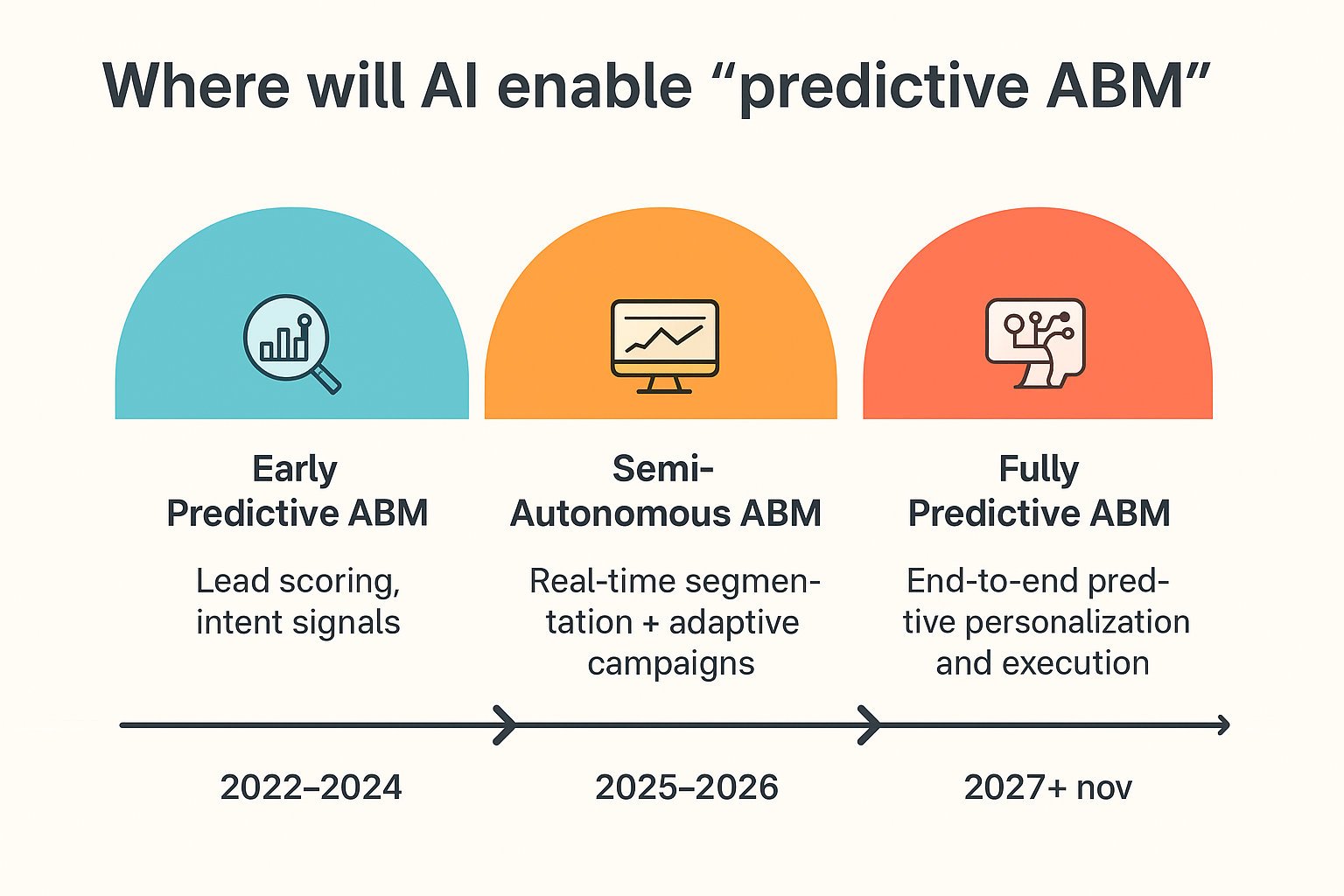
    In 2025, we’ve entered the era of real-time intent modeling. Modern AI-driven platforms like 6sense, Demandbase, and ZoomInfo are already combining behavioral data, content consumption, and CRM insights to predict which accounts are most likely to convert—before outreach even begins. Marketers can now identify in-market accounts weeks ahead of visible engagement, giving them a major competitive edge.
    By 2026, predictive personalization will become the standard. Generative AI will enable campaigns that self-adjust based on predicted intent. Instead of manually segmenting audiences, AI will automatically serve hyper-personalized ads, emails, and landing pages, refining messaging as account behaviors evolve in real time.
    Looking ahead to 2027 and beyond, Predictive ABM will evolve into fully autonomous ABM engines. These intelligent systems will not only identify and engage target accounts but also manage end-to-end campaign orchestration—deciding when to engage, what to say, and even which sales rep should handle which account, based on win probability.
    Future AI-driven ABM won’t rely on just one data type. It will merge intent data, firmographics, technographics, social listening, and buying committee insights to build a complete, predictive view of every target account.
    The Big Picture
    Predictive ABM isn’t a futuristic fantasy—it’s the next natural phase of AI-powered marketing. We’re witnessing a shift from static targeting to anticipatory engagement, where AI doesn’t just identify ideal accounts but predicts when and how to approach them.
    By 2026–2027, Predictive ABM will transition from early adoption to mainstream practice, becoming a core driver of B2B growth. It will deliver precision, personalization, and performance like never before—turning data into foresight and foresight into revenue.
    Read More: https://intentamplify.com/lead-generation/
    When will AI enable “predictive ABM Account-Based Marketing (ABM) has already revolutionized B2B strategy by shifting the focus from broad lead generation to targeting high-value accounts with personalized, intent-driven engagement. But the next evolution is already on the horizon: Predictive ABM, powered by artificial intelligence. It’s not about reacting to buyer behavior—it’s about anticipating it. So, when will this future arrive? The answer is—it’s already beginning. How AI Is Setting the Stage for Predictive ABM In 2025, we’ve entered the era of real-time intent modeling. Modern AI-driven platforms like 6sense, Demandbase, and ZoomInfo are already combining behavioral data, content consumption, and CRM insights to predict which accounts are most likely to convert—before outreach even begins. Marketers can now identify in-market accounts weeks ahead of visible engagement, giving them a major competitive edge. By 2026, predictive personalization will become the standard. Generative AI will enable campaigns that self-adjust based on predicted intent. Instead of manually segmenting audiences, AI will automatically serve hyper-personalized ads, emails, and landing pages, refining messaging as account behaviors evolve in real time. Looking ahead to 2027 and beyond, Predictive ABM will evolve into fully autonomous ABM engines. These intelligent systems will not only identify and engage target accounts but also manage end-to-end campaign orchestration—deciding when to engage, what to say, and even which sales rep should handle which account, based on win probability. Future AI-driven ABM won’t rely on just one data type. It will merge intent data, firmographics, technographics, social listening, and buying committee insights to build a complete, predictive view of every target account. The Big Picture Predictive ABM isn’t a futuristic fantasy—it’s the next natural phase of AI-powered marketing. We’re witnessing a shift from static targeting to anticipatory engagement, where AI doesn’t just identify ideal accounts but predicts when and how to approach them. By 2026–2027, Predictive ABM will transition from early adoption to mainstream practice, becoming a core driver of B2B growth. It will deliver precision, personalization, and performance like never before—turning data into foresight and foresight into revenue. Read More: https://intentamplify.com/lead-generation/
    0 Комментарии 0 Поделились
  • What are “intent signals” in B2B marketing — and why are they more important than ever?

    In today’s hyper-competitive B2B landscape, buyers don’t raise their hand and say, “I’m ready to purchase”. Instead, they leave behind digital footprints—behavioral cues that reveal their interests, needs, and purchasing stage. These cues are what we call intent signals.
    Intent signals can come from many touchpoints: reading a case study on your website, attending a webinar, comparing solutions on review sites, or even engaging with competitor content. On the surface, they may seem like random actions, but together they create a powerful picture of where a buyer is on their journey and what they need right now.
    🤖 Thanks to AI and predictive analytics, companies can now capture, interpret, and act on these signals in real time. This means marketers and sales teams can shift from cold outreach to precision engagement—meeting prospects with the right message at the right moment.
    🔍 𝐇𝐞𝐫𝐞’𝐬 𝐰𝐡𝐲 𝐢𝐧𝐭𝐞𝐧𝐭 𝐬𝐢𝐠𝐧𝐚𝐥𝐬 𝐚𝐫𝐞 𝐦𝐨𝐫𝐞 𝐢𝐦𝐩𝐨𝐫𝐭𝐚𝐧𝐭 𝐭𝐡𝐚𝐧 𝐞𝐯𝐞𝐫:
    ✅ 𝐈𝐧𝐝𝐢𝐜𝐚𝐭𝐨𝐫𝐬 𝐨𝐟 𝐁𝐮𝐲𝐢𝐧𝐠 𝐑𝐞𝐚𝐝𝐢𝐧𝐞𝐬𝐬
    Signals like pricing page visits or competitor comparisons show prospects who are actively moving toward a decision—helping sales prioritize leads.
    ✅ 𝐇𝐲𝐩𝐞𝐫-𝐏𝐞𝐫𝐬𝐨𝐧𝐚𝐥𝐢𝐳𝐞𝐝 𝐎𝐮𝐭𝐫𝐞𝐚𝐜𝐡
    With AI-driven insights, teams can tailor outreach that speaks directly to a buyer’s unique challenges instead of blasting generic pitches.
    ✅ 𝐒𝐡𝐨𝐫𝐭𝐞𝐧𝐢𝐧𝐠 𝐒𝐚𝐥𝐞𝐬 𝐂𝐲𝐜𝐥𝐞𝐬
    By engaging earlier in the research phase, businesses can nurture trust and accelerate the path to conversion.
    ✅ 𝐀𝐜𝐜𝐨𝐮𝐧𝐭-𝐁𝐚𝐬𝐞𝐝 𝐌𝐚𝐫𝐤𝐞𝐭𝐢𝐧𝐠 (𝐀𝐁𝐌) 𝐒𝐮𝐩𝐩𝐨𝐫𝐭
    Intent signals highlight which accounts are “in-market,” ensuring that marketing budgets focus on opportunities with the highest likelihood of success.
    ✅ 𝐑𝐞𝐚𝐥-𝐓𝐢𝐦𝐞 𝐒𝐭𝐫𝐚𝐭𝐞𝐠𝐢𝐞𝐬
    AI platforms track buyer behavior continuously, allowing sales and marketing to pivot quickly as needs evolve.
    📌 𝐓𝐡𝐞 𝐁𝐢𝐠 𝐏𝐢𝐜𝐭𝐮𝐫𝐞:
    Intent signals are no longer optional—they are the new currency of B2B growth. In an era where buyers control the journey, the companies that win will be those that can detect intent early, personalize at scale, and engage with empathy. By aligning sales and marketing strategies around intent, businesses can achieve higher conversions, stronger relationships, and a measurable edge over the competition.
    Read More: https://intentamplify.com/lead-generation/

    What are “intent signals” in B2B marketing — and why are they more important than ever? In today’s hyper-competitive B2B landscape, buyers don’t raise their hand and say, “I’m ready to purchase”. Instead, they leave behind digital footprints—behavioral cues that reveal their interests, needs, and purchasing stage. These cues are what we call intent signals. Intent signals can come from many touchpoints: reading a case study on your website, attending a webinar, comparing solutions on review sites, or even engaging with competitor content. On the surface, they may seem like random actions, but together they create a powerful picture of where a buyer is on their journey and what they need right now. 🤖 Thanks to AI and predictive analytics, companies can now capture, interpret, and act on these signals in real time. This means marketers and sales teams can shift from cold outreach to precision engagement—meeting prospects with the right message at the right moment. 🔍 𝐇𝐞𝐫𝐞’𝐬 𝐰𝐡𝐲 𝐢𝐧𝐭𝐞𝐧𝐭 𝐬𝐢𝐠𝐧𝐚𝐥𝐬 𝐚𝐫𝐞 𝐦𝐨𝐫𝐞 𝐢𝐦𝐩𝐨𝐫𝐭𝐚𝐧𝐭 𝐭𝐡𝐚𝐧 𝐞𝐯𝐞𝐫: ✅ 𝐈𝐧𝐝𝐢𝐜𝐚𝐭𝐨𝐫𝐬 𝐨𝐟 𝐁𝐮𝐲𝐢𝐧𝐠 𝐑𝐞𝐚𝐝𝐢𝐧𝐞𝐬𝐬 Signals like pricing page visits or competitor comparisons show prospects who are actively moving toward a decision—helping sales prioritize leads. ✅ 𝐇𝐲𝐩𝐞𝐫-𝐏𝐞𝐫𝐬𝐨𝐧𝐚𝐥𝐢𝐳𝐞𝐝 𝐎𝐮𝐭𝐫𝐞𝐚𝐜𝐡 With AI-driven insights, teams can tailor outreach that speaks directly to a buyer’s unique challenges instead of blasting generic pitches. ✅ 𝐒𝐡𝐨𝐫𝐭𝐞𝐧𝐢𝐧𝐠 𝐒𝐚𝐥𝐞𝐬 𝐂𝐲𝐜𝐥𝐞𝐬 By engaging earlier in the research phase, businesses can nurture trust and accelerate the path to conversion. ✅ 𝐀𝐜𝐜𝐨𝐮𝐧𝐭-𝐁𝐚𝐬𝐞𝐝 𝐌𝐚𝐫𝐤𝐞𝐭𝐢𝐧𝐠 (𝐀𝐁𝐌) 𝐒𝐮𝐩𝐩𝐨𝐫𝐭 Intent signals highlight which accounts are “in-market,” ensuring that marketing budgets focus on opportunities with the highest likelihood of success. ✅ 𝐑𝐞𝐚𝐥-𝐓𝐢𝐦𝐞 𝐒𝐭𝐫𝐚𝐭𝐞𝐠𝐢𝐞𝐬 AI platforms track buyer behavior continuously, allowing sales and marketing to pivot quickly as needs evolve. 📌 𝐓𝐡𝐞 𝐁𝐢𝐠 𝐏𝐢𝐜𝐭𝐮𝐫𝐞: Intent signals are no longer optional—they are the new currency of B2B growth. In an era where buyers control the journey, the companies that win will be those that can detect intent early, personalize at scale, and engage with empathy. By aligning sales and marketing strategies around intent, businesses can achieve higher conversions, stronger relationships, and a measurable edge over the competition. Read More: https://intentamplify.com/lead-generation/
    0 Комментарии 0 Поделились
Нет данных для отображения