• Where is predictive AI being used to identify high-intent B2B prospects before they enter the funnel?

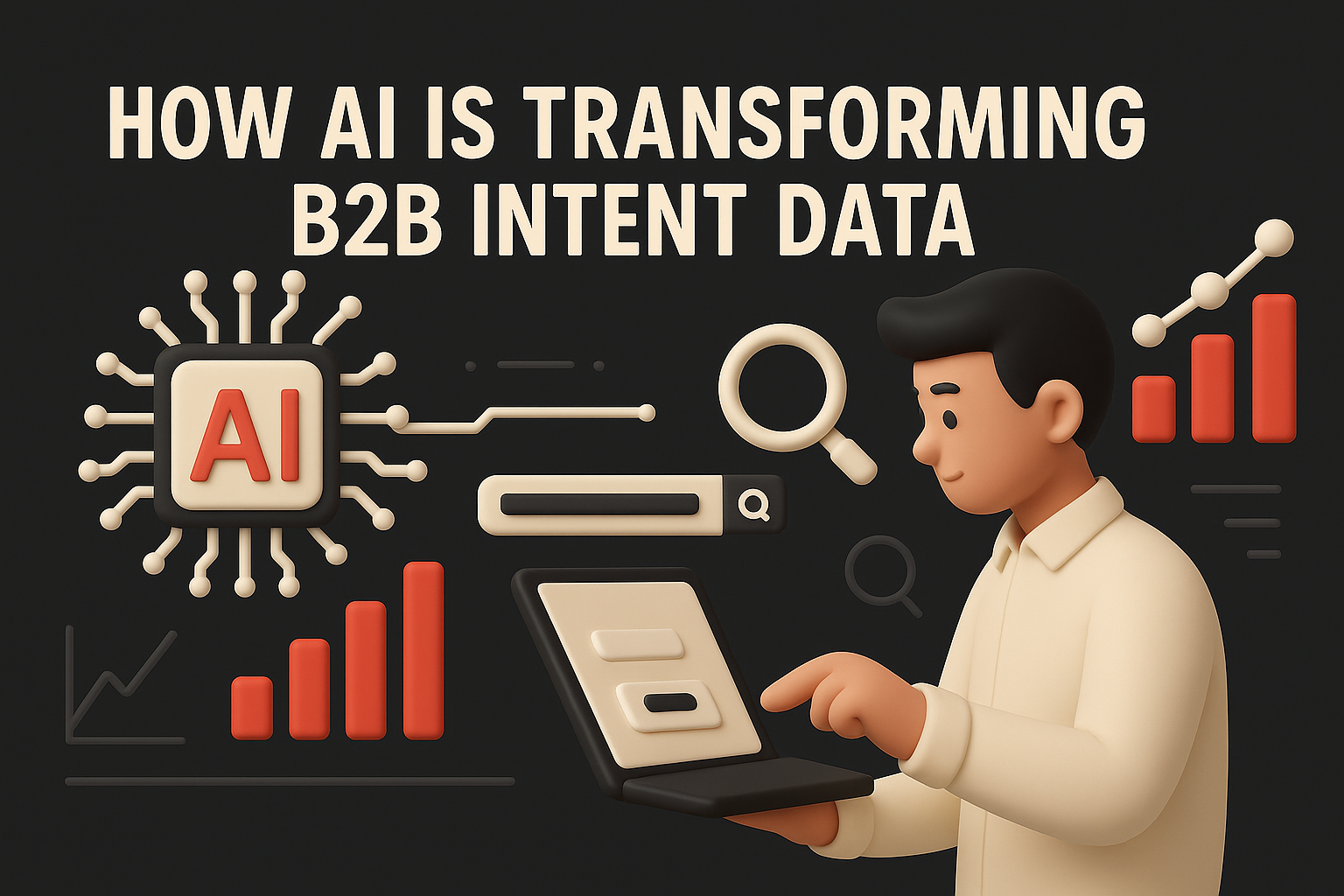
    Artificial Intelligence (AI) is rapidly transforming how B2B companies attract, qualify, and convert leads. Gone are the days of static CRM workflows and manual outreach—today, AI agents are emerging as intelligent digital teammates capable of automating the entire front end of the sales process. From identifying high-intent prospects to initiating personalized conversations, these agents are reshaping B2B lead generation into a smarter, data-driven, and highly scalable process.
    Here’s how AI agents are redefining lead qualification and outreach in the B2B space.
    1. Automating Lead Qualification with Real-Time Intelligence
    AI agents can now analyze millions of data points—website visits, email engagement, social activity, and firmographic data—to qualify leads in real time. Unlike traditional scoring models that rely on static attributes, AI-driven systems use predictive intent modeling to understand buyer readiness.
    They:
    • Rank leads based on behavioral patterns (e.g., frequency of visits, content engagement).
    • Detect intent signals like searches for specific solutions or pricing pages.
    • Continuously learn from closed deals to improve accuracy over time.
    This means sales teams spend less time on unqualified prospects and more time nurturing those who are genuinely ready to convert.
    2. Hyper-Personalized Outreach at Scale
    AI agents are revolutionizing outreach by combining automation with personalization. They use NLP (Natural Language Processing) to understand tone, context, and buyer intent—crafting tailored messages for each contact.
    For example, an AI sales assistant can:
    • Write customized outreach emails based on a prospect’s job title, industry, and recent activity.
    • Engage in two-way conversations through chat or email, responding intelligently to questions.
    • Schedule follow-ups automatically, adapting communication frequency to the lead’s responsiveness.
    Instead of bulk, impersonal outreach, AI agents make every interaction feel human and relevant—at scale.
    3. Integrating Seamlessly with CRM and Marketing Automation Systems
    AI agents don’t just sit on the sidelines—they integrate directly with CRMs like Salesforce, HubSpot, and Zoho to update contact records, qualify leads, and trigger workflows automatically.
    They can even collaborate across departments: marketing teams get insights into top-performing campaigns, while sales teams receive prioritized lists of leads with complete engagement histories.
    This unified, AI-powered ecosystem bridges the traditional gap between marketing and sales, making lead flow more efficient and measurable.
    4. Predictive Outreach and Timing Optimization
    Using predictive analytics, AI agents can determine when a lead is most likely to engage—whether that’s the best day, time, or channel. By analyzing patterns in open rates, responses, and conversion data, AI fine-tunes outreach timing to maximize engagement and minimize fatigue.
    This proactive, always-learning approach ensures that outreach isn’t just automated—it’s intelligently timed for conversion.
    The Future: Fully Autonomous B2B Pipelines
    In the near future, AI agents will evolve from assistants to autonomous revenue operators—handling everything from data enrichment to scheduling discovery calls. With generative AI and RPA (Robotic Process Automation), they’ll dynamically adapt to buyer behavior, refining messaging, scoring, and targeting with minimal human input.
    The result? B2B sales teams that are leaner, faster, and infinitely scalable.
    The Bottom Line:
    AI agents are not replacing B2B marketers and sales reps—they’re amplifying them. By automating repetitive processes, analyzing intent data in real time, and delivering hyper-personalized outreach, these agents enable teams to focus on what truly matters: building relationships and closing deals.
    Read More: https://intentamplify.com/lead-generation/
    Where is predictive AI being used to identify high-intent B2B prospects before they enter the funnel? Artificial Intelligence (AI) is rapidly transforming how B2B companies attract, qualify, and convert leads. Gone are the days of static CRM workflows and manual outreach—today, AI agents are emerging as intelligent digital teammates capable of automating the entire front end of the sales process. From identifying high-intent prospects to initiating personalized conversations, these agents are reshaping B2B lead generation into a smarter, data-driven, and highly scalable process. Here’s how AI agents are redefining lead qualification and outreach in the B2B space. 1. Automating Lead Qualification with Real-Time Intelligence AI agents can now analyze millions of data points—website visits, email engagement, social activity, and firmographic data—to qualify leads in real time. Unlike traditional scoring models that rely on static attributes, AI-driven systems use predictive intent modeling to understand buyer readiness. They: • Rank leads based on behavioral patterns (e.g., frequency of visits, content engagement). • Detect intent signals like searches for specific solutions or pricing pages. • Continuously learn from closed deals to improve accuracy over time. This means sales teams spend less time on unqualified prospects and more time nurturing those who are genuinely ready to convert. 2. Hyper-Personalized Outreach at Scale AI agents are revolutionizing outreach by combining automation with personalization. They use NLP (Natural Language Processing) to understand tone, context, and buyer intent—crafting tailored messages for each contact. For example, an AI sales assistant can: • Write customized outreach emails based on a prospect’s job title, industry, and recent activity. • Engage in two-way conversations through chat or email, responding intelligently to questions. • Schedule follow-ups automatically, adapting communication frequency to the lead’s responsiveness. Instead of bulk, impersonal outreach, AI agents make every interaction feel human and relevant—at scale. 3. Integrating Seamlessly with CRM and Marketing Automation Systems AI agents don’t just sit on the sidelines—they integrate directly with CRMs like Salesforce, HubSpot, and Zoho to update contact records, qualify leads, and trigger workflows automatically. They can even collaborate across departments: marketing teams get insights into top-performing campaigns, while sales teams receive prioritized lists of leads with complete engagement histories. This unified, AI-powered ecosystem bridges the traditional gap between marketing and sales, making lead flow more efficient and measurable. 4. Predictive Outreach and Timing Optimization Using predictive analytics, AI agents can determine when a lead is most likely to engage—whether that’s the best day, time, or channel. By analyzing patterns in open rates, responses, and conversion data, AI fine-tunes outreach timing to maximize engagement and minimize fatigue. This proactive, always-learning approach ensures that outreach isn’t just automated—it’s intelligently timed for conversion. The Future: Fully Autonomous B2B Pipelines In the near future, AI agents will evolve from assistants to autonomous revenue operators—handling everything from data enrichment to scheduling discovery calls. With generative AI and RPA (Robotic Process Automation), they’ll dynamically adapt to buyer behavior, refining messaging, scoring, and targeting with minimal human input. The result? B2B sales teams that are leaner, faster, and infinitely scalable. The Bottom Line: AI agents are not replacing B2B marketers and sales reps—they’re amplifying them. By automating repetitive processes, analyzing intent data in real time, and delivering hyper-personalized outreach, these agents enable teams to focus on what truly matters: building relationships and closing deals. Read More: https://intentamplify.com/lead-generation/
    0 Комментарии 0 Поделились

  • What role will AI agents play in automating B2B lead qualification and outreach?

    Artificial Intelligence (AI) is rapidly transforming how B2B companies attract, qualify, and convert leads. Gone are the days of static CRM workflows and manual outreach—today, AI agents are emerging as intelligent digital teammates capable of automating the entire front end of the sales process. From identifying high-intent prospects to initiating personalized conversations, these agents are reshaping B2B lead generation into a smarter, data-driven, and highly scalable process.
    Here’s how AI agents are redefining lead qualification and outreach in the B2B space.
    1. Automating Lead Qualification with Real-Time Intelligence
    AI agents can now analyze millions of data points—website visits, email engagement, social activity, and firmographic data—to qualify leads in real time. Unlike traditional scoring models that rely on static attributes, AI-driven systems use predictive intent modeling to understand buyer readiness.
    They:
    • Rank leads based on behavioral patterns (e.g., frequency of visits, content engagement).
    • Detect intent signals like searches for specific solutions or pricing pages.
    • Continuously learn from closed deals to improve accuracy over time.
    This means sales teams spend less time on unqualified prospects and more time nurturing those who are genuinely ready to convert.
    2. Hyper-Personalized Outreach at Scale
    AI agents are revolutionizing outreach by combining automation with personalization. They use NLP (Natural Language Processing) to understand tone, context, and buyer intent—crafting tailored messages for each contact.
    For example, an AI sales assistant can:
    • Write customized outreach emails based on a prospect’s job title, industry, and recent activity.
    • Engage in two-way conversations through chat or email, responding intelligently to questions.
    • Schedule follow-ups automatically, adapting communication frequency to the lead’s responsiveness.
    Instead of bulk, impersonal outreach, AI agents make every interaction feel human and relevant—at scale.
    3. Integrating Seamlessly with CRM and Marketing Automation Systems
    AI agents don’t just sit on the sidelines—they integrate directly with CRMs like Salesforce, HubSpot, and Zoho to update contact records, qualify leads, and trigger workflows automatically.
    They can even collaborate across departments: marketing teams get insights into top-performing campaigns, while sales teams receive prioritized lists of leads with complete engagement histories.
    This unified, AI-powered ecosystem bridges the traditional gap between marketing and sales, making lead flow more efficient and measurable.
    4. Predictive Outreach and Timing Optimization
    Using predictive analytics, AI agents can determine when a lead is most likely to engage—whether that’s the best day, time, or channel. By analyzing patterns in open rates, responses, and conversion data, AI fine-tunes outreach timing to maximize engagement and minimize fatigue.
    This proactive, always-learning approach ensures that outreach isn’t just automated—it’s intelligently timed for conversion.
    The Future: Fully Autonomous B2B Pipelines
    In the near future, AI agents will evolve from assistants to autonomous revenue operators—handling everything from data enrichment to scheduling discovery calls. With generative AI and RPA (Robotic Process Automation), they’ll dynamically adapt to buyer behavior, refining messaging, scoring, and targeting with minimal human input.
    The result? B2B sales teams that are leaner, faster, and infinitely scalable.
    The Bottom Line:
    AI agents are not replacing B2B marketers and sales reps—they’re amplifying them. By automating repetitive processes, analyzing intent data in real time, and delivering hyper-personalized outreach, these agents enable teams to focus on what truly matters: building relationships and closing deals.

    Read More: https://intentamplify.com/lead-generation/
    What role will AI agents play in automating B2B lead qualification and outreach? Artificial Intelligence (AI) is rapidly transforming how B2B companies attract, qualify, and convert leads. Gone are the days of static CRM workflows and manual outreach—today, AI agents are emerging as intelligent digital teammates capable of automating the entire front end of the sales process. From identifying high-intent prospects to initiating personalized conversations, these agents are reshaping B2B lead generation into a smarter, data-driven, and highly scalable process. Here’s how AI agents are redefining lead qualification and outreach in the B2B space. 1. Automating Lead Qualification with Real-Time Intelligence AI agents can now analyze millions of data points—website visits, email engagement, social activity, and firmographic data—to qualify leads in real time. Unlike traditional scoring models that rely on static attributes, AI-driven systems use predictive intent modeling to understand buyer readiness. They: • Rank leads based on behavioral patterns (e.g., frequency of visits, content engagement). • Detect intent signals like searches for specific solutions or pricing pages. • Continuously learn from closed deals to improve accuracy over time. This means sales teams spend less time on unqualified prospects and more time nurturing those who are genuinely ready to convert. 2. Hyper-Personalized Outreach at Scale AI agents are revolutionizing outreach by combining automation with personalization. They use NLP (Natural Language Processing) to understand tone, context, and buyer intent—crafting tailored messages for each contact. For example, an AI sales assistant can: • Write customized outreach emails based on a prospect’s job title, industry, and recent activity. • Engage in two-way conversations through chat or email, responding intelligently to questions. • Schedule follow-ups automatically, adapting communication frequency to the lead’s responsiveness. Instead of bulk, impersonal outreach, AI agents make every interaction feel human and relevant—at scale. 3. Integrating Seamlessly with CRM and Marketing Automation Systems AI agents don’t just sit on the sidelines—they integrate directly with CRMs like Salesforce, HubSpot, and Zoho to update contact records, qualify leads, and trigger workflows automatically. They can even collaborate across departments: marketing teams get insights into top-performing campaigns, while sales teams receive prioritized lists of leads with complete engagement histories. This unified, AI-powered ecosystem bridges the traditional gap between marketing and sales, making lead flow more efficient and measurable. 4. Predictive Outreach and Timing Optimization Using predictive analytics, AI agents can determine when a lead is most likely to engage—whether that’s the best day, time, or channel. By analyzing patterns in open rates, responses, and conversion data, AI fine-tunes outreach timing to maximize engagement and minimize fatigue. This proactive, always-learning approach ensures that outreach isn’t just automated—it’s intelligently timed for conversion. The Future: Fully Autonomous B2B Pipelines In the near future, AI agents will evolve from assistants to autonomous revenue operators—handling everything from data enrichment to scheduling discovery calls. With generative AI and RPA (Robotic Process Automation), they’ll dynamically adapt to buyer behavior, refining messaging, scoring, and targeting with minimal human input. The result? B2B sales teams that are leaner, faster, and infinitely scalable. The Bottom Line: AI agents are not replacing B2B marketers and sales reps—they’re amplifying them. By automating repetitive processes, analyzing intent data in real time, and delivering hyper-personalized outreach, these agents enable teams to focus on what truly matters: building relationships and closing deals. Read More: https://intentamplify.com/lead-generation/
    0 Комментарии 0 Поделились
  • Clinical Workflow Solutions Market Report: Unlocking Growth Potential and Addressing Challenges

    United States of America – [30-9-2025] – The Insight Partners is proud to announce its newest market report, "Clinical Workflow Solutions Market: An In-depth Analysis of the Clinical Workflow Solutions Market." The report provides a holistic view of the Clinical Workflow Solutions Market and describes the current scenario as well as growth estimates of the industry during the forecast period.

    Explore more - https://www.theinsightpartners.com/reports/clinical-workflow-solutions-market

    Overview of Clinical Workflow Solutions Market
    The Clinical Workflow Solutions Market has witnessed significant developments in recent years due to the increasing digitization of healthcare, rising demand for streamlined processes, and the need for improved care coordination. Hospitals, clinics, and diagnostic centers are adopting workflow management tools to reduce inefficiencies, ensure data accuracy, and enhance patient outcomes. Factors such as regulatory compliance requirements, the adoption of electronic health records (EHRs), and the integration of telehealth services are further shaping market dynamics.

    Key Findings and Insights
    Market Size and Growth
    • The Clinical Workflow Solutions Market is expected to register a CAGR of 13.5% from 2025 to 2031

    • Key Factors: The growth of this market is influenced by the rising demand for interoperability in healthcare systems, a surge in patient data volumes, technological advancements such as AI-enabled workflow solutions, and the increasing focus on reducing medical errors and operational costs.
    Market Segmentation
    • By Type: Real-time communication solutions, data integration solutions, care collaboration solutions, workflow automation solutions, and enterprise reporting & analytics.
    • By End User: Hospitals, ambulatory care centers, diagnostic & imaging centers, long-term care facilities, and others.
    • By Deployment Mode: Cloud-based, on-premises, and hybrid solutions.
    • By Region: North America, Europe, Asia-Pacific, Middle East & Africa, and Latin America.
    Spotting Emerging Trends
    • Technological Advancements: Integration of artificial intelligence (AI), machine learning (ML), and robotic process automation (RPA) to automate repetitive tasks, enhance predictive analytics, and improve decision-making in healthcare workflows.
    • Changing Consumer Preferences: Rising preference for telehealth platforms, mobile health applications, and self-service portals that allow patients to schedule, communicate, and access care records seamlessly.
    • Regulatory Changes: Implementation of stringent healthcare IT regulations such as HIPAA in the U.S. and GDPR in Europe are driving demand for secure, compliant, and interoperable workflow solutions.
    Growth Opportunities
    The Clinical Workflow Solutions Market offers robust growth opportunities:
    • Expanding adoption of telemedicine and remote patient monitoring solutions.
    • Integration of big data analytics and cloud computing for improved workflow management.
    • Growing investments in healthcare IT infrastructure in emerging economies.
    • Rising demand for AI-powered decision support systems to reduce physician workload.
    • Increasing focus on patient-centric care models, driving the need for seamless care coordination tools.
    Conclusion
    The Clinical Workflow Solutions Market: Global Industry Trends, Share, Size, Growth, Opportunity, and Forecast 2023–2031 report provides essential insights for companies looking to establish or expand their presence in this sector. With technological innovations, regulatory compliance needs, and evolving patient expectations driving demand, the clinical workflow solutions industry is poised for sustained growth and transformation.
    Also Available in : Korean | German | Japanese | French | Arabic | Chinese | Italian | Spanish
    Clinical Workflow Solutions Market Report: Unlocking Growth Potential and Addressing Challenges United States of America – [30-9-2025] – The Insight Partners is proud to announce its newest market report, "Clinical Workflow Solutions Market: An In-depth Analysis of the Clinical Workflow Solutions Market." The report provides a holistic view of the Clinical Workflow Solutions Market and describes the current scenario as well as growth estimates of the industry during the forecast period. Explore more - https://www.theinsightpartners.com/reports/clinical-workflow-solutions-market Overview of Clinical Workflow Solutions Market The Clinical Workflow Solutions Market has witnessed significant developments in recent years due to the increasing digitization of healthcare, rising demand for streamlined processes, and the need for improved care coordination. Hospitals, clinics, and diagnostic centers are adopting workflow management tools to reduce inefficiencies, ensure data accuracy, and enhance patient outcomes. Factors such as regulatory compliance requirements, the adoption of electronic health records (EHRs), and the integration of telehealth services are further shaping market dynamics. Key Findings and Insights Market Size and Growth • The Clinical Workflow Solutions Market is expected to register a CAGR of 13.5% from 2025 to 2031 • Key Factors: The growth of this market is influenced by the rising demand for interoperability in healthcare systems, a surge in patient data volumes, technological advancements such as AI-enabled workflow solutions, and the increasing focus on reducing medical errors and operational costs. Market Segmentation • By Type: Real-time communication solutions, data integration solutions, care collaboration solutions, workflow automation solutions, and enterprise reporting & analytics. • By End User: Hospitals, ambulatory care centers, diagnostic & imaging centers, long-term care facilities, and others. • By Deployment Mode: Cloud-based, on-premises, and hybrid solutions. • By Region: North America, Europe, Asia-Pacific, Middle East & Africa, and Latin America. Spotting Emerging Trends • Technological Advancements: Integration of artificial intelligence (AI), machine learning (ML), and robotic process automation (RPA) to automate repetitive tasks, enhance predictive analytics, and improve decision-making in healthcare workflows. • Changing Consumer Preferences: Rising preference for telehealth platforms, mobile health applications, and self-service portals that allow patients to schedule, communicate, and access care records seamlessly. • Regulatory Changes: Implementation of stringent healthcare IT regulations such as HIPAA in the U.S. and GDPR in Europe are driving demand for secure, compliant, and interoperable workflow solutions. Growth Opportunities The Clinical Workflow Solutions Market offers robust growth opportunities: • Expanding adoption of telemedicine and remote patient monitoring solutions. • Integration of big data analytics and cloud computing for improved workflow management. • Growing investments in healthcare IT infrastructure in emerging economies. • Rising demand for AI-powered decision support systems to reduce physician workload. • Increasing focus on patient-centric care models, driving the need for seamless care coordination tools. Conclusion The Clinical Workflow Solutions Market: Global Industry Trends, Share, Size, Growth, Opportunity, and Forecast 2023–2031 report provides essential insights for companies looking to establish or expand their presence in this sector. With technological innovations, regulatory compliance needs, and evolving patient expectations driving demand, the clinical workflow solutions industry is poised for sustained growth and transformation. Also Available in : Korean | German | Japanese | French | Arabic | Chinese | Italian | Spanish
    0 Комментарии 0 Поделились
  • Debt Collection Software Market Report: Unlocking Growth Potential and Addressing Challenges

    United States of America – [25-9-2025] – The Insight Partners is proud to announce its newest market report, "Debt Collection Software Market: An In-depth Analysis of the Debt Collection Software Market". The report provides a holistic view of the Debt Collection Software Market and describes the current scenario as well as growth estimates of Debt Collection Software during the forecast period.
    ________________________________________
    Overview of Debt Collection Software Market
    The Debt Collection Software Market has undergone rapid transformation driven by automation, artificial intelligence (AI), and evolving regulatory environments. Businesses are increasingly adopting digital solutions to streamline collections, enhance customer engagement, and ensure compliance with debt recovery regulations. This report provides insights into the driving forces behind these changes: technological advancements in cloud-based collections, regulatory changes promoting fair collection practices, and shifting consumer preferences toward digital and self-service repayment channels.

    Key findings and insights
    Market Size and Growth
    • Historical Data: The Debt Collection Software Market is estimated to reach US$ XX million by 2031 with a CAGR of XX%. These figures highlight the rising adoption of software that enhances recovery rates and operational efficiency.
    • Key Factors:
    o Increasing need for automation in financial services and collection processes.
    o Rising regulatory compliance requirements (such as GDPR, FDCPA, and global equivalents).
    o Growing integration of AI, predictive analytics, and machine learning in debt recovery.
    o Expansion of digital payment channels and demand for customer-friendly repayment options.
    o Increasing volume of consumer and corporate debt, particularly in emerging economies.

    Market Segmentation
    Segmentation Criteria — Debt Collection Software Market:
    • By Component: Software (payment processing, reporting & analytics, customer relationship management, compliance management) and Services (implementation, training, consulting, managed services).
    • By Deployment Type: On-Premise, Cloud-Based.
    • By Organization Size: Small & Medium Enterprises (SMEs), Large Enterprises.
    • By End-User Industry: Financial Institutions, Collection Agencies, Healthcare, Government, Telecom, Retail, and Others.
    • By Region: North America, Europe, Asia-Pacific, Latin America, Middle East & Africa.

    Spotting Emerging Trends
    Technological Advancements
    • AI-powered chatbots and virtual agents for automated communication with debtors.
    • Predictive analytics for risk scoring and prioritization of accounts.
    • Cloud-native debt collection platforms enabling scalability and flexibility.
    • Integration with digital payment gateways and mobile-first repayment solutions.
    • Robotic Process Automation (RPA) to handle repetitive collection tasks efficiently.
    Changing Consumer Preferences
    • Shift toward digital-first interactions, with consumers preferring online portals, apps, and SMS reminders.
    • Demand for transparency and flexible repayment options.
    • Growing importance of customer experience in debt recovery — balancing compliance with empathetic communication.
    Regulatory Changes
    • Stricter enforcement of fair collection practices under consumer protection laws worldwide.
    • Data privacy regulations (GDPR, CCPA) shaping data handling in debt recovery.
    • Expected mandates for digital documentation and standardized communication processes across regions.
    ________________________________________
    Growth Opportunities
    • SME adoption: Small and medium enterprises increasingly seek affordable, cloud-based debt collection platforms.
    • AI & Predictive Analytics: Opportunities for vendors to offer intelligent debt prioritization and personalized repayment strategies.
    • Global Expansion: Rising consumer credit and micro-lending in Asia-Pacific and Latin America provide high-growth markets.
    • Omnichannel Communication: Development of integrated platforms that combine email, SMS, voice, and chat for collections.
    • Partnership Ecosystems: Collaboration between fintechs, banks, and software providers to create end-to-end debt management solutions.
    • Compliance-as-a-Service: Solutions that simplify and automate compliance for debt collection agencies and lenders.
    ________________________________________
    Conclusion
    The Debt Collection Software Market: Global Industry Trends, Share, Size, Growth, Opportunity, and Forecast 2023-2031 report provides much-needed insight for companies seeking to enter or expand their footprint in the Debt Collection Software Market. As organizations face increasing debt volumes and stricter compliance requirements, innovative, customer-centric, and automated solutions will be the key to capturing future growth.
    Debt Collection Software Market Report: Unlocking Growth Potential and Addressing Challenges United States of America – [25-9-2025] – The Insight Partners is proud to announce its newest market report, "Debt Collection Software Market: An In-depth Analysis of the Debt Collection Software Market". The report provides a holistic view of the Debt Collection Software Market and describes the current scenario as well as growth estimates of Debt Collection Software during the forecast period. ________________________________________ Overview of Debt Collection Software Market The Debt Collection Software Market has undergone rapid transformation driven by automation, artificial intelligence (AI), and evolving regulatory environments. Businesses are increasingly adopting digital solutions to streamline collections, enhance customer engagement, and ensure compliance with debt recovery regulations. This report provides insights into the driving forces behind these changes: technological advancements in cloud-based collections, regulatory changes promoting fair collection practices, and shifting consumer preferences toward digital and self-service repayment channels. Key findings and insights Market Size and Growth • Historical Data: The Debt Collection Software Market is estimated to reach US$ XX million by 2031 with a CAGR of XX%. These figures highlight the rising adoption of software that enhances recovery rates and operational efficiency. • Key Factors: o Increasing need for automation in financial services and collection processes. o Rising regulatory compliance requirements (such as GDPR, FDCPA, and global equivalents). o Growing integration of AI, predictive analytics, and machine learning in debt recovery. o Expansion of digital payment channels and demand for customer-friendly repayment options. o Increasing volume of consumer and corporate debt, particularly in emerging economies. Market Segmentation Segmentation Criteria — Debt Collection Software Market: • By Component: Software (payment processing, reporting & analytics, customer relationship management, compliance management) and Services (implementation, training, consulting, managed services). • By Deployment Type: On-Premise, Cloud-Based. • By Organization Size: Small & Medium Enterprises (SMEs), Large Enterprises. • By End-User Industry: Financial Institutions, Collection Agencies, Healthcare, Government, Telecom, Retail, and Others. • By Region: North America, Europe, Asia-Pacific, Latin America, Middle East & Africa. Spotting Emerging Trends Technological Advancements • AI-powered chatbots and virtual agents for automated communication with debtors. • Predictive analytics for risk scoring and prioritization of accounts. • Cloud-native debt collection platforms enabling scalability and flexibility. • Integration with digital payment gateways and mobile-first repayment solutions. • Robotic Process Automation (RPA) to handle repetitive collection tasks efficiently. Changing Consumer Preferences • Shift toward digital-first interactions, with consumers preferring online portals, apps, and SMS reminders. • Demand for transparency and flexible repayment options. • Growing importance of customer experience in debt recovery — balancing compliance with empathetic communication. Regulatory Changes • Stricter enforcement of fair collection practices under consumer protection laws worldwide. • Data privacy regulations (GDPR, CCPA) shaping data handling in debt recovery. • Expected mandates for digital documentation and standardized communication processes across regions. ________________________________________ Growth Opportunities • SME adoption: Small and medium enterprises increasingly seek affordable, cloud-based debt collection platforms. • AI & Predictive Analytics: Opportunities for vendors to offer intelligent debt prioritization and personalized repayment strategies. • Global Expansion: Rising consumer credit and micro-lending in Asia-Pacific and Latin America provide high-growth markets. • Omnichannel Communication: Development of integrated platforms that combine email, SMS, voice, and chat for collections. • Partnership Ecosystems: Collaboration between fintechs, banks, and software providers to create end-to-end debt management solutions. • Compliance-as-a-Service: Solutions that simplify and automate compliance for debt collection agencies and lenders. ________________________________________ Conclusion The Debt Collection Software Market: Global Industry Trends, Share, Size, Growth, Opportunity, and Forecast 2023-2031 report provides much-needed insight for companies seeking to enter or expand their footprint in the Debt Collection Software Market. As organizations face increasing debt volumes and stricter compliance requirements, innovative, customer-centric, and automated solutions will be the key to capturing future growth.
    0 Комментарии 0 Поделились
Нет данных для отображения