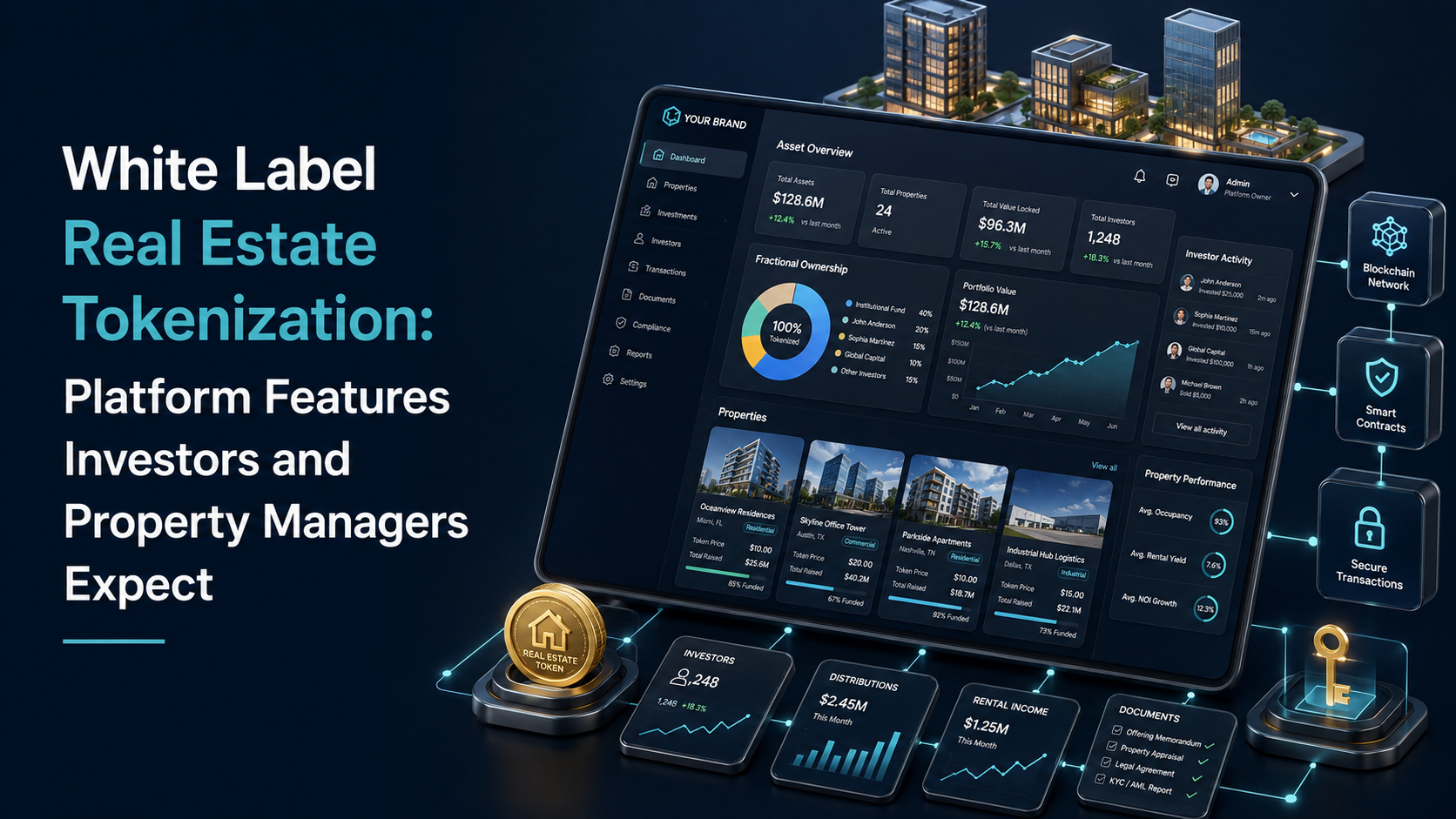
Real estate tokenization is moving from a technology concept toward a practical structure for offering fractional ownership, investment access, and digital management of property interests. As more businesses consider tokenized real estate, the platform itself has become an important part of the investment experience. Investors want reliable information, simple participation, and access to records. Property managers need tools for handling assets, documents, income, reporting, and investor communication.
A White Label Real Estate Tokenization setup gives businesses a ready technology foundation that can be presented under their own brand. Instead of creating every platform component from the beginning, a company can use a White Label Tokenization Platform and configure its interface, property offerings, workflows, and administrative functions around its business model.
However, having token creation alone is not enough. A useful platform needs features that address both sides of the marketplace. Investors need a practical way to review and manage investments, while property managers need tools that reduce manual work around property operations and investor relations. This article examines the platform features both groups are likely to expect.
1. Property Listing and Asset Information
Investors usually begin with the property page. They need sufficient information to assess what they are considering before committing funds. A White Label Real Estate Tokenization Platform should therefore provide dedicated property pages containing details such as property type, location, valuation, ownership structure, projected income, occupancy information, financial documents, and token allocation.
Property managers can use the same section to update asset information when circumstances change. Images, property documents, operating reports, financial statements, and other supporting records can be organized within each listing.
A structured listing system also helps businesses present multiple properties without making the platform difficult to navigate. Filters based on asset type, investment size, location, expected income, and availability can make property discovery easier for users.
2. Investor Onboarding and Account Management
Investor onboarding is another major part of the platform experience. A user should be able to create an account, submit required information, complete identity checks, and view their investment profile from one account area.
The platform can include investor categories, eligibility checks, document submission, verification status, wallet information, and transaction history. Different rules can be applied based on the investor's jurisdiction and the type of property offering.
For property managers and administrators, account management tools can provide visibility into pending registrations, approved investors, incomplete applications, and account activity. This reduces the need to handle every onboarding request through separate emails or spreadsheets.
3. Token Purchase and Investment Interface
Investors expect a straightforward investment process. Once they have reviewed a property, they should be able to see token price, available quantity, minimum investment, purchase conditions, and relevant documents before placing an order.
A well-planned White Label Real Estate Tokenization Platform can include an investment dashboard where users select the number of tokens, review the total amount, choose an available payment method, and confirm the transaction.
The interface should also show order status and transaction history. Investors can then see whether an order is pending, completed, cancelled, or awaiting another action.
For property managers, transaction records provide a useful view of how many tokens have been issued or sold and how much of an offering remains available.
4. Investor Portfolio Dashboard
After purchasing tokens, investors need more than a transaction receipt. They expect a dashboard that brings their holdings into one place.
The dashboard can display properties owned, number of tokens held, purchase history, distributions received, pending payments, portfolio value, and relevant property updates. A property-by-property view can also show income records and documents connected to each holding.
This feature becomes particularly useful when an investor owns tokens linked to several properties. Rather than checking individual property pages, the investor can review the portfolio from one account.
5. Property Management Dashboard
Property managers have a different set of requirements. Their dashboard should provide a central view of assets, token holders, transactions, income records, documents, maintenance information, and reporting activities.
A property management dashboard can include occupancy details, rental income, operating expenses, valuation updates, property status, and scheduled reports. Access can be divided among administrators, property managers, finance teams, and other authorized users.
A White Label Real Estate Tokenization Development project should account for these different user roles from the beginning because investors and property managers interact with the same platform in very different ways.
6. Distribution and Income Management
Many tokenized real estate models involve rental income, profit distributions, or other property-related returns. Investors therefore expect a record of what they have received and what remains pending.
The platform can calculate investor allocations according to token ownership and record distribution events. Users can view payment dates, amounts, property names, and transaction references from their dashboards.
Property managers can use administrative tools to upload income figures, review distribution calculations, approve payment batches, and maintain records. The exact process will depend on the legal and financial structure of the offering.
7. Document Management
Real estate involves a large amount of documentation. Investors may need access to ownership records, valuation reports, financial statements, offering documents, legal agreements, property reports, and periodic updates.
A document management feature can organize these files by property and investor access level. Some documents may be available to every eligible investor, while others may require restricted permissions.
Property managers also benefit from document versioning and organized records. Instead of sending updated files manually, authorized users can place current documents within the relevant property section.
8. Secondary Market Support
Investors often consider liquidity when evaluating tokenized assets. If the business model and applicable regulations permit secondary trading, the platform can include marketplace functionality where eligible users can list and acquire tokens.
A secondary market section may display available listings, token price, quantity offered, transaction conditions, and seller information where appropriate. Investors can review orders and track completed transactions.
This functionality requires careful consideration of transfer restrictions, investor eligibility, compliance checks, settlement processes, and applicable securities regulations. It should therefore be planned as part of the wider platform architecture rather than treated as a simple trading feature.
9. Wallet and Payment Integration
Tokenized property platforms need a practical connection between investment payments and token ownership. Depending on the business model, the platform may support blockchain wallets, custodial wallets, bank payments, stablecoins, or other permitted payment methods.
Investors should be able to see their wallet status, transaction history, token balances, and payment records without unnecessary complexity.
Property managers and administrators need corresponding transaction records so that payment activity can be reconciled with token issuance and investor accounts.
10. Compliance and Verification Features
Real estate tokenization can involve securities regulations, property laws, investor eligibility rules, anti-money laundering requirements, and jurisdiction-specific restrictions. Platform features should therefore support the compliance process rather than treat it as a separate administrative activity.
A White Label Real Estate Tokenization Platform can include identity verification, KYC workflows, AML screening integrations, investor accreditation checks where applicable, document collection, transaction monitoring, and transfer restrictions.
Permissions can also determine which investors can view or purchase particular offerings. These functions should be configured according to the legal structure and jurisdictions involved.
11. Token Holder Registry
A reliable record of token ownership is important for both investors and property administrators. The platform should maintain information about token holders, balances, transaction history, and relevant ownership changes.
Administrators can use the registry to review ownership distribution and generate reports. Investors can use their personal dashboard to confirm their holdings and related transactions.
Where blockchain records are used, the platform can connect on-chain transactions with the corresponding user account and property record.
12. Property Performance Reporting
Investors want to understand how the underlying property is performing after making an investment. Regular reporting can provide information about rental income, occupancy, expenses, valuation changes, distributions, and other relevant metrics.
Property managers can upload periodic reports and financial information through an administrative interface. Investors can then access reports from their portfolio dashboard.
The presentation should focus on factual property information rather than unsupported return claims. This helps investors make decisions based on available financial and operational data.
13. Notifications and Investor Communication
Investors should not have to repeatedly check the platform for every update. Notifications can inform users about distribution dates, property reports, document updates, token purchases, account verification, and important property events.
Property managers can use announcement tools to communicate with groups of investors associated with a particular asset.
Email notifications, in-platform alerts, and other communication channels can be combined depending on the platform's requirements. Users should also have control over non-critical notification preferences.
14. Role-Based Administration
A White Label Tokenization Platform may involve several types of users. An administrator, property manager, compliance officer, finance employee, and investor should not necessarily have the same permissions.
Role-based access allows businesses to assign different capabilities to different users. For example, a property manager may update asset information, while a finance user may manage distribution records. A compliance officer may review investor verification without having access to unrelated administrative functions.
This approach also creates a more organized administrative environment as the number of properties and users increases.
15. Analytics and Business Reporting
Platform operators need information about investment activity and property performance. Analytics can cover registered investors, investment volume, token sales, active properties, distributions, transaction activity, and user engagement.
Property-specific reports can help managers compare operating performance across different assets. Business administrators can also use reporting tools to understand which offerings attract the most attention.
Reports can be exported for accounting, compliance, management review, and other internal processes where appropriate.
16. Mobile-Friendly Investor Experience
Real estate investors increasingly review financial information from phones and tablets. A platform that works only on a desktop can create unnecessary friction.
A mobile-friendly interface should allow investors to check balances, review properties, read documents, monitor distributions, and receive notifications from smaller screens.
Property managers may also need mobile access for quick checks while handling property operations. The complete interface does not necessarily need to replicate every desktop function, but frequently used tasks should remain accessible.
17. Security and Transaction Controls
Tokenized property platforms handle financial information, personal information, property records, and blockchain transactions. Security therefore needs attention across the application.
Features can include multi-factor authentication, encrypted data handling, secure wallet procedures, permission controls, audit logs, transaction confirmation steps, and monitoring for unusual account activity.
Smart contracts should also undergo suitable testing and review before they are used for live transactions. The platform should maintain records of important administrative actions so that changes can be reviewed later.
18. Branding and White Label Configuration
Brand presentation is one of the main reasons businesses consider a White Label Real Estate Tokenization Platform. The platform can carry the company's logo, colors, domain, terminology, property categories, and communication style.
Branding should cover the investor interface as well as administrative screens, emails, documents, and notifications where applicable.
A White Label Real Estate Tokenization Services provider may also configure modules according to the business's selected investment model, asset types, user roles, and operational requirements.
19. API and Third-Party Integrations
A real estate tokenization platform rarely operates in isolation. It may need connections with identity verification providers, payment gateways, blockchain networks, accounting systems, property data services, custodians, email systems, analytics tools, and compliance providers.
API support makes these connections possible. It also gives businesses more flexibility when replacing or adding external services later.
During White Label Real Estate Tokenization Platform Development, integration requirements should be documented early because external services can affect the platform's workflows, data structures, and user experience.
20. What Investors and Property Managers Ultimately Expect
Investors and property managers may use the same platform, but they judge it through different requirements. Investors generally want reliable property information, easy account management, understandable transaction records, portfolio visibility, distributions, documents, and appropriate security.
Property managers need asset administration, investor records, financial information, reporting, communication tools, document management, and operational controls.
The strongest platform concept is therefore not simply a token issuance system. It is a complete environment connecting property information, investor participation, token ownership, payments, reporting, and administration.
Conclusion
White Label Real Estate Tokenization is becoming a practical option for businesses that want to enter the tokenized property market without starting every technical component from the beginning. A suitable platform should address investor expectations and property management requirements through property listings, onboarding, token purchases, portfolio dashboards, income distribution, document management, compliance tools, secondary market support, reporting, security, and administrative controls. The technology should also provide room for branding, third-party integrations, and different property investment models. When these functions are planned together, businesses can provide a more useful environment for managing tokenized property offerings and investor relationships. Blockchain App Factory provides White Label Real Estate Tokenization Services for businesses looking to launch branded platforms with features for property owners, managers, administrators, and investors.
FAQs
1. What is White Label Real Estate Tokenization?
White Label Real Estate Tokenization refers to using an existing tokenization technology framework that a business can present under its own brand for offering and managing tokenized real estate assets.
2. What features should investors expect from a real estate tokenization platform?
Investors generally expect property information, account verification, token purchasing, portfolio tracking, transaction history, distribution records, document access, notifications, and suitable security controls.
3. What features do property managers need?
Property managers may need asset listings, property performance records, document management, investor information, distribution management, reporting tools, communication features, and role-based administration.
4. Can a White Label Tokenization Platform support secondary trading?
It can include secondary market functionality when the business model, blockchain setup, and applicable regulations permit token transfers or trading.
5. Why is KYC important in real estate tokenization?
KYC helps verify investor identity and can form part of the compliance process required for certain tokenized investment structures and jurisdictions.
6. Can businesses customize the branding of a white label platform?
Yes. Depending on the provider and package, businesses can generally configure branding elements such as logos, colors, domain presentation, interface content, and communication materials.
7. What is involved in White Label Real Estate Tokenization Development?
It can involve platform configuration, smart contract integration, investor onboarding, property management modules, wallet and payment connections, compliance features, dashboards, security controls, testing, and deployment.
8. Is a White Label Real Estate Tokenization Platform suitable for multiple properties?
Yes. A platform can be designed to support multiple property listings, individual asset records, separate investor groups, token balances, documents, reports, and distribution information.
9. How does a token holder registry help?
A token holder registry records ownership information and transaction history, helping administrators and investors track token balances and ownership changes.
10. What should businesses consider before selecting a platform?
Businesses should assess supported blockchain networks, compliance requirements, investor workflows, property management functions, security practices, payment options, secondary market support, integrations, branding capabilities, and ongoing technical support.