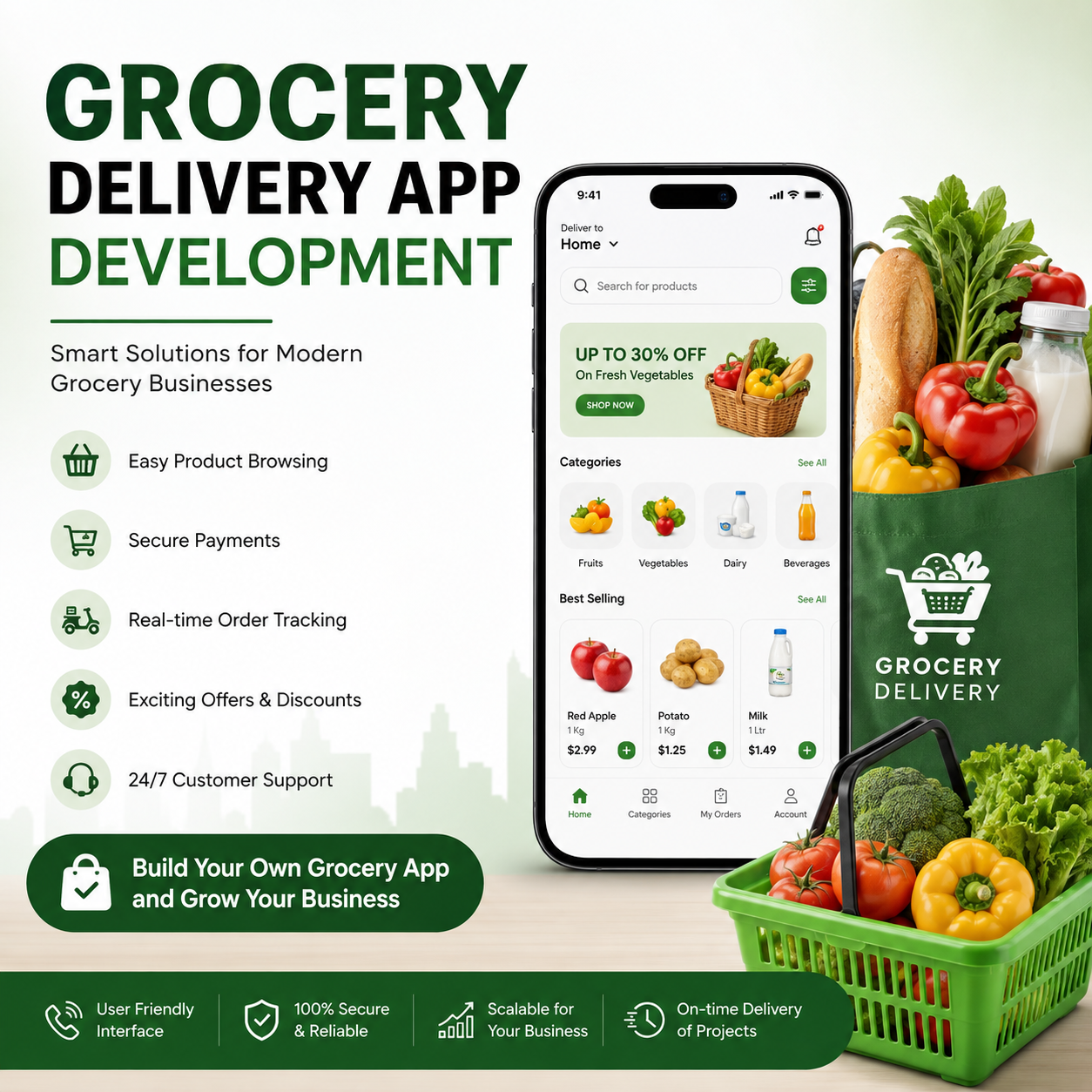
Online grocery shopping has made it easier for customers to purchase everyday essentials without visiting a physical store. However, placing an order is only one part of the experience. Customers also want to know what is happening after they complete their purchase. They want to know whether the store has accepted the order, when the groceries are being prepared, and how long it may take for the delivery to arrive.
Real-time order tracking addresses these needs by providing customers with regular updates about their orders. It can show the current order status and, in some cases, the location of the delivery partner on a map. For businesses planning grocery mobile app development, real-time tracking can be an important feature for creating a more informative and convenient delivery experience.
What Is Real-Time Order Tracking?
Real-time order tracking allows customers to follow their grocery order from confirmation until delivery. Instead of simply displaying an estimated delivery time, the application can provide updates as the order moves through different stages.
For example, an order may show statuses such as order confirmed, being prepared, ready for pickup, out for delivery, and delivered. When the delivery partner starts the journey, location-based tracking can show their approximate position where the feature is supported.
This system connects the customer application with the store and delivery partner applications, allowing order information to be updated as the delivery progresses.
Gives Customers Better Information
One of the biggest benefits of order tracking is that customers do not have to wonder about their order. Without tracking, a customer may have to call the store to ask whether an order has been prepared or dispatched.
With a tracking feature, the latest order status is available directly inside the application. Customers can check the progress whenever they want without contacting the store.
A grocery delivery app development company can add status updates and location features according to the business's delivery process.
Makes Delivery Times Easier to Understand
Grocery delivery times can change because of traffic, weather, order volume, or other circumstances. Real-time tracking can give customers more information about the progress of their delivery.
When an order is out for delivery, customers may be able to see the delivery partner's location and receive an estimated arrival time. This helps customers plan their time around the expected delivery.
During custom grocery app development, businesses can choose whether to provide basic status updates or more detailed map-based tracking.
Helps Delivery Partners
Order tracking is not only useful for customers. It can also provide useful tools for delivery partners.
Delivery partners can see assigned orders, pickup details, customer addresses, and navigation information through their application. They can update the order status after collecting the groceries and again after completing the delivery.
Grocery delivery app developers can connect GPS and mapping services with the delivery application so partners can find customer locations more easily.
Reduces Customer Calls
Customers often contact stores when they do not know the status of their orders. These calls can take time for store employees, particularly during busy periods.
A tracking feature provides customers with information directly through the app. Notifications can inform them when an order is accepted, packed, dispatched, or delivered.
This can reduce the need for customers to make repeated status inquiries and allow store staff to focus on preparing and managing orders.
Improves Communication
Real-time tracking creates a direct communication channel between the business and customer. Important updates can be shared automatically instead of relying on manual messages or phone calls.
For example, customers can receive a notification when their order has been packed or when the delivery partner has started the journey. If there is a delay or an item needs to be replaced, the application can provide an update according to the business's system.
These communication features can be included as part of grocery mobile app development.
Supports Better Delivery Management
For grocery businesses, tracking can provide a clearer view of ongoing deliveries. Store managers can monitor which orders are waiting for pickup, which are being delivered, and which have already been completed.
An admin dashboard can display information about delivery activity and order status. Managers can use this information to identify delays and review delivery performance.
A grocery delivery app development company can create an administration system that gives managers suitable access to live order information.
Builds Customer Confidence
Customers are more comfortable ordering products when they can see what is happening with their purchase. A clear tracking system can provide greater visibility throughout the delivery process.
For new customers, knowing that they can monitor an order after making payment can make the application feel more trustworthy. Existing customers can also benefit from having a consistent way to check delivery progress.
Helps Manage Delivery Delays
Delays can happen even when a business has a well-planned delivery process. Traffic, high order volumes, incorrect addresses, or unexpected events can affect delivery times.
Real-time tracking can help businesses identify orders that may be delayed. Customers can also receive updated information rather than relying on an earlier estimated delivery time.
This makes it easier for both sides to respond when delivery conditions change.
Useful for Different Grocery Business Models
Real-time tracking can be used by local kirana stores, supermarkets, grocery chains, and multi-vendor marketplaces. The exact tracking system can vary depending on how orders are processed and delivered.
A local store may only need order status updates, while a larger supermarket chain may require GPS tracking, multiple delivery zones, and centralized monitoring.
With custom grocery app development, businesses can select tracking features according to their delivery structure and budget.
Technology Behind Real-Time Tracking
Real-time order tracking usually involves several connected technologies. The customer application displays order information, while the store system updates preparation and pickup stages. The delivery partner application can share location information when GPS tracking is enabled.
APIs, mapping services, push notifications, databases, and location services can work together to provide updated information.
Experienced grocery delivery app developers can select suitable technologies based on the number of users, delivery area, application structure, and business requirements.
Final word
Real-time order tracking has become an important feature for modern grocery delivery applications. It gives customers information about their orders, helps delivery partners manage their tasks, and gives businesses better visibility into ongoing deliveries.
For businesses planning grocery mobile app development, tracking can be included alongside features such as online payments, inventory management, product search, notifications, and delivery scheduling.
With the help of a professional grocery delivery app development company, businesses can create a tracking system that matches their delivery operations. Whether it is a small local grocery store or a larger multi-store platform, real-time tracking can make the delivery process more transparent and convenient for everyone involved.