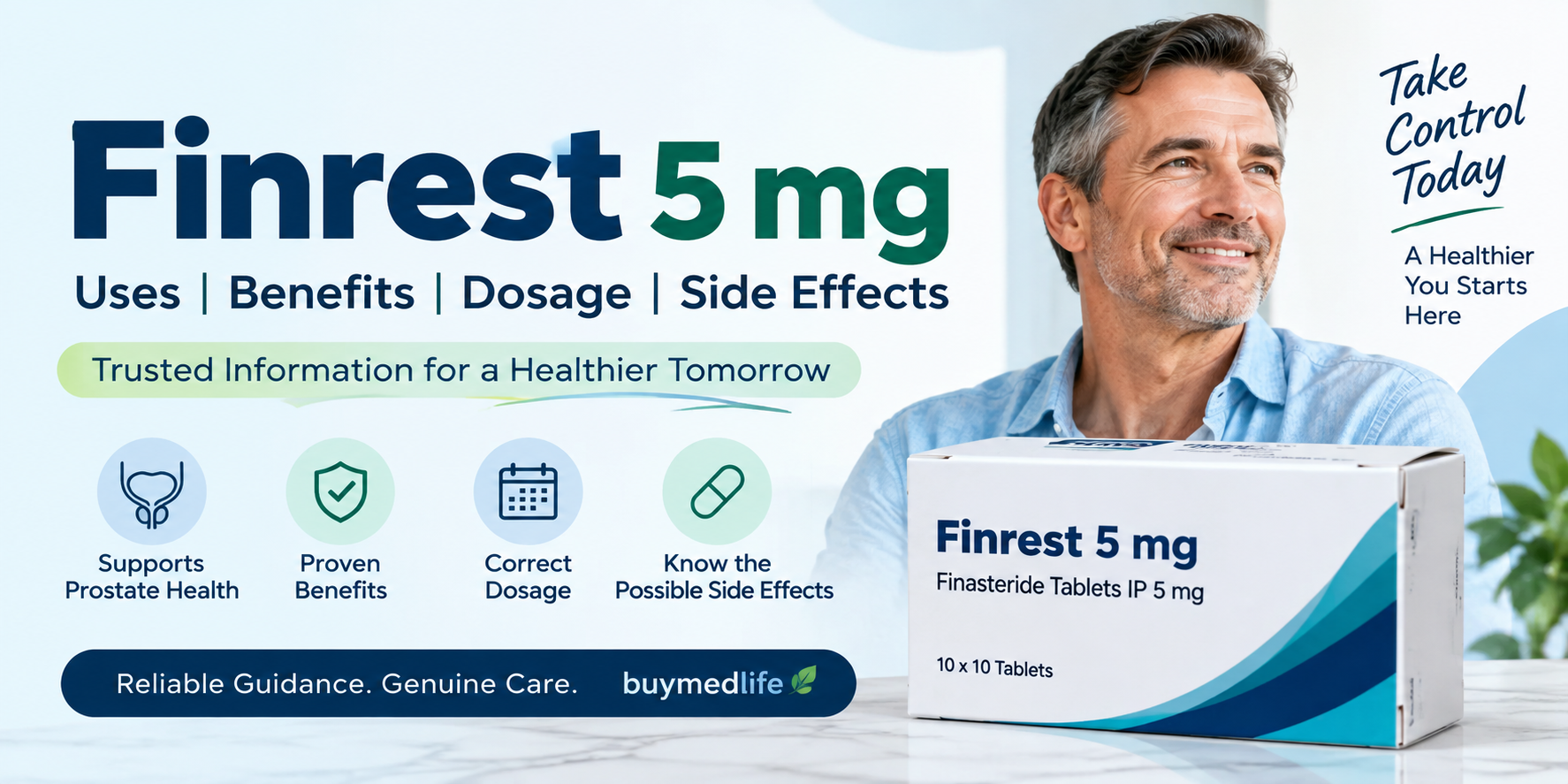
Hair loss can be frustrating, particularly when thinning becomes noticeable around the hairline or crown. Male pattern hair loss is one of the most common causes of progressive hair thinning in men and is often linked to hormonal and genetic factors. Finrest 5 mg contains finasteride, a medicine that may be prescribed to manage certain prostate-related conditions and, depending on the formulation and indication, finasteride is also used for male pattern hair loss at a lower dose.
This guide explains how finasteride works, its potential benefits, important precautions, and why choosing the appropriate strength matters.
What Is Finrest 5 mg?
Finrest 5 mg is a prescription medicine containing finasteride 5 mg. Finasteride belongs to a group of medicines called 5-alpha-reductase inhibitors. It works by reducing the conversion of testosterone into dihydrotestosterone (DHT).
DHT is an androgen that can contribute to the gradual miniaturisation of hair follicles in genetically susceptible men. As follicles become smaller, hairs may grow thinner and shorter over time.
Although finasteride is widely associated with hair-loss treatment, 5 mg is not the standard finasteride dose typically used specifically for male pattern hair loss. The 1 mg strength is generally the formulation used for that indication. Therefore, Finrest 5 mg should only be used for hair loss if specifically recommended by a qualified healthcare professional.
How Does Finrest Work for Hair Loss?
Male pattern hair loss is strongly influenced by DHT. Finasteride inhibits the enzyme responsible for converting testosterone into DHT, thereby lowering DHT levels.
With reduced DHT activity around susceptible hair follicles, the progression of follicle miniaturization may slow. Some men may experience improved hair density or reduced shedding over time.
However, finasteride does not provide an instant solution. Hair growth is a gradual biological process, and consistent treatment is generally required to maintain any benefits.
Potential Benefits of Finasteride
When appropriately prescribed, finasteride may offer several benefits for men experiencing androgenetic hair loss:
- May slow hair loss: Finasteride can help reduce the hormonal activity associated with follicle miniaturization.
- May support hair retention: Continued treatment may help preserve existing hair.
- May improve hair density: Some men experience regrowth or thicker-looking hair in areas affected by pattern hair loss.
- Targets a key hormonal pathway: Unlike products that simply condition the scalp, finasteride works by reducing DHT production.
Results vary considerably from person to person. Factors such as age, genetics, duration of hair loss, and treatment adherence can influence outcomes.
Finrest 5 mg vs Finrest 1 mg
One important distinction is the strength of the medication. Finrest 1 mg is commonly associated with the treatment of male pattern hair loss, while finasteride 5 mg is generally prescribed for benign prostatic hyperplasia (BPH).
This does not mean that taking more finasteride will necessarily produce better hair-growth results. A higher dose can expose the body to more medication without providing an appropriate additional benefit for hair loss.
For this reason, men considering finasteride for hair loss should discuss the correct strength with a healthcare professional rather than adjusting the dose independently.
How Long Does Finrest Take to Work?
Hair follicles need time to respond to changes in DHT activity. Consequently, noticeable improvement usually takes several months rather than a few days or weeks.
Some people may initially continue to experience shedding while treatment is becoming established. This does not necessarily mean that the medicine is ineffective.
If treatment is stopped, any benefits related to finasteride may gradually diminish, and hair loss can resume. Long-term treatment decisions should therefore be discussed with a healthcare professional.
Possible Side Effects
Like all prescription medicines, finasteride can cause side effects. Reported adverse effects may include:
- Reduced sexual desire
- Erectile difficulties
- Changes in ejaculation
- Breast tenderness or enlargement
- Mood changes in some individuals
Not everyone experiences these effects, and they may vary in severity. Persistent or troubling symptoms should be discussed with a doctor.
Seek medical advice promptly if you notice breast lumps, nipple discharge, significant mood changes, or other unusual symptoms.
Important Precautions
Finasteride is intended for specific patients and should be taken according to medical advice. Women who are pregnant or may become pregnant should not handle crushed or broken finasteride tablets because exposure to finasteride can pose a risk to a developing male fetus.
Before starting treatment, tell your healthcare professional about other medicines you take and any relevant medical conditions. Regular medical follow-up may also be recommended depending on why finasteride has been prescribed.
Buying Finrest Online
If you are considering purchasing Finrest or another finasteride product online, use a legitimate pharmacy and verify that the medicine comes from an authorised source. Avoid websites making unrealistic claims about guaranteed hair regrowth or offering prescription medicines without appropriate safeguards.
If you're researching products through BuyMedLife, compare the product information carefully and follow applicable prescription and pharmacy requirements. BuyMedLife
Final Thoughts
Finrest 5 mg contains finasteride, a medicine that reduces DHT production by inhibiting 5-alpha-reductase. While finasteride has an established role in managing male pattern hair loss, 5 mg is generally not the standard strength used specifically for this purpose. Finrest 1 mg is the commonly used finasteride strength for male pattern hair loss.
The most appropriate treatment depends on your individual circumstances. Before using Finrest 5 mg for hair loss, consult a qualified healthcare professional to determine whether finasteride is suitable and which strength is appropriate.