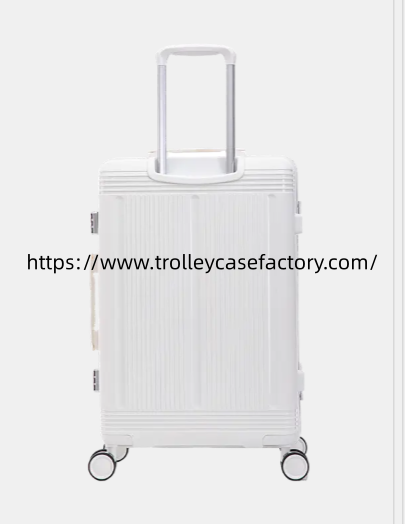
Silent Spinner Suitcase selection should involve a practical review of wheel construction, rolling behavior, shell structure, handle stability, interior organization, customization options, and manufacturing support. Buyers should consider how the product behaves during normal travel rather than relying only on photographs or short descriptions. For importers, wholesalers, retailers, and private-label brands, a structured evaluation can make product comparison and supplier communication easier.
Look Closely at Wheel Construction
The wheel system is one of the first areas buyers should inspect. Check the wheel material, diameter, bearing arrangement, axle, housing, and connection point.
Rotate each wheel by hand and look for uneven movement, stiffness, excessive play, or unusual resistance. Buyers can also push the case across a flat surface to observe whether the wheels maintain consistent movement.
The construction should be considered as a complete assembly. Wheel material alone does not determine rolling behavior because bearings, mounting structures, axle alignment, and surface conditions can also influence the result.
Test Several Floor Types
Travel cases are used across many environments, so testing on one smooth showroom floor may not provide enough information. Buyers can use tile, polished flooring, carpet, concrete, and slightly uneven surfaces during sample evaluation.
Move the case forward, backward, and sideways. Test turning, stopping, and changes in direction. Pay attention to vibration and rolling sound under each condition.
This approach helps buyers establish realistic expectations instead of relying on general marketing descriptions. A product that performs well indoors may produce different results on rough outdoor pavement.
Check Wheel Alignment
Wheel alignment can affect how easily a case changes direction. Buyers should inspect whether the four wheels remain properly positioned and whether the product tracks consistently during movement.
Push the case in a straight line and then turn it gradually. If one wheel appears to drag or move differently from the others, the assembly deserves further inspection.
The connection between the wheel housing and body should also be checked. Look for secure attachment, consistent installation, and suitable reinforcement around mounting points.
Examine the Handle System
The telescopic handle works together with the wheel assembly during pulling. Buyers should extend and retract it repeatedly while testing different height positions.
Check whether each locking point engages properly and whether the handle remains stable during movement. The top and side carrying handles should also be examined for stitching, attachment, reinforcement, and grip.
When preparing a private-label project, buyers should record handle dimensions and construction requirements in the product specification. This creates a clearer reference for sample approval and production.
Review the Shell and Interior
The outer structure should be evaluated together with the interior. Buyers can inspect shell material, thickness, surface finish, corners, lining, dividers, straps, pockets, and closure components.
Material selection can influence weight, appearance, flexibility, production cost, and overall construction. Buyers should therefore request exact material information rather than relying on general descriptions.
The interior should also be tested after packing representative items. Check whether compartments remain accessible and whether the layout provides practical organization during travel.
Pay Attention to Rolling Sound
Noise should be evaluated under controlled conditions. Buyers can compare several samples on the same floor using similar loads and movement patterns.
Record observations during straight rolling, turning, stopping, and transitions between surfaces. The purpose is to understand how the product behaves in realistic situations rather than making an absolute claim about sound levels.
Wheel tread, bearing design, axle fit, housing construction, and floor conditions may all contribute to the final result. Industry guidance similarly identifies wheel materials, bearings, and mounting structures as relevant factors when evaluating quieter rolling systems. (sectorpointhq.com)
Review Materials and Component Choices
Buyers should request detailed specifications for wheels, shell materials, handles, zippers, locks, lining, and other hardware.
Different component combinations can change product weight, appearance, cost, and handling characteristics. If a buyer has a particular target price or market position, discussing these trade-offs early can help the manufacturer propose suitable configurations.
Component consistency should also be considered for orders containing multiple colors or sizes. A clear specification sheet can help reduce confusion during production.
Confirm Customization Options
Private-label customers may request custom colors, logos, wheel designs, handles, lining, labels, packaging, or other product details.
Before confirming a project, buyers should ask which elements can be modified and whether changes affect minimum order quantities, tooling, sample costs, or production time.
trolleycasefactory can communicate with buyers regarding product specifications, sample development, branding requirements, and manufacturing arrangements. Providing artwork, dimensions, reference samples, and component preferences can make product development more efficient.
Make Sample Testing Part of Purchasing
A sample should be evaluated as a complete product. Buyers can prepare a checklist covering measurements, wheel movement, handle operation, shell finish, interior details, hardware, logo placement, labels, and packaging.
Testing should be documented whenever possible. Photographs, videos, measurement records, and written comments can provide useful references when discussing revisions with a manufacturer.
Once the sample is approved, the agreed specifications should be retained for future production. This can be particularly helpful when a buyer plans repeat orders or several related models.
Consider Manufacturing and Delivery Details
Product evaluation should also include practical purchasing factors. Buyers can ask about minimum order quantities, sample schedules, production capacity, inspection procedures, packaging, and estimated production timelines.
Packaging requirements may include inner protection, carton dimensions, labels, shipping marks, and packing quantities. These details should be confirmed before bulk packing begins.
For companies developing a new travel collection, a careful review of wheels, handles, materials, interior construction, samples, customization, packaging, and production planning can create a clearer sourcing process. trolleycasefactory provides product options and manufacturing support for buyers evaluating different travel designs and private-label requirements. The available products can be reviewed at https://www.trolleycasefactory.com/product/ before discussing specifications, samples, customization, and production arrangements.