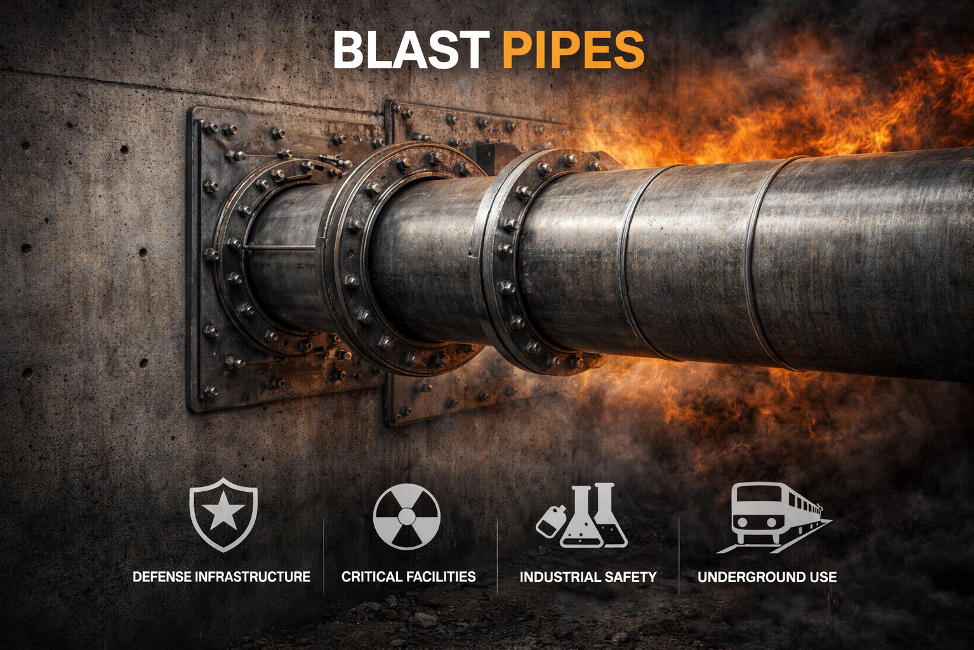
A defence command centre receives an emergency alert after an explosion occurs near its perimeter. As the blast wave travels towards the facility, the protected ventilation system immediately responds to keep fresh air flowing while preventing structural damage. One of the most important components in this process is the Blast Pipe, which protects ventilation openings, absorbs blast forces, and helps preserve the integrity of reinforced walls. For defence facilities, chemical plants, power stations, and underground shelters, this engineered solution is a critical part of modern blast protection.
What Is a Blast Pipe?
A Blast Pipe is a specially engineered section of reinforced ventilation piping designed to withstand high blast pressures. Unlike standard ductwork, it is built to protect wall penetrations where ventilation systems pass through blast-resistant structures.
During an explosion, ventilation openings can become weak points that allow pressure to damage surrounding walls. A blast pipe strengthens these areas by transferring and distributing the blast load safely, reducing the risk of structural failure.
Solutions like the Sigma Power Tech Blast Pipe are designed specifically for critical infrastructure where reliability, durability, and safety are essential.
How Does a Blast Pipe Work During an Explosion?
When an explosion occurs, a shock wave creates an intense pressure load that reaches buildings within milliseconds. Conventional ventilation pipes can deform or collapse, causing damage to both the duct system and the protective wall.
A properly designed blast pipe minimises this risk by:
- Protecting ventilation duct penetrations through reinforced blast-resistant walls.
- Distributing blast loads across its strengthened steel construction.
- Preventing excessive stress from concentrating around wall openings.
- Maintaining the structural integrity of critical infrastructure.
- Supporting continued ventilation once the blast pressure subsides.
A well-engineered blast pipe exhaust pathway also helps maintain controlled airflow while protecting connected ventilation equipment from excessive pressure.
Key Features of a Blast Pipe
Blast pipes are engineered for environments where ordinary ventilation systems cannot provide adequate protection.
Reinforced Steel Construction
Manufactured from high-strength steel, blast pipes are designed to withstand severe mechanical loads and sudden blast pressures without compromising structural performance.
Exceptional Pressure Resistance
Every quality Blast Resistant Pipe is engineered to resist significant overpressure while maintaining its shape and structural stability.
Long Service Life
Protective coatings improve resistance to corrosion, making blast pipes suitable for harsh industrial environments, coastal locations, and chemical processing facilities.
Precision Engineering
Accurate fabrication ensures seamless installation with blast walls, ventilation ducts, blast valves, and other protective components.
These engineering features contribute to dependable performance throughout the operational life of the facility.
Integration with Blast Protection Systems
A blast pipe is most effective when installed as part of a complete protected ventilation system rather than as an individual component.
Typical integrated systems include:
- Blast valves that automatically isolate incoming pressure waves.
- Gas-tight valves that prevent contaminated air from entering protected spaces.
- CBRN filtration systems that remove hazardous airborne contaminants.
- Reinforced ventilation ductwork for safe airflow.
Together, these components provide a comprehensive ventilation solution capable of protecting occupants and maintaining operational continuity during emergencies.
Where Are Blast Pipes Used?
Blast pipe systems are widely used wherever explosion protection is essential.
Defence and Military Facilities
Command centres, ammunition depots, secure bunkers, and military shelters require protected ventilation to remain operational during blast events.
Critical Infrastructure
Power plants, nuclear facilities, government buildings, and data centres depend on blast-resistant ventilation to safeguard essential operations.
Industrial Facilities
Chemical plants, oil and gas installations, petrochemical complexes, and refineries use blast pipes to reduce the impact of accidental explosions.
Underground Shelters and Bunkers
Protected shelters rely on blast-resistant ventilation systems to maintain breathable air while preventing damage from external pressure waves.
What Affects Blast Pipe Pricing?
Several engineering factors influence the overall cost of a blast pipe system.
These include:
- Steel grade and material quality.
- Wall thickness.
- Pipe diameter and length.
- Required blast pressure rating.
- Protective coatings.
- Certification and testing requirements.
- Project-specific customisation.
- Installation complexity.
Selecting the lowest-cost option may reduce upfront expenditure, but investing in properly engineered components generally provides better long-term safety and lower maintenance costs.
Choosing Reliable Blast Pipe Manufacturers in India
The effectiveness of a blast protection system depends heavily on the quality of its components and the expertise of the manufacturer.
When evaluating Blast Pipe Manufacturers in India, consider suppliers that provide:
- Proven experience in blast protection engineering.
- Custom manufacturing capabilities.
- Certified quality assurance processes.
- Technical design and installation support.
- Integration expertise with blast valves and filtration systems.
- Comprehensive after-sales service.
Choosing an experienced manufacturer ensures every component works together as part of a complete blast protection solution.
Common Mistakes to Avoid
Many facilities reduce the effectiveness of their blast protection systems by making avoidable selection mistakes.
Common issues include:
- Using standard industrial piping instead of certified blast-resistant systems.
- Ignoring reinforcement around ventilation wall penetrations.
- Choosing products based only on purchase price.
- Failing to integrate blast pipes with valves and filtration systems.
- Neglecting routine inspections and maintenance.
- Purchasing from suppliers without specialist blast engineering knowledge.
Avoiding these mistakes improves long-term reliability and enhances overall facility safety.
Build a Stronger Safety Strategy
Regularly review your facility's ventilation safety setup to ensure every protective component continues to perform as intended.
If your facility has expanded or operational risks have increased, now may be the right time to consider upgrading your blast protection systems with engineered blast-resistant ventilation solutions.
Engineers and project teams should also explore more safety insights to stay informed about evolving technologies and best practices for protected infrastructure.
Conclusion
A Blast Pipe is far more than a reinforced section of ventilation ductwork. It is a vital safety component that protects wall penetrations, distributes explosion loads, and preserves the structural integrity of blast-resistant facilities. When integrated with blast valves, gas-tight valves, and advanced filtration systems, it creates a complete protected ventilation solution capable of safeguarding people, equipment, and critical infrastructure.
Investing in a Sigma Power Tech Blast Pipe from trusted Blast Pipe Manufacturers in India helps strengthen resilience across defence installations, power plants, chemical facilities, underground shelters, and other high-risk environments. A properly engineered Blast Resistant Pipe is not simply a product—it is a long-term investment in reliable blast protection, operational continuity, and the safety of mission-critical facilities.