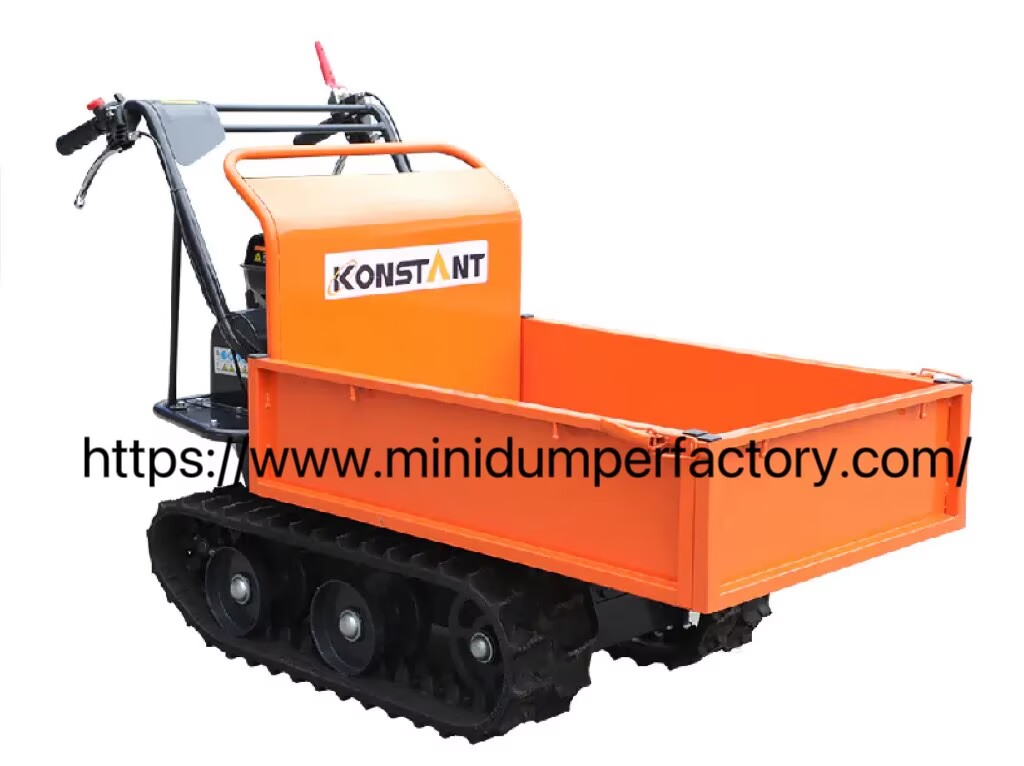
Power Barrow selection should start with the working conditions rather than a catalog image or quoted price. Importers, distributors, contractors, rental companies, landscapers, farmers, and construction businesses should evaluate the complete operating process before choosing equipment. Material type, payload, dimensions, terrain, drive arrangement, unloading method, maintenance access, customization, and shipment preparation can all influence whether a selected configuration fits the intended application.
Identify the Materials Being Transported
The material carried during daily work should be one of the first purchasing considerations.
Soil, gravel, sand, stones, bricks, concrete debris, mulch, plants, and agricultural materials can have different densities and handling characteristics.
Buyers should estimate the normal load rather than relying only on container size. Dense materials may reach the rated capacity before the container is full, while lighter materials may occupy more available space.
Preparing several realistic examples can help the technical team recommend an appropriate configuration.
Measure Access Areas Carefully
A compact machine should be able to reach the locations where customers intend to use it.
Before ordering, measure gates, entrances, pathways, corridors, ramps, turning areas, loading points, and unloading locations.
This is particularly relevant for landscaping, renovation, property maintenance, and construction projects where available space can change from one site to another.
A dimensional drawing can be useful during the purchasing process because it allows buyers to compare the proposed equipment with actual site measurements.
Match the Travel System to the Surface
Ground conditions should influence the choice of travel arrangement.
Concrete and asphalt provide different conditions from grass, gravel, loose soil, mud, or uneven construction ground.
Tracked configurations can be considered where greater ground contact is useful, while wheeled versions may suit prepared surfaces and applications where conventional wheel movement is preferred.
Buyers should describe the actual working environment to the factory instead of assuming one configuration will suit every application.
Compare Payload With Daily Workload
Rated capacity should be considered together with the frequency of transport.
A customer moving small quantities occasionally may have different requirements from a contractor completing repeated trips throughout the working day.
Buyers should estimate the number of trips, average load, transport distance, loading method, and unloading frequency.
This information can help determine whether a particular configuration is practical for the intended workload.
Review the Engine or Motor Arrangement
The available drive source should correspond with the operating environment.
Battery-powered models may be considered for indoor projects, residential areas, landscaping operations, and locations where charging access is available.
Gasoline-engine versions can be considered for outdoor projects, remote locations, and applications where refueling is convenient.
Buyers should compare operating duration, charging or refueling arrangements, maintenance requirements, local conditions, and customer preferences before selecting a configuration.
minidumperfactory currently offers both battery-powered and gasoline-engine categories, providing importers with different configurations to consider for different applications.
Examine the Unloading Process
Loading is only one part of material handling. The unloading process should also be considered before purchasing.
Buyers can review standard tipping, hydraulic tipping, high-lift functions, bucket arrangements, and other available configurations according to the intended work.
Think about where materials need to be discharged and how much clearance is available around the unloading area.
For repeated construction or landscaping work, the unloading method can influence the overall workflow and operator effort.
Check Operator Controls
Controls should be reviewed from the perspective of daily use.
Buyers can ask about steering, forward and reverse movement, speed control, braking, tipping controls, and emergency functions.
For rental businesses and distributors, the control layout is also worth considering because customers may have different levels of operating experience.
A sample evaluation allows buyers to assess whether the controls are understandable and whether the machine responds as expected under normal operating conditions.
Inspect Maintenance Access
Maintenance requirements should be considered before an order is confirmed.
Ask where operators can access filters, battery compartments, hydraulic connections, lubrication points, belts, electrical components, and other service areas.
Easy access can make routine checks more convenient for operators and technicians.
Buyers should also request maintenance instructions so that local dealers can provide customers with appropriate information about inspections and scheduled service.
Review the Component List
A detailed component list can help buyers understand what they are purchasing.
Important areas may include the engine or motor, transmission, hydraulic system, battery, controller, frame, tracks, wheels, controls, and electrical components.
Ask whether replacement components can be supplied separately and whether commonly serviced items can be included with the shipment.
This information is particularly useful for distributors that plan to maintain a local inventory of service parts.
Discuss Customization Requirements
Distributors may need equipment adapted to their own market identity.
Possible requirements include body color, logo placement, nameplates, manuals, accessories, and packaging details.
minidumperfactory offers customization covering product colors, logos, nameplates, instruction manuals, and accessories. The company also states that customized products can be developed according to customer drawings or samples.
Buyers should provide artwork, measurements, language requirements, and other specifications before production starts.
Arrange Sample Testing
A sample can provide information that photographs and specifications cannot show.
During evaluation, buyers can check dimensions, frame construction, controls, wiring, hydraulic connections, tipping operation, travel movement, braking, and general assembly.
If the equipment will be used on a particular surface or with a particular material, the test should reflect those conditions when practical.
A written inspection checklist can then be reused when future shipments are received.
Prepare for International Delivery
International purchasing requires attention to packaging and documentation.
Before shipment, buyers should confirm manuals, model information, packing lists, labels, shipping marks, and any other required documents.
Packaging should correspond with the transportation method and destination. Importers with special carton markings, multilingual instructions, or private-label requirements should communicate these details before production is completed.
Clear preparation can help reduce confusion during customs clearance, warehouse handling, and local distribution.
Evaluate Future Purchasing Needs
A purchasing decision should also consider what may be required later.
Distributors may eventually need different payload categories, additional accessories, battery-powered configurations, gasoline-engine versions, or customized specifications.
A factory capable of discussing several configurations can be useful when a buyer's product range develops over time.
minidumperfactory provides different equipment configurations for construction, landscaping, agriculture, and related material-handling applications, giving buyers several options to evaluate according to their market requirements.
Before confirming an order, buyers can create a checklist covering material type, payload, dimensions, access conditions, terrain, drive arrangement, unloading method, controls, maintenance, components, customization, testing, spare parts, packaging, documentation, and delivery. Reviewing these points together provides a more practical purchasing framework than comparing quotations alone. Buyers interested in different configurations and customized equipment can visit the official minidumperfactory website at https://www.minidumperfactory.com/ to review available products and discuss requirements for construction, landscaping, agricultural, and material-transport applications.