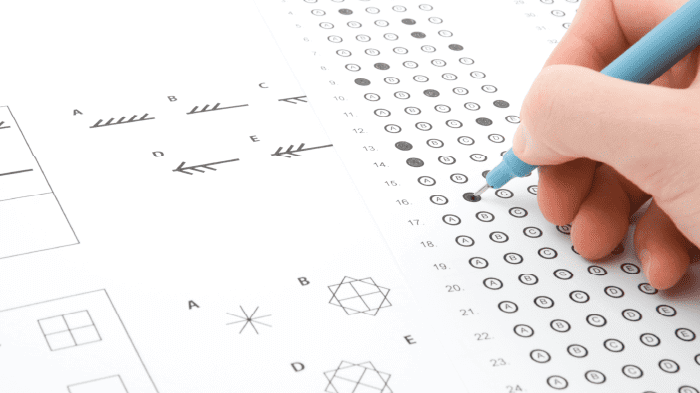
Online IQ tests have become an increasingly popular way to explore cognitive abilities. They offer a convenient alternative to traditional testing because users can complete an assessment from home using a computer, tablet, or smartphone. Within a short period, an online test may provide a score that appears to indicate a person's level of intelligence.
However, a numerical score can raise more questions than answers. How reliable is the result? Why might two tests produce different scores? Can factors such as sleep, stress, education, or familiarity with puzzles affect performance?
These questions lead to an important consideration: how accurate are online IQ tests, and what factors influence the scores they produce?
The answer depends heavily on the quality of the test and the circumstances in which it is completed. Some online assessments may provide a useful indication of performance on particular reasoning tasks, while others are designed mainly for entertainment. Understanding the factors behind online IQ scores can help users interpret their results more realistically.
What Is an IQ Test?
An IQ test is designed to measure specific cognitive abilities through structured questions and tasks. Depending on the assessment, these tasks may evaluate logical reasoning, numerical reasoning, verbal comprehension, working memory, processing speed, and visual-spatial skills.
Standardized IQ scores are generally interpreted by comparing an individual's performance with that of an appropriate reference population. On many commonly used scales, the average score is set at 100.
However, an IQ score does not measure every aspect of intelligence. Creativity, emotional intelligence, motivation, social skills, practical judgment, communication, and specialized knowledge may not be fully represented by a conventional IQ test.
This is important because an online IQ score should not be viewed as a complete description of a person's intellectual abilities.
How Accurate Are Online IQ Tests?
When considering how accurate are online iq tests it is important to remember that online assessments vary considerably.
Some tests are developed using established principles of cognitive testing and may provide useful estimates of performance. Others are short quizzes designed primarily for entertainment and may not have sufficient scientific evidence behind their scoring systems.
Accuracy depends on several factors, including reliability, validity, standardization, question quality, scoring methodology, and the quality of the normative data used.
A test may be consistent without accurately measuring general intelligence. Likewise, a test may contain challenging questions but still fail to produce a scientifically meaningful IQ score if its scoring system is poorly designed.
For this reason, users should evaluate the test itself rather than assuming that every online IQ score has the same level of accuracy.
Test Quality and Design
The design of an IQ test has a major influence on its reliability.
A well-designed assessment should contain questions that appropriately measure the cognitive abilities it claims to assess. Questions should have suitable difficulty levels and should be tested to determine whether they function as intended.
An online test that consists of only a few simple puzzles may provide an entertaining experience, but it has limited ability to measure a broad range of cognitive skills.
More comprehensive assessments typically use multiple types of tasks to develop a broader cognitive profile.
When evaluating an online IQ test, look for information about who developed it, how the questions were selected, and whether the assessment has been tested for reliability and validity.
Standardization and Normative Data
Standardization is another critical factor.
A meaningful IQ score depends on comparison with a reference population. Normative data help determine how an individual's performance compares with other people.
Professional intelligence assessments generally use carefully developed normative samples and standardized scoring procedures.
Online tests vary widely in this area. Some may explain their norm groups and statistical methods, while others provide little information.
If a website does not explain where its IQ scale comes from, the score should be treated cautiously.
A score of 120 from one online test is not necessarily directly equivalent to a score of 120 from another.
Testing Environment
The environment in which an online IQ test is taken can significantly influence performance.
Most online assessments are unsupervised. A person may take the test in a bedroom, office, classroom, or public environment.
Noise, interruptions, notifications, uncomfortable surroundings, and other distractions can interfere with concentration.
A quiet testing environment may allow someone to focus more effectively and produce a better result.
Technical conditions can also matter. A small smartphone screen may make visual questions more difficult to interpret than a larger computer display.
These factors can introduce variation that has nothing to do with underlying cognitive ability.
Sleep and Fatigue
Physical condition can also influence test performance.
When people are tired, their concentration and processing efficiency may be reduced. A person taking an online IQ test after insufficient sleep may perform differently from the same person after adequate rest.
Fatigue can make it harder to maintain attention, process instructions, and solve problems efficiently.
For this reason, anyone who wants the most consistent online result should take the test when they are reasonably rested and alert.
Stress and Anxiety
Emotional state can affect cognitive performance as well.
Stress and anxiety can make it harder to concentrate on complex problems. Someone who feels pressured by a time limit may rush through questions or have difficulty maintaining focus.
Online tests may be particularly affected by this because users often take them without guidance from a professional.
A single low score during a stressful period should therefore not automatically be interpreted as evidence of reduced cognitive ability.
Education and Prior Knowledge
Education can influence performance on some types of cognitive tests.
Although many IQ questions are designed to reduce dependence on formal knowledge, certain tasks can still benefit from familiarity with numbers, language, vocabulary, symbols, or problem-solving conventions.
People with different educational backgrounds may approach particular questions differently.
This does not mean that education determines intelligence. It simply highlights the importance of considering a person's background when interpreting test results.
Language and Cultural Factors
Language can also affect performance.
A person completing an online test in a language that is not their strongest language may spend additional mental effort interpreting the questions.
Cultural familiarity can also influence how people understand particular examples or instructions.
Nonverbal reasoning tests can reduce some of these effects, but no assessment is completely independent of context.
A reliable assessment should therefore use appropriate language and norms for the population being tested.
Motivation and Effort
Motivation can have a significant influence on online test performance.
Someone who is highly interested in their result may spend more time carefully analyzing each problem. Another person may rush through the test simply to see the final score.
Because online tests are usually unsupervised, the level of effort can vary considerably.
A score from a test taken casually should not necessarily be compared with a score from a test completed with maximum concentration and effort.
Familiarity and Practice
Practice is another important factor.
People who regularly complete IQ puzzles may become more familiar with common patterns and problem types. This can make them faster and more confident when taking similar assessments.
For example, someone who has practiced numerical sequences may quickly recognize common relationships between numbers. Someone experienced with visual matrices may know what types of patterns to look for.
This practice effect can raise test performance without necessarily representing an equivalent increase in general intelligence.
Repeatedly taking the same test can therefore make the score increasingly influenced by familiarity.
Time Limits
Many IQ-style tests use time limits.
Time pressure can affect how people approach questions. Someone may solve a problem correctly but run out of time before submitting an answer.
Different tests may use different time limits, making their scores difficult to compare.
Some individuals also perform better under time pressure than others.
Therefore, a score reflects not only reasoning ability but also performance within the particular time constraints of the assessment.
Device and Technical Factors
Online testing introduces technical considerations that traditional testing may avoid.
Internet interruptions, browser problems, screen resolution, input delays, and device differences can affect the experience.
Visual questions may be easier to interpret on a large screen than on a smartphone. Touchscreen interaction may also feel different from using a mouse or keyboard.
These issues may seem minor, but they can influence performance when a test is timed.
Scoring Methodology
The way a test converts answers into an IQ score is extremely important.
Two websites can use similar questions but produce different scores because their scoring formulas and reference groups differ.
A raw score based simply on the number of correct answers is not necessarily equivalent to a standardized IQ score.
Users should therefore look for information about how the test calculates its results.
A transparent scoring system makes it easier to understand what a score represents.
Why One Test Should Not Define Your Intelligence
An important principle when considering how accurate are online IQ tests is that no single online result should be treated as a complete definition of intelligence.
Scores can be affected by temporary conditions and test-specific factors.
Someone might receive a higher score on one day and a lower score on another. This does not necessarily indicate a meaningful change in underlying cognitive ability.
Similarly, two different assessments may produce different results because they emphasize different skills.
The most sensible approach is to interpret online scores as estimates and consider the broader context.
How to Get a More Reliable Online IQ Score
If you decide to take an online IQ test, several steps can make the experience more consistent.
Choose a test that provides information about its methodology and development. Take it in a quiet environment and make sure you are rested.
Read the instructions carefully and avoid distractions. Do not use external assistance unless the test explicitly allows it.
If you want to compare results over time, use comparable assessments rather than repeatedly taking the exact same test.
Most importantly, treat the result as an estimate rather than an absolute measurement.
When Professional Testing Is More Appropriate
A professional cognitive assessment may be more appropriate when an accurate evaluation is needed for an important purpose.
Professional assessments are generally standardized and administered according to established procedures. They can evaluate multiple cognitive domains and provide more detailed information about strengths and weaknesses.
A qualified professional can also interpret the results within the appropriate educational or psychological context.
An online test can be convenient, but it does not automatically provide the same level of information or reliability.
So, How Accurate Are Online IQ Tests?
The question of how accurate are online IQ tests depends on many factors.
The quality of the test, standardization, normative data, scoring methodology, testing environment, sleep, stress, motivation, education, language, practice, time limits, and technical conditions can all influence results.
A carefully designed online assessment may provide a useful estimate of certain cognitive abilities. However, an entertainment-focused quiz may have little scientific value.
This means that users should not focus solely on the number displayed at the end of the test. They should also consider how the test was developed and what its score actually represents.
Final Thoughts
Online IQ tests can be useful tools for exploring reasoning skills and challenging yourself with cognitive puzzles. Their accessibility makes them appealing, but convenience should not be confused with scientific accuracy.
When considering how accurate are online IQ tests, remember that test quality and testing conditions matter greatly. Different assessments can produce different results because they measure different abilities, use different scoring systems, and rely on different norms.
Sleep, stress, motivation, education, language, practice, time limits, and technology can also affect performance.
For casual curiosity, an online IQ test can be an enjoyable way to explore cognitive challenges. For formal evaluation or important decisions, a standardized professional assessment is generally a more reliable choice.
Ultimately, an IQ score represents performance on a particular assessment under particular conditions. It is useful information when interpreted appropriately, but it should never be treated as the complete measure of a person's intelligence, potential, or worth.