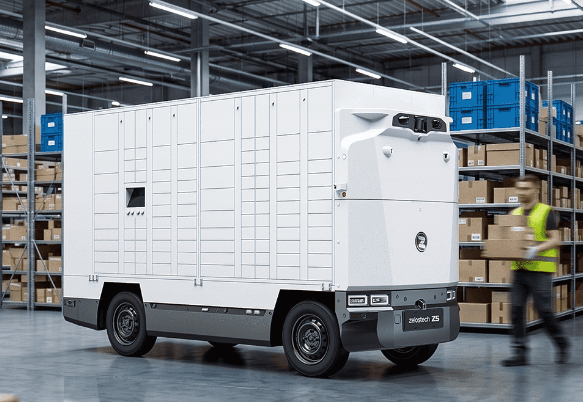
Autonomous vehicles are reshaping modern logistics by improving delivery efficiency, reducing repetitive manual work, and creating smarter transportation solutions for urban, industrial, and specialized logistics operations.
The Rise of Autonomous Vehicles in Logistics
The rapid growth of e-commerce and on-demand delivery has created new challenges for logistics companies. Businesses need faster transportation, reliable delivery schedules, and better operational efficiency. Autonomous vehicles offer a practical solution by automating repetitive transportation tasks and supporting logistics operations with less dependence on traditional manual driving. According to Zelostech, logistics is one of the most promising areas for autonomous driving because many routes and transportation tasks can be structured and repeatedly optimized.
How Autonomous Vehicles Improve Efficiency
One of the main advantages of autonomous vehicles is their ability to support consistent transportation operations. In logistics environments, vehicles may repeatedly move parcels, products, components, or supplies between fixed locations. Automation can help reduce delays and improve the utilization of transportation resources. Zelostech develops RoboVans for applications including urban delivery, warehouse transfers, industrial logistics, retail replenishment, and cold-chain distribution, demonstrating how autonomous technology can be adapted to different operational requirements.
Advanced Technology Behind Autonomous Vehicles
Modern autonomous vehicles rely on multiple technologies working together. Zelostech combines LiDAR, radar, cameras, and ultrasonic sensors to provide 360-degree environmental perception. Artificial intelligence, onboard computing, decision-making algorithms, and vehicle control systems then help the vehicle understand its surroundings and select appropriate actions. This integrated approach allows autonomous vehicles to operate within defined environments while supporting reliable transportation and logistics processes.
Applications Across Different Industries
The potential applications of autonomous vehicles extend far beyond ordinary parcel delivery. In urban logistics, they can support frequent deliveries and retail replenishment. In industrial environments, autonomous vehicles can transport materials between factories, warehouses, and production areas. Other applications include pharmaceutical delivery, agricultural transportation, port logistics, healthcare logistics, and temperature-controlled distribution. These diverse applications show that autonomous vehicles can become an important part of modern supply chain infrastructure.
Autonomous Vehicles and the Future of Smart Logistics
As logistics networks become more complex, autonomous vehicles can help companies build flexible and scalable transportation systems. The future of autonomous logistics is not simply about removing drivers from vehicles. It also involves fleet management, remote supervision, route planning, charging, maintenance, and integration with existing logistics workflows. Zelostech's RoboVan platform reflects this broader approach by combining autonomous driving technology with different vehicle configurations for specific logistics requirements.
Building a Smarter Transportation Network
The development of autonomous vehicles is creating new opportunities for businesses seeking safer, more efficient, and more sustainable logistics solutions. As technology, infrastructure, and regulations continue to develop, autonomous transportation can move from individual pilot projects toward larger commercial operations. With practical applications already emerging across urban, industrial, warehouse, and specialized logistics, autonomous vehicles are becoming an important technology for the next generation of intelligent logistics.