Finding more distance off the tee doesn't always mean buying the newest driver or completely rebuilding your golf swing. Sometimes, one of the biggest improvements can come from finding the right driver head and shaft combination for the way you actually swing.
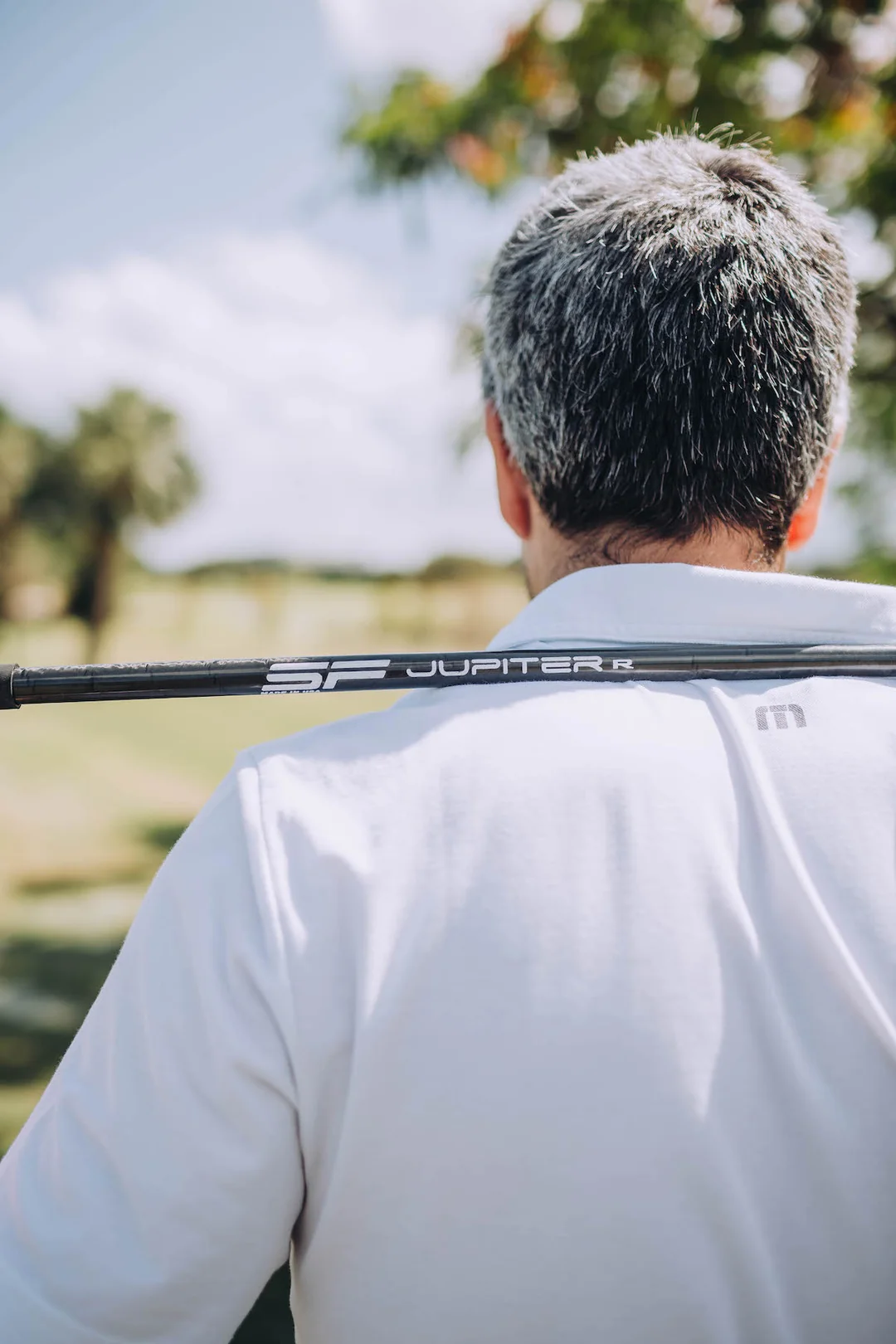
That's exactly what one 68-year-old Steadfast golfer experienced after pairing his Steadfast Jupiter One Driver Shaft with a Callaway RX 9.0° driver head.
The result was impressive. He reported drives of around 250 yards, consistently found the fairway, and even drove a par-4 green from the senior tees for the first time all year.
But the most interesting part of his experience wasn't simply the extra confidence or distance.
It showed just how important the relationship between your golf driver shaft, driver head, loft, weight and swing can be.
A 250-Yard Drive at 68 Years Old
Golf equipment performance is often discussed using launch-monitor numbers, swing speeds and controlled testing.
This story happened where golfers really care about performance: on the golf course.
After installing his Jupiter One Driver Shaft in the Callaway RX 9.0° head, the golfer reported hitting drives approximately 250 yards down the fairway.
Then came the shot that made the round memorable.
On the second hole, a par 4 from the senior tees, he hit his drive straight down the middle. As he approached the green, he initially started looking around for his ball.
His playing partner found it somewhere unexpected.
It was on the green.
It was the first time all year that he had driven that particular green.
More importantly, this wasn't just one perfect swing. On the remaining holes where he used his driver, he reported finishing either in the fairway or barely off it.
For golfers searching for the best driver shaft for distance and accuracy, that combination of usable distance and tighter dispersion is often more valuable than chasing maximum distance alone.
Why Your Driver Head and Shaft Combination Matters
A golf driver should be thought of as a complete system rather than a collection of individual components.
Your setup includes the driver head, golf shaft, shaft flex, shaft weight, loft, club length, adapter settings and grip. Then you have the most important variable of all—the golfer swinging it.
Change one component and the way the club feels and delivers the head to the golf ball can change.
That's why asking, "What is the best driver shaft?" doesn't necessarily have one universal answer.
A more useful question is:
What driver shaft and head combination works best for my swing?
The ideal setup for one golfer may feel completely different for another, even if their swing speeds are similar.
Why Can the Same Driver Shaft Perform Differently With Another Head?
Installing the same golf driver shaft into two different driver heads doesn't guarantee identical results.
Several factors can influence how the complete club performs.
Driver Loft Can Change Launch Conditions
One noticeable part of this golfer's setup was the 9.0° loft.
Driver loft can influence launch conditions, but the ideal loft depends on your swing speed, attack angle, impact position and how you deliver the clubhead into the ball.
Less loft isn't automatically better for distance, and more loft isn't automatically more forgiving.
The goal is to find a driver shaft and loft combination that produces efficient launch conditions for your swing.
Head Weight and Balance Affect Feel
Different driver heads have different weight characteristics and centers of gravity.
Once the head and shaft are connected, you aren't feeling the shaft by itself. You're feeling the complete golf club.
That's why the same driver shaft can feel easier to control in one head and more difficult to time in another.
For golfers struggling with consistency, testing a different compatible head can sometimes reveal whether the issue is really the shaft or simply the overall combination.
Impact Location Still Matters
Even the best golf shaft cannot compensate for every off-center strike.
Where the ball contacts the driver face affects ball speed, spin, launch and direction.
A properly matched setup may help a golfer deliver the club more consistently, potentially leading to better strikes and more predictable results.
Choosing the Right Driver Shaft Flex
The driver head is only one part of the equation.
Choosing the correct driver shaft flex and weight is also important.
The Steadfast Jupiter One Driver Shaft is available in four flex options:
Senior Flex: 70–89 mph swing speed, 50g
Regular Flex: 90–99 mph swing speed, 55g
Stiff Flex: 100–109 mph swing speed, 58g
X-Stiff Flex: 110–129 mph swing speed, 61g
Each has a listed play length of 45.5 inches.
These swing-speed ranges can provide a useful starting point when selecting a golf shaft flex, but swing speed shouldn't be the only consideration.
Tempo, transition, launch tendencies, preferred feel and overall consistency can also affect which shaft works best.
This becomes especially relevant when searching for the best driver shaft for seniors, because two senior golfers of the same age can have completely different swing speeds and tempos.
Distance Is Great, but Fairway Accuracy Matters Too
A 250-yard drive at age 68 is certainly worth talking about.
But perhaps the more important part of this golfer's experience was how consistently his drives stayed in play.
Distance receives plenty of attention in golf because it's easy to measure. But another 10 or 15 yards isn't particularly helpful when the ball ends up behind a tree or deep in the rough.
For many recreational and senior golfers, better driver performance means finding a balance between:
Usable distance, tighter dispersion and predictable ball flight.
The Jupiter One was designed with torque and head-to-shaft weight balance as key considerations, with the goal of promoting stability, controlled spin and more consistent dispersion.
That makes driver shaft accuracy just as important a consideration as raw distance.
Can an Older Driver Head Still Perform?
Another interesting part of this story is the age of the driver head.
The golfer described the Callaway RX as a roughly 15-year-old driver head—and he was happy to keep playing it.
That's an important reminder.
A newer driver can offer updated technology, but newer doesn't automatically mean better for every golfer.
If you already own a driver head that looks comfortable at address, produces solid contact and gives you confidence, pairing it with a new driver shaft that better matches your current swing may be worth testing before replacing the entire club.
This can be especially relevant for golfers in their 60s and 70s.
Swing speed, tempo and transition can change over time. The driver head you have trusted for years may still perform well when paired with a more suitable senior golf shaft.
What If a New Driver Shaft Isn't Working?
If you install a new aftermarket driver shaft and don't immediately get the results you expected, don't automatically assume the shaft is wrong.
Evaluate the complete setup.
Ask yourself whether the shaft flex matches your current swing speed, whether the loft works for your launch, whether you're striking the center of the face consistently and whether the adapter settings have changed.
You should also consider the overall club weight and whether another compatible driver head might produce better results.
If possible, use a launch monitor or work with a professional club fitter.
Compare ball speed, launch angle, spin rate, carry distance and dispersion instead of judging the shaft from only a few swings.
The goal isn't to build the newest driver.
The goal is to build the best driver setup for your swing.
Could a Lighter Driver Shaft Help Senior Golfers?
The golfer also wondered whether a Jupiter Lite Regular shaft could work better with another driver head he owns.
That's a question worth testing rather than guessing.
A lightweight driver shaft may make the club easier for some golfers to swing and can potentially help certain players generate speed more comfortably.
However, lighter isn't automatically better.
Your swing speed, tempo, transition and preferred feel still matter.
For golfers considering a lightweight golf shaft for seniors, the goal should be finding a weight and flex that makes the driver easier to control without sacrificing stability.
What This 68-Year-Old Golfer's Experience Tells Us
The headline is certainly impressive: approximately 250-yard drives at age 68 and a par-4 green reached from the senior tees.
But there's a more useful takeaway.
This experience demonstrates why golfers should treat the driver shaft and clubhead as a complete combination rather than focusing on one component alone.
Once this golfer found a combination that suited his game, he reported around 250 yards off the tee, a drive straight down the middle onto a par-4 green, and fairway or near-fairway positions on his other driver holes.
Those are individual results, so another golfer shouldn't expect exactly the same distance or ball flight.
But the principle applies broadly:
Don't choose golf equipment simply because it's newer. Find the driver head and shaft combination that fits your swing and gives you results you can trust.
Find the Right Driver Shaft for Your Game
If your driver has become inconsistent, you're losing distance, or you're wondering whether your current driver head could perform better, don't assume you need an entirely new club.
Start by evaluating your driver shaft, shaft flex, weight, loft and driver head combination.
The Steadfast Jupiter One Driver Shaft is available in Senior, Regular, Stiff and X-Stiff flex options, with adapter options for popular driver manufacturers including Callaway, TaylorMade, Titleist, Ping and Cobra.
If you're unsure where to begin, the Steadfast Shaft Selector Quiz can provide a starting recommendation based on your swing.
Because sometimes the best driver shaft isn't about chasing the newest equipment.
It's about finally finding the combination that works for you.