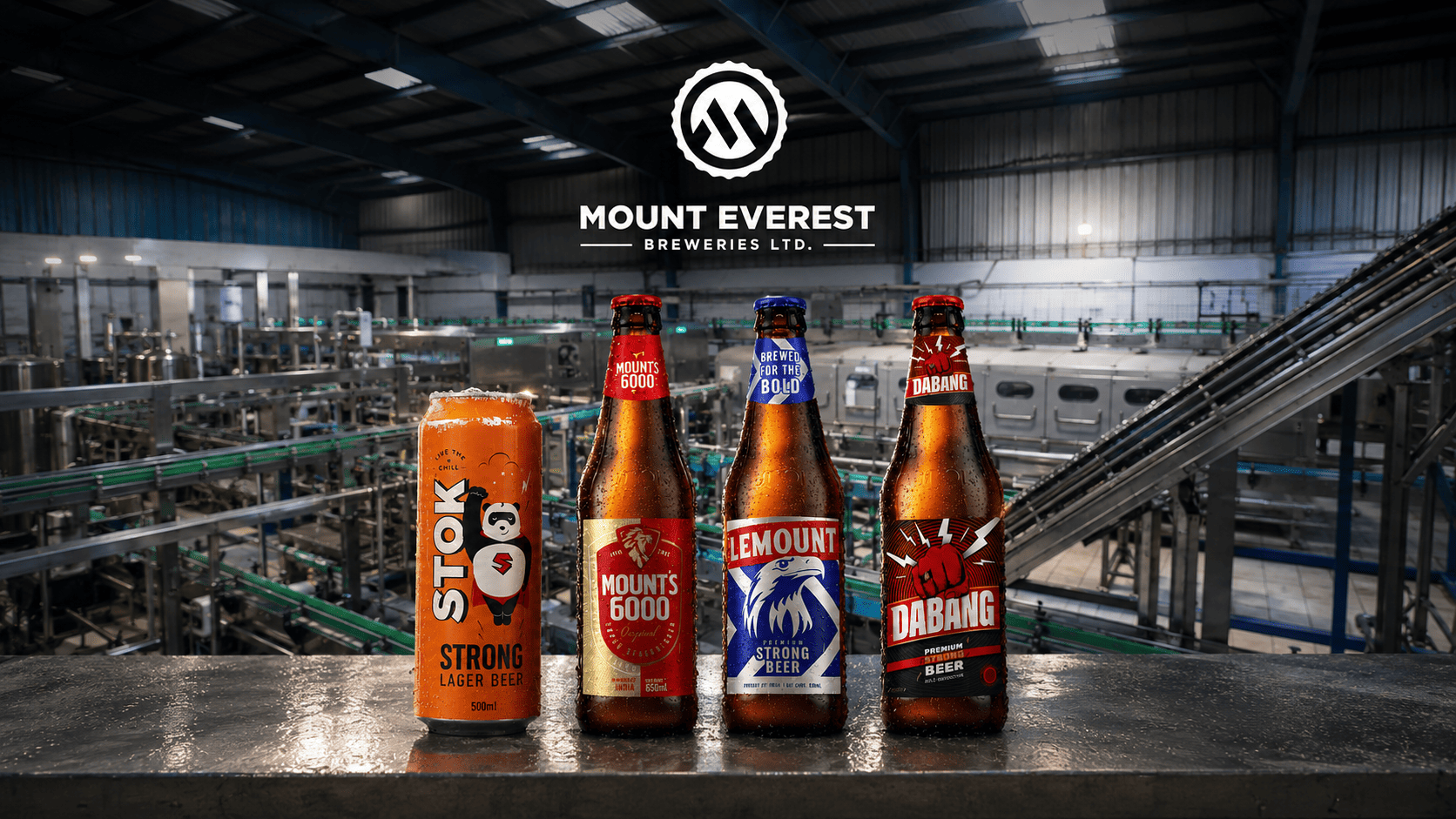
India's beer industry is expanding steadily, but operating a brewery in the country involves much more than producing and selling beer. Unlike many consumer markets, India's alcohol industry is largely governed at the state level. Excise duties, licensing procedures, pricing systems, and distribution regulations can vary considerably from one state to another. This makes regional planning an important part of building a successful Beer Company in India.
The Indian beer market was valued at around INR 477 billion in 2025 and is expected to maintain growth through the coming years. However, this expansion is not uniform across every region. Consumer preferences, taxation, infrastructure, and regulatory frameworks all influence how breweries enter and develop individual markets.
How India's Beer Industry Is Structured
India has a concentrated beer market in which a small number of large companies account for a substantial share of overall sales. More than ten companies are involved in commercial beer production, while major macro-breweries benefit from established manufacturing and distribution networks.
The industry's structure is closely connected to the economics of beer. Since beer is relatively heavy compared with its retail value, transportation over long distances can increase costs. State-specific excise regulations add another layer of complexity. Consequently, larger breweries often rely on multiple production locations, partnerships, or contract manufacturing arrangements to serve different markets efficiently.
What Determines a Brewery's Market Share?
There is no single way to measure the position of a beer brand in India. Volume share reflects the number of units sold and often favours mainstream beer products. Value share can provide a different picture because premium products may generate more revenue per unit.
Regional performance is another important measurement. A company can have a strong national presence while remaining relatively small in particular states. For breweries planning expansion, understanding individual state markets can therefore be more useful than looking only at nationwide figures.
How Can a Beer Company Enter a New State?
Launching beer in a new state usually requires careful regulatory and commercial planning. A brewery must first understand the state's excise framework and determine the applicable requirements for manufacturing, brand registration, pricing, and distribution.
Production capacity is another major consideration. Companies can establish their own brewery, acquire an existing facility, or work with a licensed contract brewer. Contract manufacturing can offer an efficient way to test consumer demand before investing in a dedicated production facility.
Distribution also needs to be planned around the state's alcohol sales system. Warehousing, authorised distributors, retail channels, and applicable government procedures can all influence the speed and cost of market entry.
Why State Excise Policies Matter
Government policies have a direct influence on how breweries operate. Changes in taxation, licensing conditions, registration fees, or distribution rules can alter the economics of selling beer within a particular state.
Recent policy developments in large markets such as Uttar Pradesh have attracted attention from the brewing industry because regulatory clarity can influence investment decisions. Karnataka's move toward an alcohol-content-based taxation approach is another example of how state-level policy can affect the relative economics of beer.
For breweries, monitoring policy changes is therefore an ongoing business requirement rather than a one-time exercise.
Are Smaller Indian Cities Creating New Beer Opportunities?
India's beer market is no longer limited to its largest metropolitan areas. Rising consumer interest, changing lifestyles, developing hospitality sectors, and comparatively lower operating costs are creating opportunities in smaller cities.
Craft beer has also contributed to this expansion. Microbreweries and brewpubs can experiment with products designed around local preferences and ingredients. Flavours involving ingredients such as mango, kokum, cardamom, millet, and tamarind demonstrate how Indian brewing is increasingly exploring regional characteristics.
Tier-2 cities can provide lower rental and operating costs than major metropolitan markets. This can make them attractive locations for businesses seeking to establish a local presence without taking on the costs associated with larger urban centres.
What Makes Craft Beer Different?
Craft brewing generally focuses on smaller production volumes, distinctive recipes, and direct consumer experiences. Brewpubs can combine beer production with hospitality, allowing customers to experience products at the point of production.
This model can be particularly relevant in emerging urban markets where consumers are looking for alternatives to conventional mass-market products. At the same time, craft breweries must still comply with state-specific licensing, food safety, environmental, and alcohol-service requirements.
What Licences Are Required to Produce Beer in India?
Licensing requirements depend on the state and the nature of the operation. A commercial brewery may need a state excise manufacturing licence, FSSAI registration or licence, pollution-control approvals, factory-related registrations, and product or label registrations.
Brewpubs can have additional requirements because they combine manufacturing with on-premise alcohol service. Environmental permissions, water availability, wastewater treatment, and local approvals may also influence the establishment timeline.
Because alcohol regulations differ between jurisdictions, a licence obtained in one state generally does not automatically permit a company to manufacture or sell beer in another state.
The Future of India's Brewing Industry
The long-term development of India's beer industry will depend on more than rising consumer demand. Regulatory changes, production capacity, distribution infrastructure, premiumisation, and the expansion of smaller-city markets will all influence future growth.
For a Beer Company in India, understanding regional differences can be just as important as developing a strong product. Companies that study local regulations, consumer behaviour, pricing conditions, and distribution structures can build expansion plans around the realities of individual markets.
As India's beer consumption continues to develop, the country's state-by-state market structure will remain a defining characteristic of the brewing business.