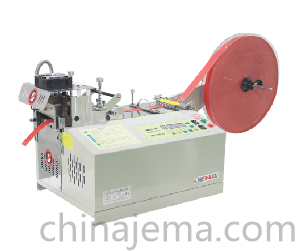
Flexible textile materials are widely used in sportswear, underwear, casual clothing, protective garments, medical textiles, and accessories, making elastic cutting an important process in modern textile manufacturing. These materials can stretch, contract, shift, and change shape during handling, which creates different requirements from those associated with rigid or stable materials. Manufacturers therefore need to consider material behavior, feeding control, processing consistency, and downstream assembly when developing an efficient production workflow.
Elastic materials can be made from woven tapes, knitted structures, synthetic fibers, blended yarns, and other textile combinations. Each construction may respond differently to tension and mechanical movement. A material that appears stable before processing may change its dimensions when pulled or released. If the material is not properly supported, its position may become inconsistent during preparation. Understanding the relationship between material composition and processing conditions is therefore essential for maintaining a reliable manufacturing process.
Automation can help organize repetitive preparation tasks and reduce dependence on repeated manual handling. Traditional operations may require workers to measure, position, stretch, release, and separate materials many times throughout a production cycle. Differences in working rhythm or operator experience can influence the consistency of these actions. Automated machinery can provide a more structured sequence for material feeding and processing, helping manufacturers create a smoother workflow across repeated production batches.
Material feeding is especially important when working with flexible textiles. If the material moves unpredictably, the cutting process may become less consistent. A suitable system should guide the material through the working area while limiting unnecessary tension and movement. Coordinating feeding with cutting can help manufacturers reduce manual adjustments and improve the connection between material preparation and later sewing or assembly operations.
The importance of this process becomes clear in garments that depend on comfort and flexibility. Sportswear, waistbands, cuffs, underwear, and fitted clothing often use elastic materials to support movement and fit. When these components are prepared consistently, they can contribute to a more predictable garment structure. For consumers, this may be experienced as improved comfort, easier movement, and greater confidence during everyday activities.
Material technology also influences product design. Designers use flexible textiles to create fitted shapes, stretch panels, supportive structures, and comfortable garment details. Different materials can provide different levels of flexibility, recovery, and surface feel. Manufacturing equipment needs to respect these characteristics so that the final product remains aligned with the intended design. The connection between textile science and automated processing is therefore important for both functional and fashion-oriented apparel.
JEMA develops textile machinery with practical production requirements in mind. In a modern factory, material preparation is connected with sewing, inspection, finishing, and packaging. When these stages are organized as part of a coordinated workflow, manufacturers can reduce unnecessary handling and improve production rhythm. Automation becomes more valuable when it supports the movement of materials throughout the factory rather than operating as an isolated step.
Flexibility is another consideration for manufacturers. Apparel companies may process different fabric constructions, product styles, and order quantities. A system designed for only one material may be less useful when production requirements change. Adaptable equipment can help manufacturers respond to new products while maintaining a more consistent approach to material preparation. This is particularly relevant for businesses producing sportswear, outdoor clothing, intimate apparel, and customized textile products.
Sustainability is also influencing decisions about textile processing. Better material control can help reduce waste caused by inaccurate preparation, repeated cutting, and unnecessary rework. More organized workflows may also improve the use of labor and production resources. Although machinery is only one part of responsible manufacturing, efficient processing can support wider efforts to reduce material waste and improve operational efficiency.
Operator experience remains important even when automation is introduced. Workers still need to load materials, monitor equipment, manage production changes, inspect results, and complete routine maintenance. Machinery with a practical operating structure can help employees work more effectively alongside automated systems. A balanced production environment combines mechanical consistency with human judgment and flexibility.
As textile manufacturing continues to develop, elastic cutting represents more than the separation of flexible material. It brings together material knowledge, controlled feeding, automated processing, garment comfort, and production coordination. Manufacturers exploring textile automation can review JEMA's product solutions at https://www.chinajema.com/product/ when evaluating equipment for flexible material preparation and modern apparel production.