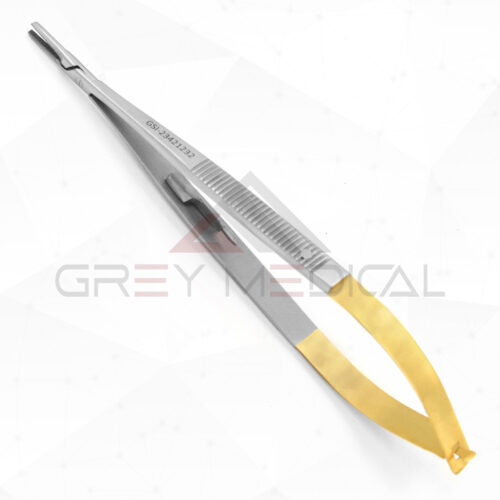
A needle holder is an essential surgical instrument designed to securely grasp and control a suture needle during suturing procedures. It provides surgeons with the stability and precision needed to guide needles through tissue accurately. With different designs, sizes, and jaw configurations available, needle holders are used across a wide range of surgical specialties, including general surgery, plastic surgery, gynecology, and other procedures requiring reliable tissue closure.

What Is a Needle Holder?
A needle holder is a handheld surgical instrument that allows surgeons to hold a suture needle firmly while passing it through tissue. It generally consists of two handles, a joint mechanism, and working jaws designed to grip the needle securely. Many models include a locking ratchet that helps maintain a consistent grip during suturing. The instrument is selected according to the type of procedure, needle size, and level of precision required.
Common Types of Needle Holders
Different surgical procedures require different needle holder designs. Mayo-Hegar needle holders are commonly used for general suturing because of their strong construction and dependable grip. Crile-Wood needle holders feature slimmer jaws and are suitable when greater precision is required. Castroviejo needle holders are designed for delicate procedures and are frequently associated with microsurgical and ophthalmic applications. Choosing the appropriate design can help provide better control and handling during the suturing process.
Features of a Quality Needle Holder
A well-designed needle holder should provide a secure grip, smooth operation, and comfortable handling. The jaws should hold the needle firmly without causing unnecessary damage, while the locking mechanism should engage and release consistently. Stainless steel construction is widely used for surgical instruments because it offers durability, corrosion resistance, and compatibility with standard sterilization processes. Ergonomic handles can also improve instrument control during procedures that involve repeated suturing.
How to Choose the Right Surgical Instrument
Selecting the correct needle holder depends on several factors, including the surgical specialty, needle dimensions, tissue characteristics, and required level of precision. Smaller instruments are generally useful for delicate work, while larger models can provide the strength needed for heavier sutures. Surgeons and medical facilities should also consider material quality, jaw design, finish, locking performance, and ease of maintenance when evaluating surgical instruments.
Importance in Modern Surgical Procedures
Reliable needle control is an important part of effective suturing. A properly selected needle holder can help surgeons manipulate needles with greater stability and maintain consistent handling throughout a procedure. Its role extends from routine wound closure to specialized surgical techniques where accurate needle placement is particularly important. Proper cleaning, inspection, sterilization, and storage are also essential for maintaining instrument performance and longevity.
Conclusion
A needle holder is a fundamental dental instruments that supports controlled and precise needle manipulation during suturing. Its different designs allow medical professionals to select an instrument suited to specific procedures and surgical requirements. By considering construction, jaw configuration, ergonomics, and durability, healthcare facilities can select reliable instruments for their surgical environments.