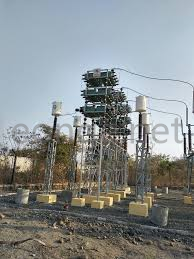
Industrial electrical systems frequently operate with motors, transformers, compressors, pumps, and other equipment that creates reactive power demand. While reactive power is necessary for many electromagnetic devices to operate, excessive reactive demand can influence current flow, voltage conditions, equipment loading, and overall power-system efficiency. A Reactive Power Compensation Device can be incorporated into an electrical network to help manage this demand through coordinated electrical components and control methods.
The foundation of compensation design is an understanding of the connected load. Different facilities can have very different operating profiles, with some processes running continuously and others changing rapidly throughout a production cycle. Engineers therefore need to evaluate load characteristics before selecting a compensation approach. Reviewing operating schedules, motor behavior, transformer loading, and changes in electrical demand can provide a more useful basis for system planning than relying on a single nominal load value.
Capacitor-based compensation is widely associated with reactive power management because capacitive and inductive reactive effects can interact within an electrical system. The physical construction of capacitors depends heavily on dielectric materials, conductive films, winding processes, insulation, and protective structures. Consistent manufacturing helps provide predictable electrical characteristics, while appropriate enclosure and connection design can support reliable integration into distribution equipment.
Automatic control can be particularly useful when reactive demand varies. Instead of keeping every compensation stage continuously connected, a controller can respond to changing electrical conditions and coordinate switching operations. This allows the compensation system to adapt to different load levels. Proper switching equipment is important because frequent energization and disconnection can create electrical stresses that need to be considered during system design.
Harmonic conditions also deserve careful attention. Modern industrial facilities may contain variable-frequency drives, rectifiers, power converters, and other nonlinear loads. These devices can produce harmonic currents that interact with capacitive components. Before compensation equipment is installed, engineers should examine the electrical environment and determine whether additional measures are necessary to reduce undesirable interactions. Compensation design should therefore be integrated with the wider power-quality strategy.
Thermal management is another important consideration. Electrical components generate and absorb heat according to their operating conditions, and equipment installed inside cabinets may have limited ventilation. Elevated temperatures can accelerate material aging and influence long-term performance. Appropriate cabinet arrangement, airflow, spacing, and environmental control can help create more suitable operating conditions for compensation components and their associated switching equipment.
Protection systems should be coordinated with the compensation arrangement. Electrical faults, abnormal current conditions, overheating, and component failures require appropriate protective responses. Protective devices should be selected according to the actual circuit configuration and coordinated with upstream electrical equipment. Clear isolation procedures are equally important, particularly when technicians need to inspect or service components that may retain stored electrical energy after disconnection.
Maintenance provides an additional layer of reliability. Routine inspection can include checking terminals, connection points, ventilation paths, enclosures, switching components, and visible signs of deterioration. Unusual temperature, noise, physical deformation, contamination, or repeated protection events may indicate that further investigation is necessary. Maintenance records can help identify recurring operating conditions and provide useful information for future system adjustments.
Installation planning should also account for accessibility. Compensation equipment should be positioned so that technicians can safely reach relevant components without unnecessary disruption to other electrical infrastructure. Clear labeling and organized wiring can make troubleshooting more efficient. Documentation should describe the system arrangement, component identification, protection configuration, and maintenance requirements so that future service personnel have accurate reference information.
When designed around actual load characteristics and integrated with protection, switching, thermal management, and power-quality considerations, a Reactive Power Compensation Device can become an important component of a structured electrical distribution strategy. For businesses evaluating electrical equipment and related technologies, Shanghai Yongjin Electric Technology Co.,Ltd. provides further product information through https://www.eonge.net/product.