Getting a UI/UX job as a fresher can feel difficult when you do not have internship experience. However, internships are not the only way to prove your design abilities. Students can build practical projects, create a strong portfolio, practise design tools, and learn how to explain their decisions clearly. A well-planned UI/UX course can also help students develop the skills needed for entry-level design roles.
What Can Students Build Without an Internship?
Students can create their own projects based on everyday problems. For example, redesign a college website, create a food delivery app, improve a travel booking screen, or design a simple banking interface. These projects give students something practical to discuss during interviews. The project does not need to be complicated. What matters is showing how you identified a problem, explored possible solutions, created the design, and improved it after testing.
How Important Is User Research for Freshers?
UI/UX is not only about making attractive screens. Designers also need to understand what users actually need. Students can conduct small research activities by speaking with classmates, friends, or family members.Ask simple questions about how they currently complete a task and what problems they face. The answers can help you identify usability issues and design a more useful solution. Students attending UI/UX training in Chennai can use similar research activities to strengthen their practical understanding.
Can Personal Projects Replace Internship Experience?
Personal projects cannot be described as formal work experience, but they can demonstrate practical skills. A well-developed project can show recruiters that you know how to approach a design problem independently.Try to include two or three meaningful projects instead of filling your portfolio with many unfinished designs. Each project should have a clear purpose and show your contribution from research to final design.
Why Should You Show Your Design Process?
Recruiters are interested in how you think, not just in the final screen. Your portfolio should therefore explain the journey behind each project.Include the problem statement, user observations, wireframes, design alternatives, testing feedback, and final interface. Brief explanations can make your work easier to understand and help interviewers see how you make design decisions.
How Can Students Improve Their Figma Skills?
Figma is widely used for creating wireframes, prototypes, and interface designs. Instead of learning features only through tutorials, students should use Figma while working on real design exercises.Practise creating components, layouts, interactive prototypes, design systems, and responsive screens. Recreating familiar interfaces can also help beginners understand spacing, alignment, typography, and component structure.
What Visual Design Skills Should Freshers Practise?
A strong UI designer needs more than knowledge of design software. Students should understand typography, colour combinations, spacing, hierarchy, alignment, and consistency.Start by studying well-designed websites and applications. Observe how information is organised and how visual elements guide users. Then apply those observations to your own projects.
How Can a Portfolio Help During Placement Interviews?
Your portfolio should make your abilities easy to understand within a few minutes. Select projects that demonstrate different skills rather than showing several similar screens.For every project, explain the problem, your approach, important design decisions, and final result. Students pursuing a UI/UX course in Hyderabad can also use portfolio reviews and mock interviews to improve how they present their work.
Should Students Practise Design Challenges?
Yes. Many placement interviews include short design exercises or questions based on common user problems. Practising these challenges can help students become comfortable with working under time limits.Choose a simple problem and give yourself a fixed amount of time to research, sketch, wireframe, and explain a possible solution. Focus on your reasoning instead of trying to create a perfect interface.
Why Is Usability Testing Worth Learning?
A design may look good but still be difficult to use. Testing helps students discover problems that they may not notice themselves.Ask a few people to complete a task using your prototype. Watch where they hesitate, make mistakes, or ask questions. Use their feedback to make changes and document what you improved.
What Should a Fresher Include on a Resume?
A fresher's resume should focus on relevant skills and project experience. Mention tools such as Figma, prototyping abilities, user research, wireframing, usability testing, and visual design where applicable.Instead of simply writing “UI/UX designer,” describe what you actually created. For example, mention the type of application designed, the problem addressed, and the methods used during the project.
How Can Students Prepare for Design Interviews?
Students should be ready to explain every major project in their portfolio. Interviewers may ask why you selected a particular layout, how you identified user needs, what feedback you received, or what you would change if you had more time.Practise answering these questions aloud. A student who can clearly explain the reasoning behind a design can demonstrate practical thinking even without internship experience.
Does Responsive Design Matter for Placement?
Modern products are accessed through different screen sizes, so students should understand responsive design. Practise adapting the same interface for desktop, tablet, and mobile screens.Pay attention to navigation, text size, spacing, buttons, images, and content hierarchy. This can make portfolio projects look more realistic and complete.
Should Freshers Learn Accessibility Basics?
Accessibility is an important part of responsible interface design. Students should understand basic practices such as readable text, sufficient contrast, clear labels, logical navigation, and usable interactive elements.Including accessibility considerations in a project can also give you useful points to discuss during an interview.
How Can Training Support Placement Preparation?
Structured learning can provide students with regular practice, feedback, and guidance. A UI/UX training in Bangalore program, for example, may help learners work through design exercises, tools, projects, and interview preparation in a planned manner.However, students should continue practising independently. Building projects outside classroom assignments can make their portfolio more personal and demonstrate initiative.
What Should Students Do Before Applying for Jobs?
Before applying, review your portfolio, resume, LinkedIn profile, and design projects. Remove unfinished or weak work and make sure the remaining projects are easy to understand.Also practise introducing yourself, discussing your projects, completing design challenges, and answering basic UI/UX questions. Regular preparation can make placement conversations more comfortable.
Conclusion
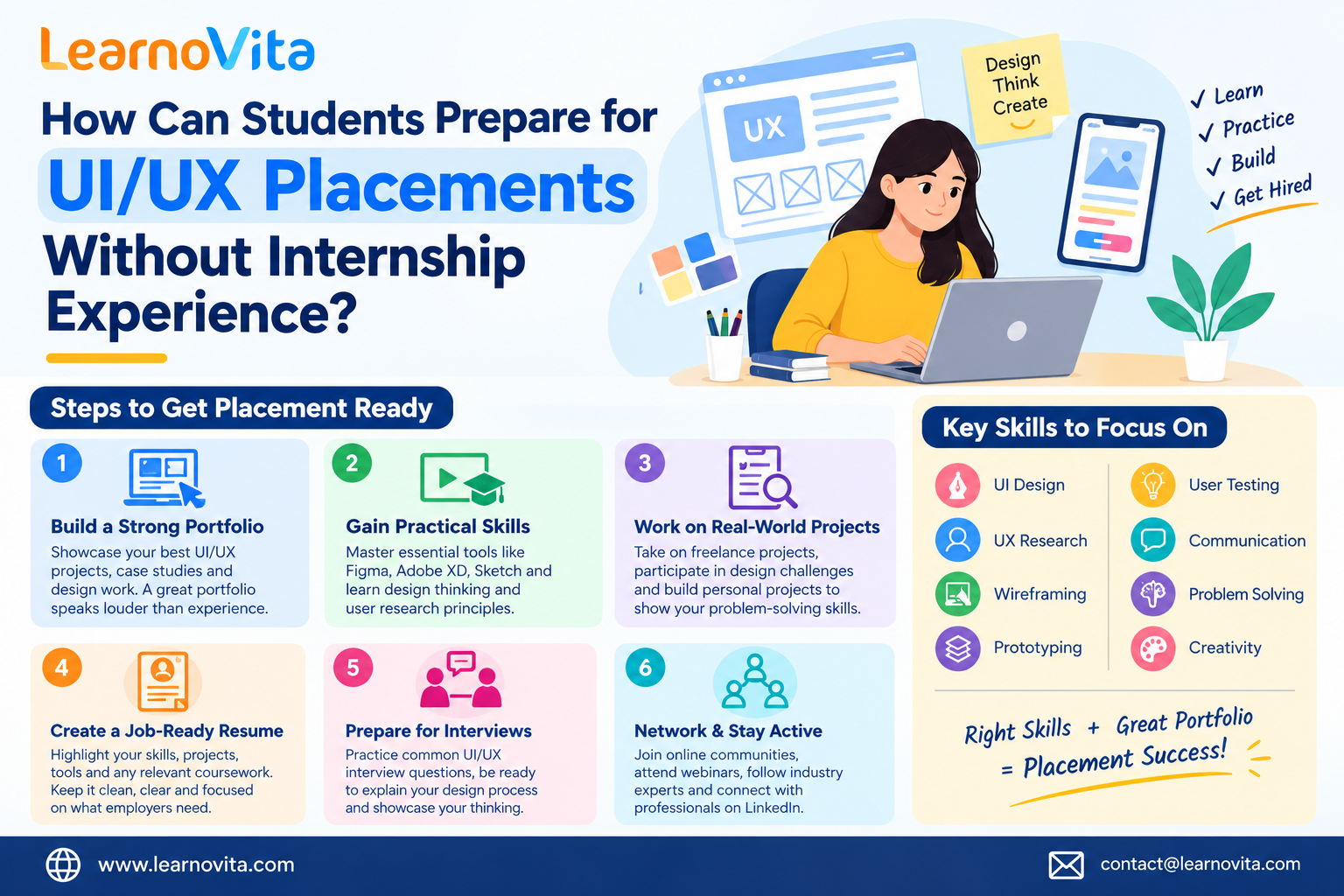
Internship experience can be useful, but students can still prepare for UI/UX placements by building meaningful projects, learning design tools, practising research and testing, and developing a clear portfolio. A UI/UX course can provide structured guidance, while independent practice helps students turn that knowledge into practical skills. The goal is to show recruiters how you think, solve problems, and design experiences for real users.