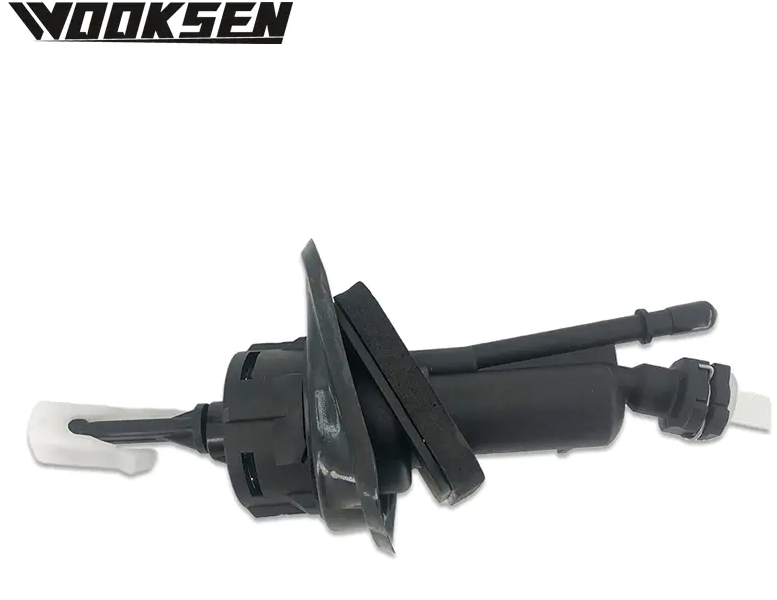
An automotive parts catalog can contain products that look almost identical at first glance. Two hydraulic cylinders may share a similar body shape, yet their mounting points, port positions, bore sizes, or reservoir arrangements can be different. This is why selecting a Clutch master cylinder requires attention to details rather than appearance alone.
Vehicle application is usually a useful starting point. Make, model, engine configuration, production period, and drivetrain information can help narrow down the appropriate component. For aftermarket distributors, accurate application data is particularly useful when building product listings or organizing inventory.
The physical structure provides another set of clues. A Clutch master cylinder may have a flange with two or more mounting holes, a threaded hydraulic outlet, a plastic reservoir, or a connection designed for a specific hose. Even small differences can determine whether the component fits the intended installation position.
Bore diameter is another specification worth checking. The piston inside the cylinder determines how mechanical input is converted into hydraulic pressure and fluid movement. Different clutch systems can use different bore dimensions, so matching this specification with the vehicle application is important.
Reservoir configuration can also vary. Some designs place the fluid reservoir directly above the cylinder body, creating a compact assembly. Other systems use a remote reservoir connected through a hose. This difference can be useful when distinguishing between visually similar products.
For wholesalers and importers, reference numbers are valuable catalog tools. OE numbers, interchange references, and application lists can help purchasing teams group products according to vehicle compatibility. This information can also make it easier for customers to identify a suitable replacement.
A Clutch master cylinder can be supplied as an individual hydraulic unit or as part of a broader clutch-related product range. Businesses serving the aftermarket may therefore organize their catalogs around vehicle applications, reference numbers, dimensions, and connection types.
The interesting part of this component is that its physical size does not reveal its entire function. The cylinder acts as the starting point of a hydraulic chain, and its dimensions need to correspond with the rest of the clutch system.
For B2B buyers, the practical approach is to compare application data with physical and technical specifications. A Clutch master cylinder should be considered through its vehicle fitment, bore, mounting design, hydraulic connections, reservoir arrangement, and reference information. These details provide a clearer basis for product selection than visual similarity alone.