If you keep asking yourself, “Why can’t I break 90 in golf?”, you are far from alone.
Breaking 90 is one of the biggest milestones for recreational golfers. Getting there consistently is not about hitting one perfect drive or making a couple of birdies. It is about reducing the mistakes that turn bogeys into doubles and doubles into triples.
Most advice about how to break 90 consistently focuses on swing mechanics, putting, course management, club selection, and short-game practice. All of those things matter. But there is another factor golfers sometimes overlook: whether their equipment actually complements their swing.
Your Driver Shaft is a good example. The wrong shaft will not automatically ruin your round, and the Best Driver Shaft cannot compensate for poor technique. But when your shaft weight, flex, torque, or overall profile does not suit your swing, producing predictable tee shots can become more difficult.
For golfers regularly shooting in the 90s, that consistency can matter more than chasing a few extra yards.
Why Is Breaking 90 in Golf So Difficult?
Breaking 90 sounds relatively simple on paper.
On a par-72 course, you do not need to make birdies on every hole or hit 300-yard drives. What you need to do is keep big numbers off the scorecard.
That is where many golfers struggle.
You might play 14 holes reasonably well, but two triple bogeys and a couple of doubles can quickly turn a potential 88 into a 95.
The difference is often consistency.
Golfers trying to break 90 do not necessarily need significantly more power. They need more playable tee shots, better approach opportunities, fewer penalties, and fewer situations where they have to manufacture difficult recovery shots.
This is why choosing a Driver Shaft for Accuracy can sometimes be more valuable than focusing entirely on maximum distance.
Accuracy Matters More Than Your Longest Drive
Distance gets plenty of attention in golf, but your longest drive does not tell you much about your scoring potential.
Imagine one golfer who can hit the ball 260 yards but regularly misses both sides of the fairway. Another golfer averages 235 yards but produces a much more predictable ball flight.
The second golfer may have the easier path to breaking 90.
Why?
Because predictable tee shots make the rest of the hole easier to manage.
You can select better targets, avoid hazards and plan your approach based on your normal shot pattern. When you do not know whether your next drive will finish left, right, or down the middle, even good course management becomes difficult.
If accuracy is your main problem, the goal should not automatically be finding the Best Golf Shaft for Distance. You should look for a shaft that provides a combination of feel, control, stability and appropriate launch characteristics for your swing.
How Your Golf Shaft Can Affect Consistency
A Golf Shaft is more than a component connecting your grip to the clubhead.
Its weight, flex, torque and bend characteristics influence how the club feels throughout your swing. These factors can affect timing and how consistently you deliver the clubhead to the ball.
That is why there is no universal Best Driver Shaft for every golfer.
A shaft that performs exceptionally well for a golfer with a fast, aggressive transition might feel completely different to someone with a smoother swing and lower swing speed.
The same applies to Driver Shaft Flex.
Playing a flex that does not suit your swing characteristics may make it harder to consistently time the club. However, flex should not be selected based on handicap, age, or ego alone.
Swing speed, transition, tempo, release and personal feel all matter.
This is one reason Custom Golf Shafts and professional fitting have become increasingly relevant. Instead of assuming one specification works for everyone, golfers can build a setup around how they actually swing.
Why Carbon Fiber Golf Shafts Are Popular
Modern shaft construction has also changed considerably.
A Carbon fiber golf shaft can be engineered with different combinations of weight, stiffness, torque and bend profile. Manufacturers can use those characteristics to develop shafts for different types of golfers and performance goals.
The important point is not that carbon fiber automatically makes one shaft better than another.
It gives shaft designers considerable flexibility in how a shaft is constructed.
When comparing Best Performance Golf Shafts, golfers should therefore look beyond the material itself. Consider the complete shaft profile and whether it suits your swing.
The most technologically advanced shaft in the world will not necessarily be the right shaft for you if its specifications do not complement the way you deliver the club.
Your Tee Shots May Be Costing Strokes, Not Yards
If your goal is breaking 90, one of the most useful questions you can ask is:
What happens after my average tee shot?
Suppose you hit a drive 15 yards shorter than you wanted but finish in the fairway. You probably still have a reasonable opportunity to reach or approach the green.
Now compare that with a longer drive that finishes behind a tree.
Suddenly, your second shot becomes a recovery shot. You punch back toward the fairway, hit your third from a position where you originally wanted to hit your second, and now you are fighting to save bogey.
An out-of-bounds drive or lost ball can be even more expensive.
That is why choosing a High Performance Golf Shaft should not simply be about maximizing clubhead speed or distance.
Performance also includes control, predictable launch conditions, feel and repeatability.
Can the Wrong Driver Shaft Make Your Misses Worse?
Your swing remains the biggest factor in determining where the golf ball goes.
A shaft does not automatically create a slice, hook, push, or pull.
However, if your shaft does not complement your swing, it may affect timing and make it more difficult for you to consistently deliver the club.
That can become particularly frustrating when your misses are unpredictable.
One drive goes right. The next turns left. Then you hit one perfectly down the middle.
When golfers lose confidence in the driver, they sometimes start guiding the club instead of making a committed swing. That can introduce even more inconsistency.
Our guide to What Your Miss Says About Your Swing explains how your shot pattern can provide clues about both your technique and equipment.
If a slice is your recurring problem, The Real Reason Your Slice Won’t Go Away explores that issue in more detail.
Will the Best Driver Shaft Help You Break 90?
There is an important distinction here.
Finding the Best Driver Shaft for your swing can improve how comfortable and confident you feel with your driver, but it cannot guarantee lower scores.
If you regularly three-putt or struggle with shots around the green, changing your Driver Shaft will not solve those problems.
But if your worst holes consistently begin with an uncontrollable tee shot, your driver setup deserves a closer look.
The objective is not to buy equipment simply because it promises performance.
It is to remove unnecessary variables from your game.
A properly fitted shaft may help you develop a driver setup that feels more predictable, allowing you to focus on making your normal swing instead of fighting the club.
What About Senior Golfers?
Shaft selection becomes especially important when swing characteristics change over time.
Golfers searching for the best senior driver shafts should avoid choosing a shaft based solely on the word “senior.”
Two golfers of the same age can have completely different swing speeds, tempos and transitions.
A lighter shaft may help some golfers feel more comfortable or generate speed, while another golfer may prefer additional weight and stability.
The right approach is to evaluate your current swing rather than relying entirely on age-based categories.
Knowing your driver swing speed is a useful starting point.
You can use our Driver Shaft Flex Chart to understand how swing speed generally relates to Driver Shaft Flex.
How to Know If Your Driver Setup Needs Attention
Before buying a new shaft, look at your last several rounds.
Pay particular attention to holes where you made double bogey or worse.
Were those problems caused by putting? Poor approach shots? Bad decisions? Or did they frequently begin with the driver?
Ask yourself whether your tee-shot miss is predictable, whether you feel confident swinging freely, and whether you know your actual swing speed.
Also consider how your current shaft was selected.
Was it fitted to your swing, or is it simply the stock Golf Shaft that came with your driver?
If your short game is responsible for most of your lost strokes, practice there first. But if poor tee shots repeatedly create your biggest numbers, checking your driver setup makes sense.
The Steadfast Golf Shaft Selector Quiz can help you identify a starting point based on your swing characteristics.
Distance Still Matters, But It Needs Control
There is nothing wrong with wanting more distance.
A longer drive can leave you with a shorter approach, and shorter approaches can make scoring easier.
That is why golfers naturally search for the Best Golf Shaft for Distance.
But distance without reasonable control does not necessarily improve your score.
A better goal is usable distance.
You want a driver setup that gives you the distance your swing can produce while keeping your typical misses manageable.
That balance between speed, distance, feel and control is what golfers should look for when comparing Best Performance Golf Shafts.
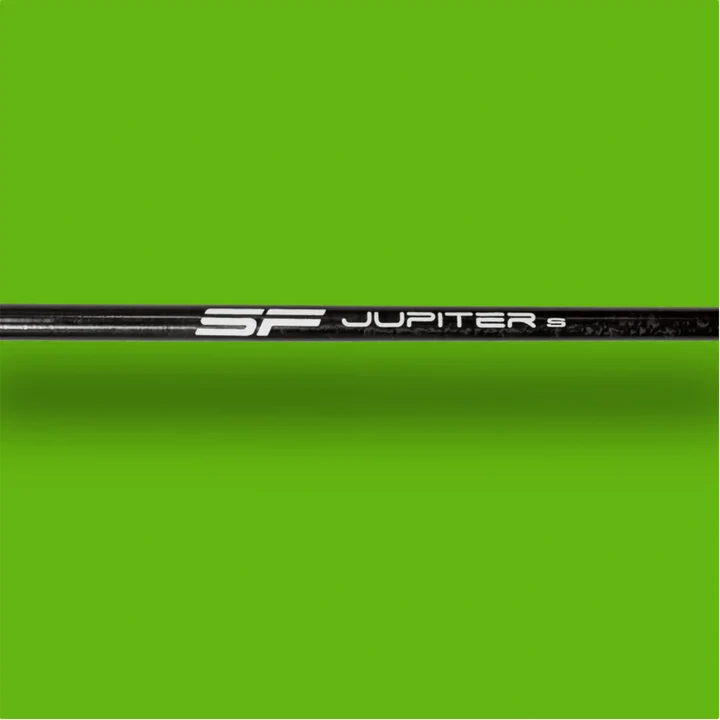
If you determine that your current shaft does not suit your swing, you can explore the Jupiter One Plus Driver Shaft and choose a configuration suited to your swing characteristics.
The Bottom Line
If you are wondering why you can’t break 90 in golf, do not look for one magic solution.
Lower scores usually come from several improvements working together: better decisions, fewer penalties, stronger short-game fundamentals and more predictable ball striking.
Equipment is only one piece of that puzzle.
But your Driver Shaft is worth evaluating if your blow-up holes repeatedly begin with unpredictable tee shots.
Do not simply chase the Best Driver Shaft, the lightest shaft, or the shaft that promises the most distance. Look for a setup that matches your swing and gives you confidence when you stand on the tee.
Because breaking 90 is rarely about hitting one spectacular shot.
It is about eliminating enough costly ones to finally turn that 92 into an 89.