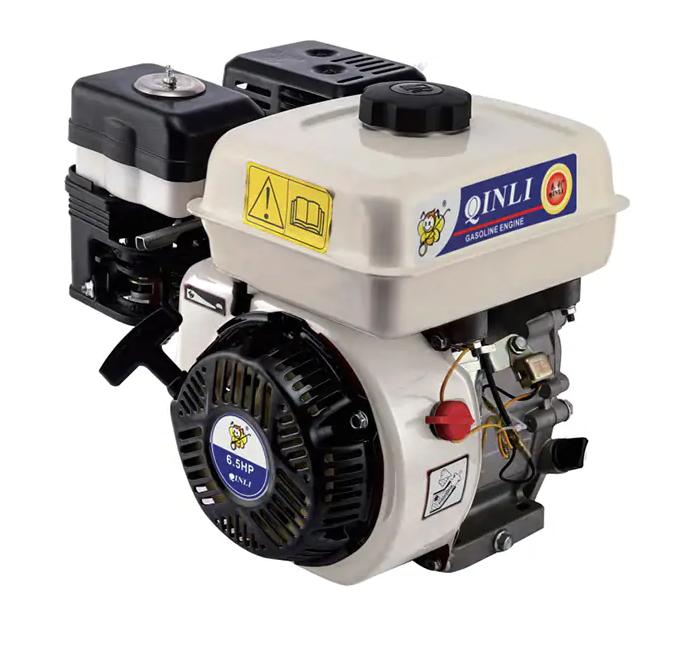
Think about a portable generator, a compact tiller, and a small construction machine. All three can use gasoline engines, yet their power requirements may be completely different. This is because Gasoline Engine Power is not simply about one number printed on an engine specification sheet. The way that power is delivered can be just as important as the rated figure.
A gasoline engine converts chemical energy in fuel into mechanical movement. Inside the cylinder, a mixture of fuel and air is compressed before ignition. The resulting combustion creates expanding gases that push the piston. Connecting rods transfer this movement to the crankshaft, which turns reciprocating motion into rotation.
This process happens repeatedly, and engine speed determines how quickly those cycles occur. At a higher rotational speed, the engine completes more cycles within the same amount of time. However, usable Gasoline Engine Power depends on how well the engine manages air intake, fuel delivery, combustion, and mechanical movement across its operating range.
Torque gives another perspective. Imagine trying to turn a stubborn wheel with a wrench. The twisting force you apply is similar to the idea of torque. In an engine, torque represents the rotational force available at the crankshaft. Power is related to both torque and rotational speed, so looking at the two together provides a clearer picture of engine behavior.
Engine displacement can also influence power characteristics. Cylinders with greater volume can accommodate a larger charge of air and fuel under suitable operating conditions. Cylinder count, bore, stroke, compression ratio, and valve arrangement then add further differences between engine designs.
For industrial buyers, these details can help connect engine specifications to actual equipment requirements. A machine used for intermittent loads may have different requirements from one expected to operate under a steady mechanical workload. Starting characteristics, working speed, torque delivery, and rated Gasoline Engine Power can all become part of the selection process.
Gasoline Engine Power is ultimately about the relationship between combustion, movement, and application. Once these elements are considered together, engine specifications become easier to understand. What appears to be a simple power rating is actually the result of many connected mechanical and combustion factors working in sequence.