Healthy-looking skin does not necessarily require a complicated routine. A consistent approach that combines gentle skin care, appropriate hydration, sun protection, healthy lifestyle habits, and carefully selected botanical ingredients can help maintain a fresh and comfortable appearance.
Ayurvedic skin care tips for naturally glowing skin are based on traditional principles that view skin health as part of overall wellness. Ayurveda emphasizes individualized care, daily routines, balanced habits, and the thoughtful use of herbs and natural ingredients.
What Does Healthy-Looking Skin Mean?
Healthy-looking skin can vary from person to person. It may appear smooth, comfortable, hydrated, and relatively even in tone.
A glowing appearance does not mean that the skin must be completely free from pores, lines, pigmentation, or occasional blemishes. Healthy skin naturally changes with age, weather, lifestyle, and other factors.
The goal of an Ayurvedic-inspired routine should therefore be supporting skin health rather than chasing an unrealistic idea of perfection.
1. Understand Your Skin Type
The first step is to understand what your skin needs.
Dry skin may feel tight or flaky, while oily skin may produce excess sebum and appear shiny. Combination skin may have both oily and dry areas, while sensitive skin may react easily to certain products.
Choose products according to your skin type rather than following every skin-care trend.
Your skin type can also change with seasons, age, hormones, and environmental conditions.
2. Cleanse Gently
Cleansing removes dirt, sweat, sunscreen, and excess oil from the skin.
Use a gentle cleanser suitable for your skin and avoid excessive rubbing. Very hot water and aggressive scrubbing can leave the skin feeling dry or irritated.
The purpose of cleansing is not to remove every trace of natural oil. Maintaining the skin's natural moisture barrier is also important.
3. Keep Your Skin Moisturized
Hydration is one of the foundations of healthy-looking skin.
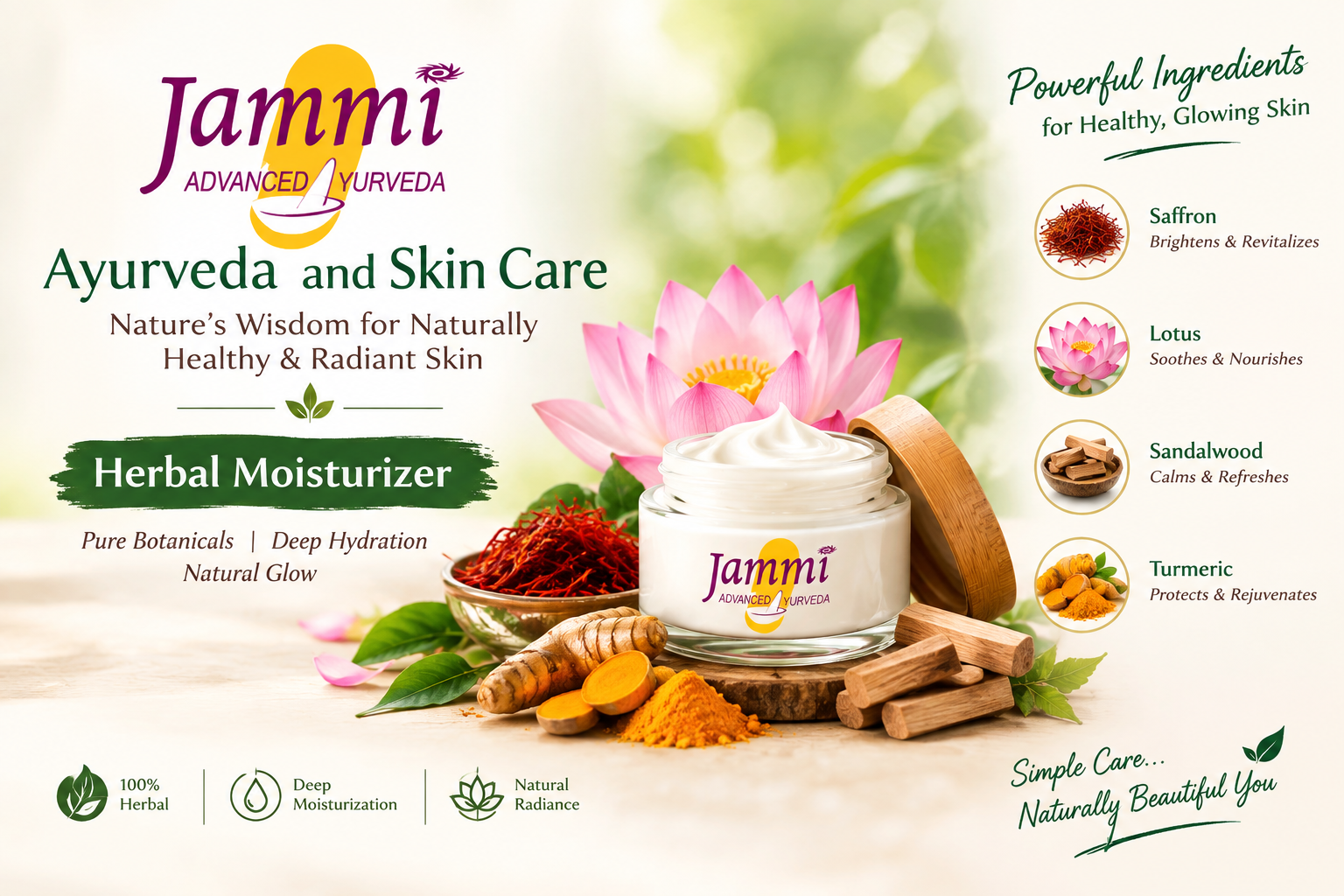
A suitable herbal moisturizer can combine moisturizing ingredients with botanical extracts. Choose a lightweight formulation for oily skin or a richer formulation if your skin is dry.
Apply moisturizer after cleansing, preferably while the skin is slightly damp.
Remember that oily skin also needs hydration. Skipping moisturizer may make your routine unnecessarily drying.
4. Use Traditional Ayurvedic Ingredients Carefully
Ayurveda has a long history of using botanical ingredients in personal care.
Some commonly used ingredients include:
Aloe vera: traditionally valued for moisturizing and soothing qualities.
Neem: commonly used in cleansing-oriented herbal preparations.
Turmeric: a familiar Ayurvedic botanical used in traditional personal-care practices.
Sandalwood: traditionally associated with cooling and soothing applications.
Sesame oil: widely used in traditional Ayurvedic oil preparations and valued for its emollient properties.
These powerful ingredients may be included in modern herbal products, but their suitability depends on the formulation and individual skin tolerance.
5. Never Skip Sun Protection
Sun protection is one of the most important daily skin-care habits.
Regular ultraviolet exposure can contribute to premature skin aging, uneven pigmentation, and other forms of skin damage.
Apply a broad-spectrum sunscreen during the day and follow the product's instructions for reapplication. Protective clothing, shade, and hats can also reduce direct UV exposure.
Ayurvedic herbs and natural ingredients do not replace sunscreen.
6. Support Skin Health With a Balanced Lifestyle
Ayurvedic wellness looks beyond topical products.
Maintain a balanced diet containing a variety of nutritious foods and drink adequate fluids according to your individual needs.
Regular sleep is also important for overall well-being. Try to maintain a consistent sleep schedule rather than relying on occasional long periods of rest.
Physical activity and stress-management practices such as yoga, meditation, breathing exercises, or other relaxing activities can complement a healthy lifestyle.
7. Avoid Overloading Your Skin
Using too many products does not necessarily produce better results.
Layering numerous cleansers, exfoliants, masks, serums, oils, and creams can increase the risk of irritation and make it difficult to understand which products your skin actually tolerates.
Start with the basics:
- Gentle cleansing
- Moisturizing
- Sun protection
Add other products only when there is a clear reason to use them.
8. Be Careful With Homemade Remedies
Natural skin care does not mean every kitchen ingredient is suitable for facial use.
Avoid applying undiluted essential oils, concentrated herbal powders, lemon juice, or other potentially irritating substances directly to the skin.
Professionally formulated products provide more controlled concentrations and clearer usage instructions.
When trying a new product, introduce it gradually. Patch testing may help identify potential irritation, although it cannot guarantee that a reaction will not occur.
9. Maintain Consistency
Skin care usually works better as a consistent habit rather than an occasional activity.
Choose products that fit comfortably into your daily routine and use them according to their instructions.
Constantly switching between products can make it difficult to understand what suits your skin.
Give your routine time and monitor how your skin responds.
10. Know When to Seek Professional Advice
Basic skin care can support everyday skin health, but persistent concerns may require professional evaluation.
Seek appropriate advice if you experience severe acne, persistent redness, unusual pigmentation, significant itching, painful skin lesions, eczema, psoriasis, or symptoms that do not improve with basic care.
Professional assessment can help identify the underlying issue and determine suitable treatment.
Ayurvedic Skin Care at Jammi
Jammi Pharmaceuticals provides Ayurvedic approaches to skin care based on traditional principles and individualized requirements. Its skin-care services address concerns including acne and blemishes, dryness, excessive oiliness, uneven skin tone, eczema, psoriasis, and premature aging.
For people interested in Ayurveda and skin care, personalized guidance can help determine an approach suited to individual skin requirements.
Conclusion
Following Ayurvedic skin care tips for naturally glowing skin does not require an elaborate routine. Focus on understanding your skin, cleansing gently, maintaining hydration, protecting yourself from the sun, and supporting overall wellness through healthy daily habits.
Traditional ingredients such as aloe vera, neem, turmeric, sandalwood, and sesame oil are among the powerful ingredients used in Ayurvedic and herbal skin-care formulations.
A suitable herbal moisturizer can also be part of a simple daily routine.
The goal is healthy-looking, comfortable skin—not perfection. Keep your routine consistent, introduce new products carefully, and seek professional guidance when persistent or significant skin concerns require further evaluation.