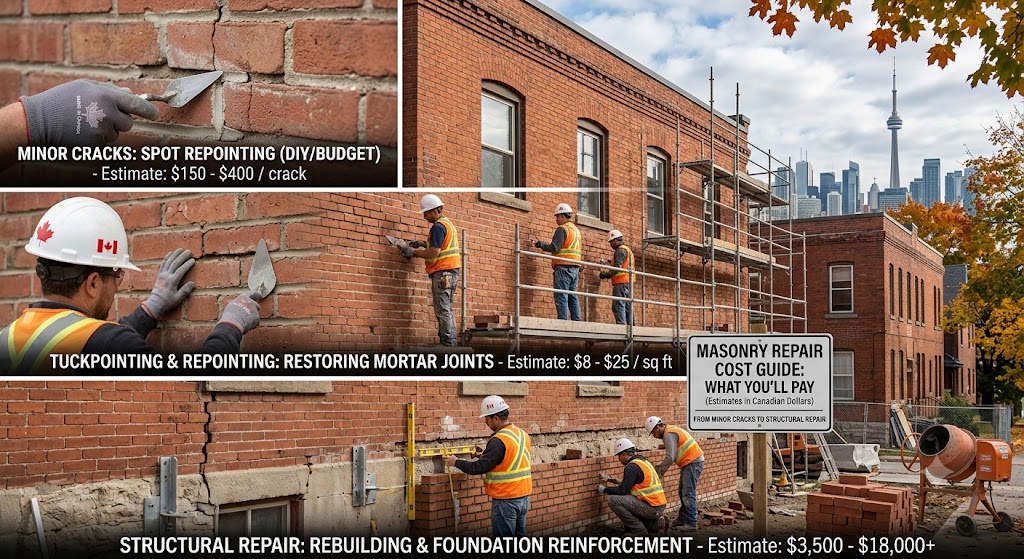
A brick chimney can add character and durability to a home, but its position above the roofline leaves it exposed to rain, snow, wind, moisture, and changing temperatures throughout the year. Over time, these conditions can cause mortar joints to deteriorate, bricks to crack, and sections of masonry to weaken. What begins as a small gap between bricks can eventually become a larger maintenance concern. Professional chimney repointing and timely masonry repair can help restore damaged areas and protect the chimney from further deterioration.
Understanding the signs of masonry damage and knowing when professional attention may be necessary can help homeowners make informed maintenance decisions.
What Is Chimney Repointing?
Chimney repointing is the process of removing deteriorated mortar from the joints between bricks and replacing it with new mortar. Mortar provides important support between individual masonry units while helping prevent moisture from entering the structure.
As mortar ages, it can become cracked, loose, powdery, or begin to fall away. Once the joints deteriorate, rainwater can penetrate more easily into the masonry.
During chimney repointing, damaged mortar is carefully removed from affected joints before the joints are cleaned and prepared for new material. Fresh mortar is then installed and finished appropriately.
The goal is not simply to improve the appearance of the chimney. Proper repointing can help restore the joints and improve their resistance to weather exposure.
Why Does Chimney Mortar Deteriorate?
Chimney mortar is exposed to harsh outdoor conditions throughout the year. Rain and snow can repeatedly wet the masonry, while temperature changes cause materials to expand and contract.
In colder climates, moisture that enters cracks can freeze and expand. When temperatures rise, the ice melts and the masonry dries. Repeated freeze-and-thaw cycles can gradually weaken mortar joints.
Age, poor drainage, excessive moisture, and unsuitable previous repairs can also contribute to deterioration.
Signs Your Chimney May Need Repointing
Homeowners should periodically check their chimney for visible signs of masonry deterioration. Some common indicators include:
- Crumbling or powdery mortar
- Cracks between bricks
- Missing mortar sections
- Gaps in masonry joints
- Loose bricks
- Damp or stained areas
- White deposits on the brick surface
- Deterioration near the chimney crown
If these signs are visible, a professional assessment can determine whether chimney repointing is appropriate or whether additional repairs are required.
What Is Masonry Repair?
Masonry repair is a broader term covering the restoration of damaged brick, stone, mortar, concrete, and other masonry components.
For chimneys, masonry repair may include:
- Replacing cracked or broken bricks
- Repointing deteriorated mortar
- Repairing masonry cracks
- Restoring damaged chimney sections
- Repairing the chimney crown
- Rebuilding unstable areas
- Addressing moisture-related deterioration
The correct repair depends on the type, location, and severity of the damage.
Chimney Repointing vs. Masonry Repair
Although the terms are sometimes used interchangeably, chimney repointing and masonry repair are not exactly the same thing.
Repointing specifically focuses on deteriorated mortar joints. Masonry repair can include repointing but may also involve replacing bricks, rebuilding sections, or repairing other components.
For example, if the bricks remain structurally sound but the mortar between them has deteriorated, repointing may be enough. If several bricks are cracked or severely damaged, additional masonry repair may be necessary.
A professional inspection can help determine the appropriate scope of work.
Why Water Is a Major Concern
Moisture is one of the biggest threats to brick chimneys. Water can enter through damaged mortar, cracked bricks, deteriorated chimney crowns, defective flashing, or other openings.
Once moisture gets inside the masonry, changing temperatures can accelerate deterioration. In freezing weather, trapped water expands and can place pressure on bricks and mortar.
This is why repairing damaged joints and addressing other sources of water intrusion is an important part of chimney maintenance.
The Importance of Compatible Materials
Choosing appropriate materials is an important consideration during chimney repairs. Older chimneys may contain softer bricks and mortar than those commonly used in newer construction.
Using an excessively hard mortar during chimney repointing can potentially create stress within the surrounding brickwork. The repair material should be suitable for the existing masonry rather than selected solely for appearance.
An experienced professional can assess the existing structure and determine an appropriate repair approach.
When Should Masonry Repair Be Considered?
There is no need to wait until bricks begin falling from the chimney before arranging an assessment. Visible deterioration can be a useful warning that the masonry needs attention.
Consider professional evaluation if you notice:
- New or expanding cracks
- Deteriorating mortar
- Loose bricks
- Water stains
- Spalling or flaking bricks
- Damage around the chimney crown
- Sections of masonry that appear unstable
Early masonry repair may help prevent localized problems from spreading to surrounding areas.
Can You Repoint a Chimney Yourself?
Repointing may look like a simple task, but chimney work often involves working at height and dealing with weather-exposed masonry.
Removing mortar too aggressively can damage bricks, while using an unsuitable mortar can create additional problems. There is also the safety concern associated with accessing chimney areas above the roofline.
For these reasons, homeowners should consider professional assessment and repair, particularly when deterioration is extensive or difficult to access.
How Regular Maintenance Can Help
Chimney maintenance does not have to wait until serious deterioration appears. Periodic inspections can identify early signs of damage and provide an opportunity to address them.
Keeping the chimney crown, flashing, cap, mortar joints, and masonry in good condition can help reduce moisture-related problems.
After severe weather, homeowners should also check for visible changes such as new cracks, loose materials, or water stains.
Protect Your Chimney for the Long Term
A chimney is an important part of a home's exterior structure, and maintaining its masonry can help extend its useful life. Deteriorated mortar should not be ignored simply because the chimney still appears functional.
Professional chimney repointing can restore weakened mortar joints, while broader masonry repair can address damaged bricks, cracks, structural deterioration, and other masonry concerns.
The right solution depends on the condition of the chimney. By identifying deterioration early, using suitable repair materials, and addressing moisture problems, homeowners can help protect their chimney from further damage and avoid more extensive repairs in the future.