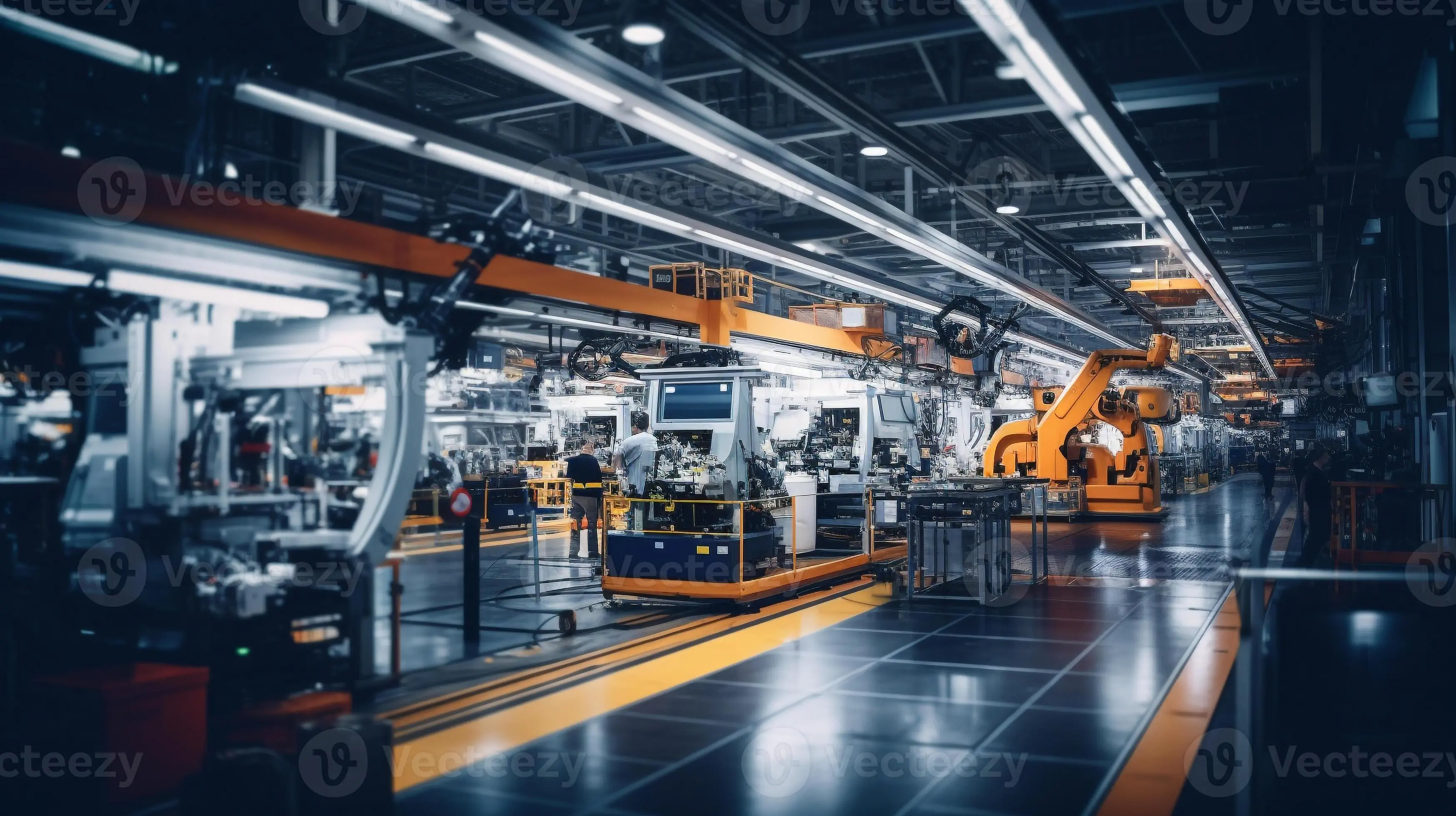
Industrial facilities increasingly rely on connected automation systems to manage equipment, processes, instrumentation, and operational data from a coordinated control architecture. Modern automation can combine field sensors, programmable controllers, communication networks, supervisory software, and industrial equipment. Smart industrial automation extends these capabilities by connecting control functions with monitoring and data analysis. It is used across manufacturing, utilities, process industries, infrastructure, oil and gas, water treatment, and other technical environments. Proper engineering remains essential because automation architecture must match the process, equipment, operating conditions, and requirements of the personnel responsible for the facility.
What is smart industrial automation and how does it work?
Smart industrial automation combines conventional industrial control with connected devices, data collection, supervisory monitoring, and software-based analysis. Instead of treating each machine or process as an isolated unit, the automation architecture can allow relevant operational information to move between field devices, controllers, operator interfaces, and higher-level systems.
Industrial sensors and instrumentation provide information about physical conditions. Common measurements include temperature, pressure, flow, level, vibration, speed, position, and equipment status. These signals are transmitted to controllers or data acquisition systems for processing.
PLC automation is widely used for sequencing, interlocking, machine control, and automated process control. A programmable logic controller receives inputs, executes configured logic, and produces outputs for connected equipment. SCADA systems can collect information from several controllers and display process conditions, alarms, trends, and equipment states.
HMI systems provide an interface between operators and machines or processes. Industrial communication systems connect sensors, controllers, drives, remote I/O, SCADA platforms, and other equipment. In suitable applications, industrial IoT technologies can extend this connectivity to remote monitoring and analytical platforms.
What are the benefits of smart industrial automation for modern industries?
Smart automation can provide greater operational visibility by making selected process and equipment information available through centralized or distributed monitoring systems. The practical benefits depend on the application, system architecture, implementation, and quality of the collected data.
For plant operators, real-time information can support observation of important process variables. An operator may monitor pressure, temperature, flow, speed, level, or equipment status through an HMI or SCADA interface. Alarm functions can indicate conditions that require attention according to configured operating limits.
Manufacturing facilities can use smart manufacturing technologies to coordinate machines, material movement, inspection equipment, and production sequences. Process plants can use process control systems to manage variables according to established control strategies.
Automation data can also support maintenance activities. Industrial equipment monitoring can provide information about operating conditions, while condition monitoring can help maintenance teams track equipment behavior. Predictive maintenance programs may analyze historical and current information to identify patterns requiring further inspection.
These capabilities do not remove the need for human supervision. Operators and maintenance professionals still need to evaluate alarms, confirm equipment conditions, investigate abnormal behavior, and make decisions based on process knowledge and established procedures.
What does an industrial automation company do?
An industrial automation company may provide services covering the engineering, integration, implementation, commissioning, and maintenance of industrial control systems. The exact scope depends on the facility and project requirements.
The engineering stage can involve process assessment, control architecture development, instrumentation planning, I/O design, PLC programming, HMI development, SCADA configuration, communication planning, and equipment selection.
Automation integration becomes especially important when a facility contains equipment from different generations or manufacturers. Existing PLCs, drives, sensors, instrumentation, communication protocols, and supervisory platforms may need to exchange information with newly installed systems.
Commissioning involves verifying that the installed system performs according to the approved design. Engineers may test field signals, controller logic, communication links, alarm functions, interlocks, operator interfaces, and equipment sequences.
Industrial automation services can also cover troubleshooting, system modifications, software changes, maintenance support, technical documentation, and upgrades. Proper documentation helps maintenance teams understand system architecture and supports future troubleshooting or expansion.
Senscore Technologies can provide an example of an automation provider operating within this technical service environment, where system design, integration, commissioning, and support may need to be coordinated according to specific industrial requirements.
What technologies are used in smart industrial automation?
A smart automation architecture generally combines multiple technologies. Industrial instrumentation forms the measurement layer by providing information from the physical process. Sensors and transmitters detect process conditions and communicate corresponding signals to control systems.
PLCs and industrial controllers provide the control layer. They execute programmed logic for machinery and processes. SCADA systems operate at the supervisory level, providing monitoring, data acquisition, alarm management, and historical information.
HMI systems provide operator interaction with individual machines, production lines, or process areas. Industrial communication systems connect control devices and allow data to move between different system components.
Other technologies can include variable frequency drives, remote I/O, industrial computers, data historians, edge devices, databases, and analytical applications. Industrial IoT can provide additional connectivity when remote data access or higher-level analysis is appropriate for the facility.
The selection of technology should consider process characteristics, response requirements, environmental conditions, network architecture, cybersecurity, equipment compatibility, maintenance capabilities, and future expansion. Not every facility requires the same level of connectivity or intelligence.
How should businesses choose an industrial automation company?
Businesses should evaluate automation providers according to their ability to understand the actual process and existing technical environment. Experience with PLCs, SCADA, instrumentation, industrial networks, process control, commissioning, and system integration can be important for complex projects.
Legacy equipment deserves particular attention. Older machinery may use discontinued controllers, proprietary communication methods, or interfaces that require additional engineering. A provider should be able to identify compatibility limitations before implementation rather than discovering them during commissioning.
Scalability is also important. A control architecture should allow practical expansion where future production equipment, sensors, I/O points, or monitoring requirements are expected.
Cybersecurity should be incorporated into system planning when industrial networks connect with enterprise infrastructure or remote services. Access control, authentication, network segmentation, software management, and appropriate security procedures can help reduce unnecessary exposure.
Businesses should also examine documentation practices, testing procedures, component availability, lifecycle support, operator requirements, environmental conditions, and maintenance arrangements. An industrial automation solutions provider should explain the proposed architecture and equipment selection in terms of process requirements rather than relying on a standardized configuration.
A technically appropriate automation project depends on cooperation between engineers, operators, maintenance teams, and the system integrator. Clear requirements and well-defined responsibilities can help ensure that the resulting industrial control solutions remain practical to operate and maintain.
Conclusion
Smart industrial automation combines sensors, instrumentation, controllers, software, communication networks, and industrial equipment within a coordinated control environment.
Industrial control systems allow operators to manage processes while viewing important operating conditions through suitable interfaces.
PLC automation, SCADA systems, HMI platforms, and industrial monitoring systems support different levels of machine and process control.
Collected operational information can also contribute to preventive maintenance, condition monitoring, and predictive maintenance programs.
Effective system integration is essential when new automation technologies must work with legacy machinery and existing control infrastructure.
Cybersecurity, compatibility, scalability, documentation, reliability, and operator requirements should remain part of the engineering process.
Experienced automation providers can support design, integration, commissioning, maintenance, and technical implementation according to the requirements of each industrial facility.