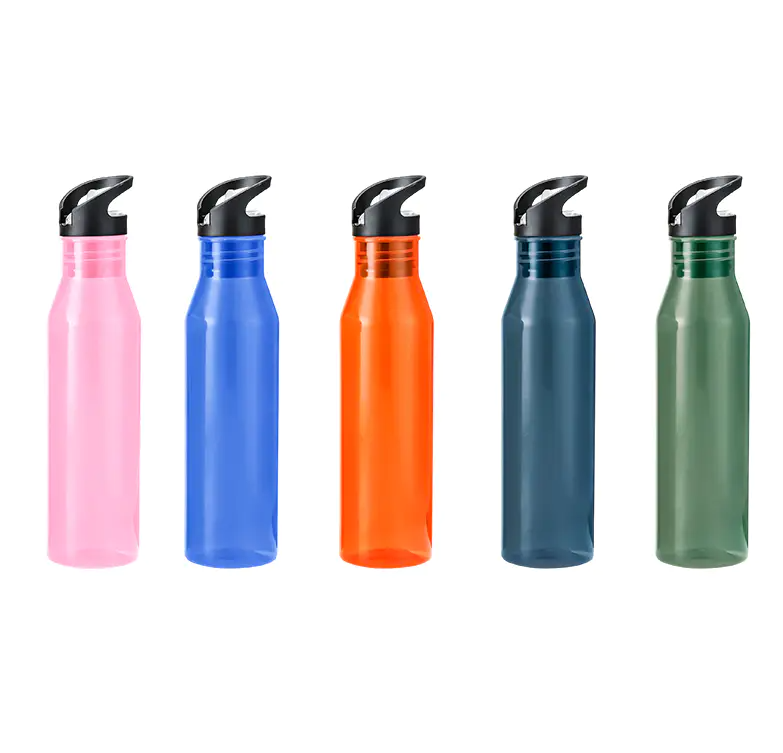
Product managers building a drinkware range often begin with capacity and color, then discover the real question is where the bottle will ride. Bags, bike frames, car doors, and gym lockers all impose limits. A backpack-friendly sport bottle answers that question by treating the bag as its primary home.
Consider how the shape is developed. Designers start from the pocket, not the bottle. Side pockets on common packs are narrow and stretchy, so the body needs a straight wall and a gently rounded base that slips in without catching. The shoulder stays low so the lid clears the zipper track. Early prototype rounds usually involve trying several bodies in a stack of real backpacks collected from different market segments, from student packs to travel daypacks.
Customization is where private label clients spend much of their time. On a backpack-friendly sport bottle, logos sit best on the flat middle section, where a pocket doesn't rub the print. Color runs can follow a school, club, or event theme, and a small set of sample colors lets a client's team vote before committing to a full order.
Assortment planning deserves a moment too. A family of three body heights sharing one lid design covers different bag sizes while keeping tooling manageable. Shared lids also simplify inventory, since one component fits every size in the range.
Quality checks should mirror real use. A common routine involves filling a bottle, closing the lid, and shaking it inside a bag to look for seepage. Other checks include repeated lid opening and closing, and drops from desk height onto a hard floor. Buyers tend to appreciate hearing that a backpack-friendly sport bottle is tested under conditions that resemble a commute rather than a lab bench.
Retail placement can strengthen sales. Shelving the bottles beside backpacks and lunch boxes invites shoppers to try the fit on the spot. Display hooks, packaging that shows the slim profile, and a small card explaining lid styles help staff tell the story quickly. A backpack-friendly sport bottle placed next to the bags it fits sells its own argument.
Wholesale clients may also want mixed cartons, with several colors or lid styles packed together so smaller stores can stock variety without large commitments. Planning that at the design stage avoids awkward repacking later.
When briefing a supplier, share the dimensions of the bags your customers carry and let the bottle be drawn around them. A backpack-friendly sport bottle developed that way tends to need fewer revisions before it reaches the shelf.