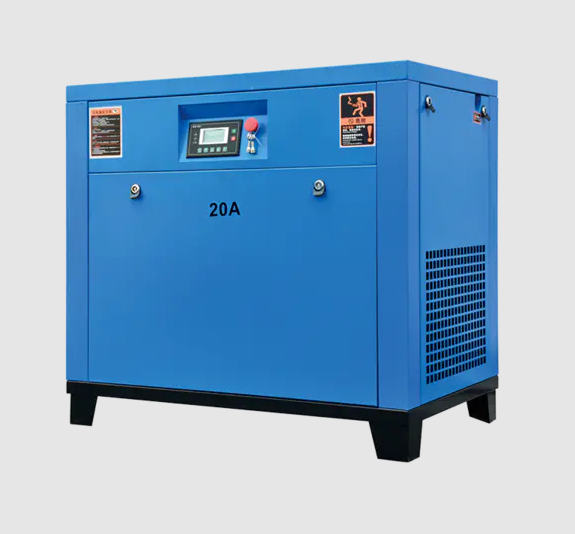
Choosing an air compressor can become surprisingly complicated when production requirements are placed beside a long list of technical specifications. Motor power, airflow, pressure range, control method, installation size, and electrical requirements all appear on the specification sheet. Yet the first question should be much simpler: what does the production line actually need? For many applications, a Low-Pressure Screw Air Compressor can be considered when high-pressure output is unnecessary.
Screw compressors are built around rotating screw elements that continuously compress air. This operating principle can suit production environments that need a regular compressed-air supply rather than occasional bursts. When the pressure requirement is relatively modest, a Low-Pressure Screw Air Compressor can be matched to the working conditions instead of selecting equipment designed for a substantially different duty.
Air consumption should be measured carefully. Pneumatic cylinders, valves, tools, packaging machines, and conveying equipment can all consume compressed air at different rates. Adding their individual requirements gives buyers a clearer picture of expected demand. A Low-Pressure Screw Air Compressor should then be evaluated around both airflow and pressure rather than one number alone.
Receiver capacity can also influence system behavior. An air receiver stores compressed air and can help handle short changes in demand. Filters and dryers may be included when downstream equipment requires cleaner or drier air. These components form a connected system, so compressor selection should consider the complete air path.
Machine installation is another practical issue. Industrial facilities may have limited floor space, existing electrical infrastructure, or fixed piping routes. Equipment dimensions and connection locations can therefore affect the final layout. Buyers considering a Low-Pressure Screw Air Compressor should collect these details before confirming a machine configuration.
Noise can also matter in certain working areas. Operators may spend long periods near production equipment, so compressor placement and enclosure design can influence the surrounding workspace. This is especially relevant in facilities where several machines operate in one area.
B2B buyers may also need to compare different configurations for separate production lines. One facility might require continuous airflow for packaging equipment, then another could need compressed air for pneumatic automation. A Low-Pressure Screw Air Compressor can be evaluated around the specific workload rather than treated as a universal machine.
Technical communication becomes important during procurement. Buyers should provide operating pressure, expected airflow, working schedule, power supply information, installation dimensions, and downstream equipment requirements. Suppliers can then recommend a configuration based on actual operating conditions.
A compressor is not simply a box that produces air. It connects to machines, piping, controls, storage, and production schedules. Understanding those connections can make equipment selection much clearer. For industrial applications operating below high-pressure requirements, a Low-Pressure Screw Air Compressor can be a sensible category to investigate when building a compressed-air system around real production needs.