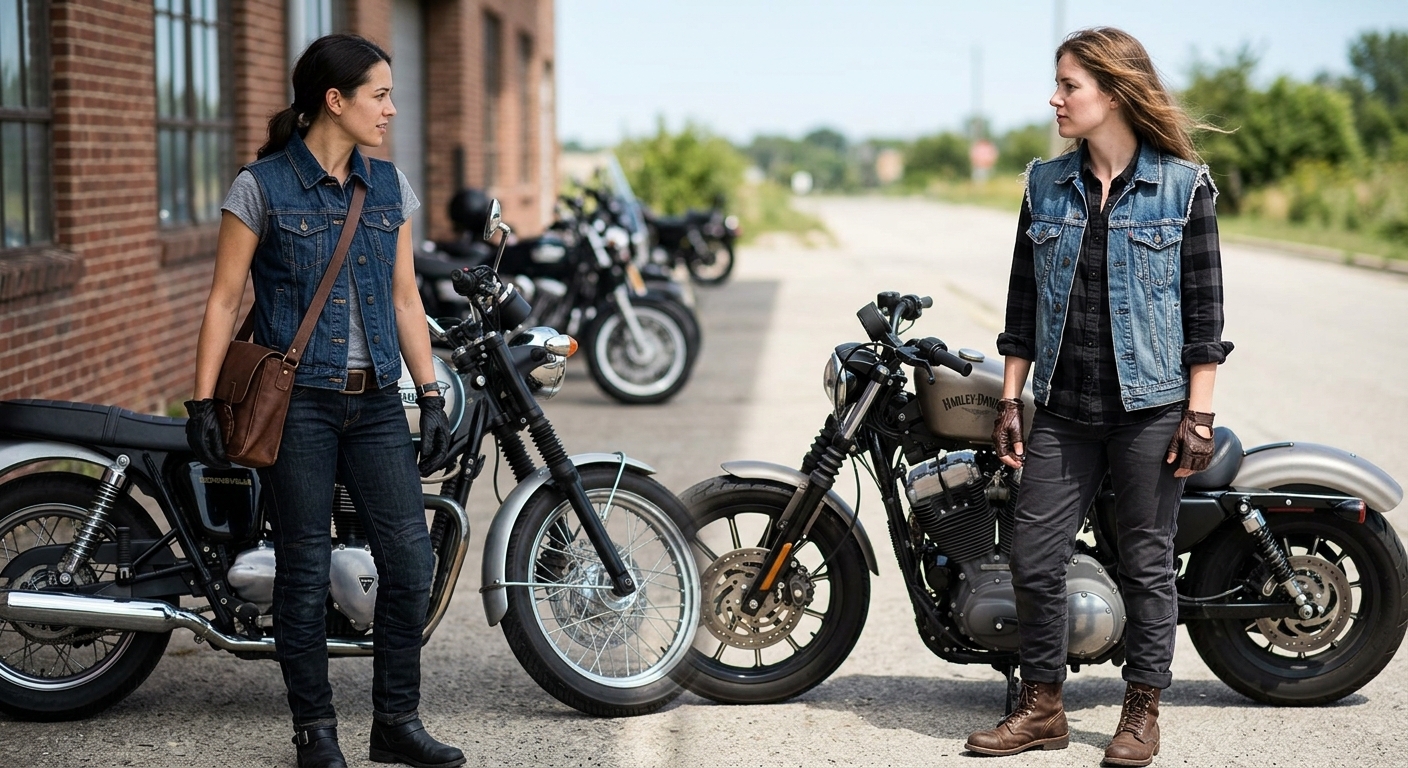
A factory-made sleeveless vest and a denim jacket with its sleeves removed can look nearly identical from a distance, but they are built very differently and it’s where the uniqueness comes into play. A purpose-built men's denim motorcycle vest is designed without sleeves from the start, while a cut-off begins as a regular jacket and has its sleeves removed. This article compares armholes, fit, patch space, riding comfort, maintenance, and cost so you can choose the construction that matches your riding style and customization needs.
How Sleeveless and Cut-Off Are Not the Same Thing
A purpose-built sleeveless vest is engineered as a vest from the beginning. It usually features shaped armholes, finished edges, vest-specific proportions, dedicated pockets, and closures designed for sleeveless wear. While on the other hand, a cut-off denim jacket starts as a regular jacket and has its sleeves removed later. It retains the jacket's original shoulders, chest pockets, back panel, and armholes that may be raw, frayed, or modified. The difference is not simply appearance. Construction affects comfort, fit, patching, and long-term maintenance.
Purpose-Built Sleeveless Vests: What You Get
Ready-made sleeveless vests offer several practical advantages such as the armholes are finished cleanly, the interior construction is predictable, and sizing is designed for vest wear rather than jacket proportions. Many motorcycle or club-style vests include interior storage, side adjustment, and large back panels suitable for patches. There is less alteration work required after purchase.
Yet possible disadvantages include fixed panel layouts, less DIY character, and potentially higher cost compared to thrift options. Some decorative features may interfere with patch placement. When shopping online, actual product measurements still matter more than size labels. Some vests run smaller than expected, so check chest, shoulder, and torso measurements before ordering.
Cut-Off Denim Jackets: Why Riders Still Make Their Own
The DIY route remains attractive for several reasons:
- More jacket styles, washes, and colors to choose from
- Easier thrift sourcing and secondhand shopping
- Strong DIY and battle-vest character
- Familiar jacket fit if you already own the garment
- Flexible patch layouts without manufacturer seams
- Potentially lower cost
Many riders recommend buying a regular denim jacket and cutting the sleeves off rather than limiting the search to factory-made vests. This opens up far more options for denim weight, wash, and fit.
However, possible disadvantages include awkward armholes, continued fraying, bulky shoulder seams, and extra finishing work. The donor jacket may not suit layering over hoodies or under riding jackets. A cut-off is only as good as the jacket used to make it.
Why Does Armholes Make the Biggest Difference
The armhole is where a clean sleeveless vest and a rough DIY conversion feel most different.
Purpose-Built Vest:
- Shaped armholes designed for sleeveless movement
- Reinforced edges and binding or finished hems
- Proportions intended for vest wear
Cut-Off:
- Raw denim edges or exposed seam allowance
- Intentional fraying or re-stitched openings
- Armhole size inherited from the original jacket
Poor armholes can cause rubbing, excessive looseness, shoulder pulling, uncontrolled fraying, and fabric bunching over a hoodie or jacket. Cutting too deeply into the original shoulder area can change the shape and structure of the vest entirely.
If the donor jacket had dropped shoulders, the armholes may become awkwardly large after sleeve removal. A well-finished armhole eliminates most of these problems.
How Denim Weight and Stretch Affect Both Styles
Denim weight and fabric composition influence comfort, structure, and patch support in both sleeveless and cut-off vests.
- Lightweight Denim is cooler, easier movement, less structure.
- Medium-Weight Denim is balanced comfort, patch-friendly, practical for everyday wear.
- Heavyweight Denim is stronger structure, better support for large patches, but warmer and stiffer.
- Rigid and raw denim create a cleaner silhouette but require more break-in.
- Washed denim offers immediate flexibility.
- Stretch denim improves mobility but may behave unpredictably around cut armholes, especially if the fabric contains significant elastane.
- Pure cotton denim holds its shape more consistently after sleeve removal.
Try to avoid assuming heavyweight denim is always better. The right weight depends on climate, layering, and intended use.
Which Style Works Better for Patches and Pockets?
Patch space depends on the actual seam layout, not the category. Check for a one-piece back panel, shoulder yoke placement, center seams, and usable back-patch area. Some ready-made vests offer excellent large back panels designed for club patches, while others have decorative seams that limit customization. Cutting the sleeves off a jacket can provide more choice in the base garment, but the jacket's original seam layout still determines patch space.
Pockets also vary. Purpose-built vests may include chest pockets, hand pockets, or interior pockets designed for vest use. Cut-offs retain the jacket's original chest and hand pockets, which can be more functional than decorative vest pockets. The actual seam layout and pocket design matter more than whether the vest was factory-built or DIY.
Fit and Layering Matter More Once You Start Riding
Standing in front of a mirror and guessing the look is not enough. Evaluate chest room, shoulder width, armholes, torso length, hem position, and layering room while reaching forward, bending elbows, rotating shoulders, and sitting in a riding position. Consider what will be worn underneath: a T-shirt, flannel, hoodie, or leather jacket.
A purpose-built vest may offer more predictable layering space because the proportions are designed for vest wear. A cut-off depends entirely on the donor jacket. If the jacket fit closely with sleeves attached, it may still feel tight over a thick layer after conversion. The best fit is the one that still works when the rider reaches for the handlebars.
Men's Denim Motorcycle Vest: Sleeveless or Cut-Off?
For a men's denim motorcycle vest, compare chest measurement, stomach room, shoulder width, armhole depth, torso length, and layering space for hoodies or jackets. A purpose-built vest may suit riders who want predictable proportions and minimal alteration work. A cut-off may suit riders who want more control over denim weight, specific washes, thrift options, and custom patch layouts. Actual measurements should guide the decision, not the category or label alone. Both styles can work well when the construction matches the intended use.
Women's Denim Motorcycle Vest: Choosing the Right Shape
For a summer riding women's denim motorcycle vest, check bust room, waist shaping, hip room, torso length, armholes, and stretch content. A factory sleeveless vest may offer more intentional shaping through the waist and bust, while some are simply smaller versions of men's cuts. A cut-off can work equally well if the donor jacket already fits correctly through the bust, waist, and hips. Sleeve removal does not fix a poorly fitting body section. Start with a jacket that already fits before turning it into a vest.
Durability, Fraying, and Maintenance: What to Look at
Purpose-built sleeveless vests often require less armhole maintenance because the edges are already finished and reinforced. A cut-off may require trimming loose threads, reinforcement stitching, edge binding, or occasional repair as fraying continues. Raw fraying can be intentional for a punk or battle-vest look, but uncontrolled fraying near structural seams may eventually require reinforcement. Both styles experience fading, washing, shrinking, and seam wear. Overall durability still depends on denim quality, stitching quality, and how the vest is worn and maintained.
Which Option Gives Better Value?
Purpose-built vests offer better value when the buyer wants ready-to-wear construction, usable pockets, clean armholes, and minimal alterations. Cut-offs offer better value when a good donor jacket is already available, thrift shopping is possible, customization is the priority, and DIY work is acceptable. Do not assume DIY is always cheaper if professional tailoring or edge finishing is needed after sleeve removal.
Final Thoughts
A men's denim motorcycle vest or women's denim motorcycle vest works best when the construction matches your priorities. Choose sleeveless for cleaner, predictable construction. Choose cut-off for DIY freedom, jacket-based fit, and greater customization.