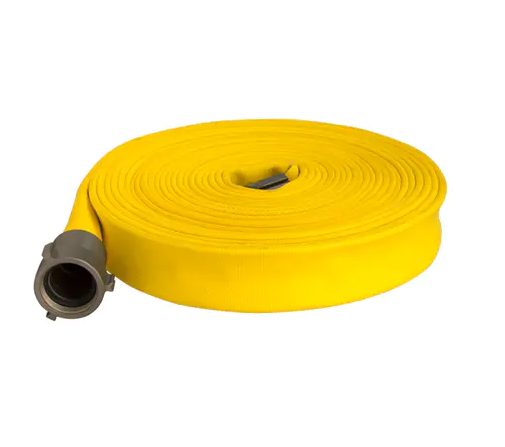
A textile hose may look simple at first glance, yet its structure plays an important role in many industrial systems. Unlike rigid pipes, a Textile Hose can bend, move, and follow the layout of equipment. This flexibility makes it useful for applications where fixed connections are difficult to arrange.
A typical textile hose combines an inner tube with textile reinforcement. The reinforcement gives the hose a balance between flexibility and structural support. Depending on the application, different textile materials and construction methods can be selected. This allows buyers to match the hose to specific working conditions instead of treating every hose as the same product.
In factories, workshops, processing equipment, and fluid transfer systems, a Textile Hose can be used for air, water, certain industrial fluids, and other compatible media. Its flexible body helps connect equipment that may not sit perfectly in a straight line. This can make installation layouts easier to organize, especially around machines, tanks, pumps, and other equipment.
For distributors and industrial buyers, the selection process usually starts with the medium being transferred. Temperature, working pressure, hose diameter, bending requirements, and connection type also matter. A hose designed for one application may not be suitable for another, even if the outside appearance is similar.
Textile reinforcement is particularly useful when a hose needs additional support without becoming a rigid component. The textile layer can help the hose retain its shape under normal working conditions while allowing movement during operation. This combination is one reason Textile Hose products appear in different industrial sectors.
Another consideration is hose length. A short connection may be enough between nearby components, while longer sections may be needed for equipment that requires movement. Choosing a suitable length can help reduce unnecessary bends and keep the overall routing practical.
For B2B purchasing, specifications should be checked as a complete set rather than focusing on one feature. Diameter, pressure range, temperature range, reinforcement structure, connection style, and intended medium should all match the application.
A Textile Hose is therefore more than a flexible tube. It is a connection component that helps bridge the gap between fixed equipment and moving or irregular layouts. When the right structure is matched to the working conditions, it can become a practical part of many fluid and air transfer systems.