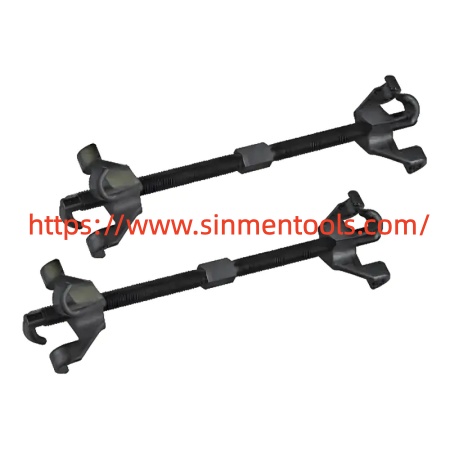
Bearings are designed to remain securely positioned during mechanical operation, but this secure fit can make maintenance more challenging when replacement is required. In this situation, a Bearing Puller provides a structured way to grip and remove a bearing while directing mechanical force toward the center of the assembly. Its practical value comes from the interaction between the gripping components, central mechanism, material construction, and working environment rather than from any single feature.
Material selection is an important starting point when evaluating a bearing removal tool. The arms, jaws, cross structure, and central screw all experience mechanical forces during operation, so the complete tool needs to be manufactured with suitable materials and processing methods. Alloy steel is commonly used in professional puller construction because it can combine structural strength with resistance to repeated workshop use. Surface treatments can also help protect exposed metal and contribute to easier cleaning after maintenance work.
The shape of the bearing should influence the purchasing decision. Some bearings provide accessible outer edges, while others are positioned close to housings, shoulders, or surrounding components. Buyers should examine how much room is available around the bearing and determine whether the tool can reach an appropriate contact point. A puller that fits the general category but cannot establish a stable grip on the actual bearing may not be suitable for the intended repair task.
Jaw configuration is therefore an important selection factor. Different puller structures can approach a bearing from different directions. Two-jaw designs may be useful where access is limited on opposite sides, while three-jaw arrangements can distribute contact around the component. Adjustable jaws provide another layer of flexibility by allowing the user to adapt the gripping position to the workpiece. The correct configuration depends on the geometry of the bearing and the surrounding assembly.
The central force mechanism also contributes to the tool's functionality. A forcing screw can transfer rotational movement into a controlled pulling action, while the frame and jaws guide that force toward the component. Proper alignment is important because an uneven setup can place unnecessary pressure on one area of the bearing or cause the tool to shift. The relationship between the center point and gripping surfaces should therefore be considered before operation.
Manufacturing technology can influence both consistency and usability. Forging can be used to form structural components, while machining can refine threads, contact areas, and adjustment sections. Surface treatment can provide another layer of protection for the finished tool. Taizhou Xinming Technology Co., Ltd. describes its puller production as combining material selection, manufacturing processes, testing, and quality control, with its product range covering different puller configurations and automotive maintenance tools.
The intended application should also guide the buying process. Automotive workshops may encounter wheel bearings, engine components, hubs, and other fitted parts, while industrial maintenance teams may work with bearings in motors, pumps, gearboxes, or transmission assemblies. Instead of selecting a tool based solely on its product name, users can consider the component structure, available access, pulling direction, and surrounding equipment.
User experience begins with preparation. Before applying force, technicians need to position the jaws securely against a suitable part of the bearing or component. The central screw should remain aligned with the shaft or intended pulling direction. A clear adjustment mechanism can make this positioning easier, particularly when working in restricted spaces. Xinming's product information also highlights adjustable puller structures for applications where bearing removal requires flexible positioning.
Handling comfort matters during repeated maintenance work. A well-organized puller allows technicians to adjust the jaws without excessive manipulation and operate the central mechanism in a controlled manner. The shape of handles, access to adjustment points, and overall balance can influence how easily the tool can be positioned. Good ergonomics do not replace mechanical performance, but they can make routine workshop procedures more manageable.
Maintenance of the tool itself should also be considered. Pullers may be exposed to grease, dust, metal particles, moisture, and other workshop contaminants. Cleaning the jaws and threaded areas after use can help keep the mechanism easier to inspect and operate. Users can also check for visible wear, damaged threads, or deformation before storing the tool. A straightforward construction can make these checks easier to incorporate into regular equipment maintenance.
Design and appearance contribute to the practical identity of a professional tool. A consistent surface treatment can help protect metal components while creating a recognizable appearance across a product range. Chrome, zinc, or other finishes may be selected according to the manufacturer's design and application requirements. Clear markings and an organized structure can also help users identify adjustment areas and understand how the tool should be positioned.
For manufacturers and distributors, design flexibility can help address different maintenance environments. A workshop with varied equipment may need several puller configurations, while a specialized repair operation may focus on a particular type of bearing or access condition. Taizhou Xinming Technology Co., Ltd. develops pullers alongside automotive repair, hydraulic, and assembly tools, and its manufacturing and R&D capabilities support different product configurations and customized requirements.
For automotive technicians, machinery maintenance teams, tool distributors, and purchasing departments, evaluating a bearing removal tool through material construction, jaw configuration, alignment, mechanical operation, handling, maintenance, and surface design can make product selection more closely connected with real workshop conditions. More information about Taizhou Xinming Technology Co., Ltd. and its professional pulling and maintenance tools is available at https://www.sinmentools.com/