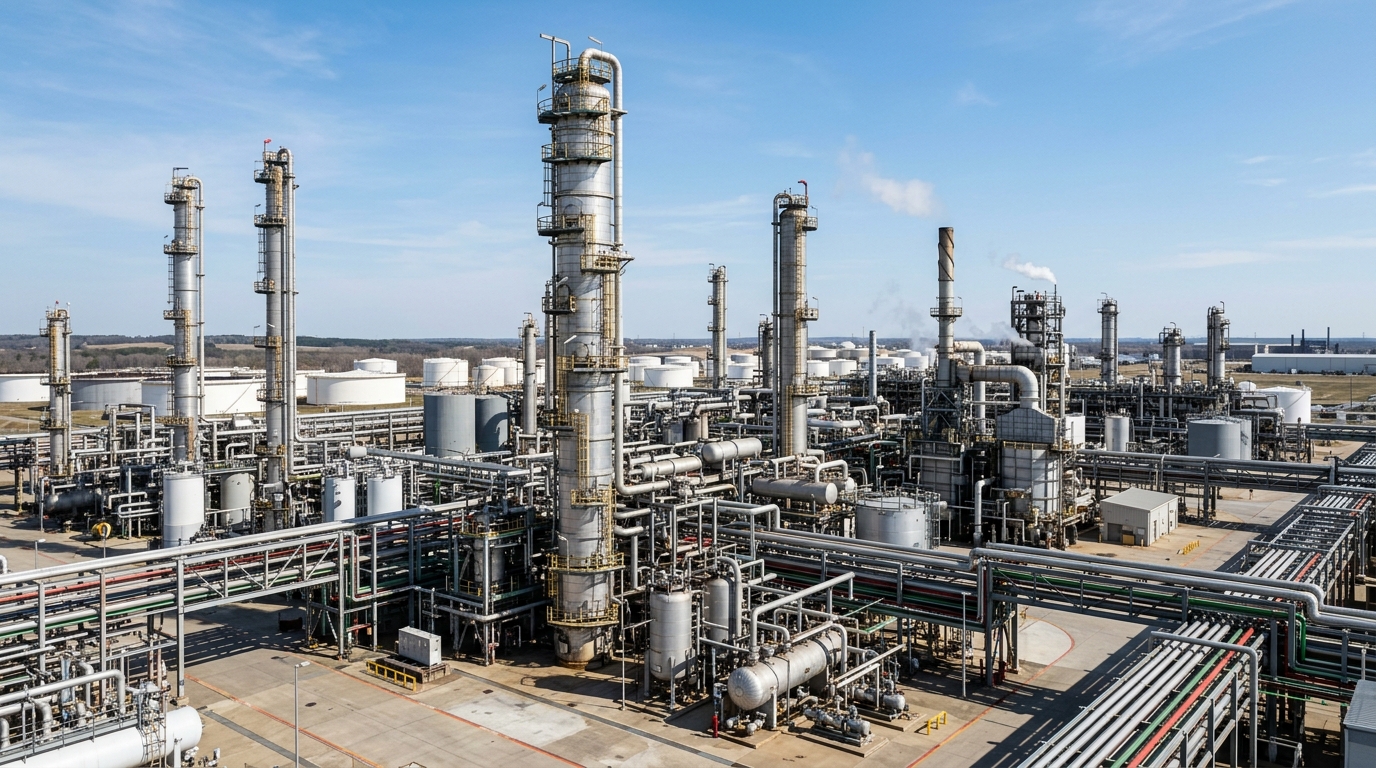
Crude oil contains a complex mixture of hydrocarbons, impurities, and other compounds that must be separated and processed before it can become useful fuel or petrochemical feedstock. This is where oil refinery equipment plays an important role. Refineries use interconnected machines and processing systems to separate crude oil into different fractions, remove unwanted materials, and convert selected components into products with specific characteristics. From large distillation columns to heat exchangers, pumps, compressors, and storage systems, every piece of equipment contributes to the safe and efficient operation of a refinery.
What Is Oil Refinery Equipment?
Oil refinery equipment refers to the machinery, vessels, heat-transfer systems, separation units, and supporting infrastructure used throughout the petroleum refining process. Refineries are not based on one single machine. Instead, they operate as integrated facilities where several types of equipment work together.
The exact equipment used depends on the refinery configuration and the products it is designed to manufacture. A simple refinery may primarily focus on separation, while a more complex facility can include conversion and treatment units that modify hydrocarbon molecules and improve product quality.
Because crude oil varies significantly in composition, refineries need equipment capable of handling different operating temperatures, pressures, flow rates, and chemical conditions. Equipment selection therefore affects reliability, process performance, maintenance requirements, and operational safety.
Main Types of Oil Refinery Equipment
Refineries contain many categories of equipment, but several systems are particularly important because they are directly involved in processing crude oil.
Distillation Equipment
Distillation is one of the fundamental operations in petroleum refining. Atmospheric distillation units heat crude oil and separate it into fractions according to differences in boiling ranges.
A typical distillation system includes a furnace, distillation column, trays or packing, condensers, reboilers, pumps, and associated piping. The heated crude enters the column, where lighter components move upward while heavier fractions remain toward the lower sections.
Some refineries also use vacuum distillation equipment. Vacuum conditions lower the boiling temperature of heavy hydrocarbons, allowing additional separation without exposing the material to excessively high temperatures that could cause thermal degradation.
Heat Exchangers
Heat management is extremely important in a refinery because many processes require heating and cooling. Heat exchangers transfer heat between process streams without directly mixing them.
For example, a hot refinery stream can transfer some of its heat to incoming crude oil. This can reduce the amount of additional fuel needed in furnaces and improve overall energy efficiency.
Shell-and-tube heat exchangers are widely used in industrial processing because they can handle high temperatures and pressures. Their design depends on factors such as fluid properties, heat-transfer requirements, pressure drop, and corrosion considerations.
Pumps and Compressors
Pumps move liquids through refinery systems, while compressors increase the pressure of gases. These machines keep process streams moving between different units.
Pumps may be used for crude oil, intermediate products, finished fuels, and various chemical streams. Compressors are particularly important in processes involving hydrogen and hydrocarbon gases.
The correct selection of rotating equipment depends on flow rate, pressure requirements, temperature, fluid characteristics, and operating conditions. Reliability is especially important because failure of a major pump or compressor can interrupt an entire processing section.
Equipment Used for Separation and Treatment
Refining does not stop after crude oil has been separated into different fractions. Many streams require additional treatment before they meet required specifications.
Desalting Systems
Crude oil can contain water, salts, sediment, and other contaminants. A crude oil desalter removes a significant portion of these unwanted materials before the crude enters the main refining units.
Removing salts early is important because they can contribute to corrosion, fouling, and operational problems in downstream equipment. Desalting commonly involves mixing crude with water and using an electric field to help separate the resulting water phase from the oil.
Proper pretreatment can therefore protect equipment and support more stable refinery operation.
Hydroprocessing Equipment
Hydroprocessing units use hydrogen under controlled temperature and pressure conditions to remove contaminants and improve the quality of petroleum streams.
Hydrotreaters are commonly used to reduce sulfur, nitrogen, and other unwanted compounds. These systems generally include reactors, heaters, separators, compressors, heat exchangers, and supporting equipment.
Hydrocracking is another important process. It combines hydrogen with catalytic reactions to convert heavier hydrocarbons into lighter, more valuable products. The equipment required for these processes must operate under demanding pressure and temperature conditions.
Catalytic Processing Equipment
Catalytic processes change the structure of hydrocarbons and can increase the production of desirable fuels. Catalytic cracking, for example, breaks larger hydrocarbon molecules into smaller ones.
Fluid catalytic cracking units contain specialized reactors, regenerators, cyclones, fractionation equipment, and heat-management systems. Catalysts play a central role, but the mechanical equipment surrounding the catalyst is equally important for maintaining controlled process conditions.
Furnaces and Boilers
Industrial furnaces provide the heat required for several refinery operations. Crude oil and other process streams may need to reach specific temperatures before entering reactors or distillation units.
A refinery furnace typically includes burners, radiant and convection sections, tubes, controls, and safety systems. Heat must be transferred efficiently while maintaining appropriate temperatures and avoiding excessive thermal stress.
Boilers and steam systems also support refinery operations. Steam can be used for heating, stripping, power generation, and other utility requirements. Efficient steam management can reduce energy losses and improve the overall performance of a facility.
Storage and Material Handling Systems
Processing equipment is only one part of a refinery. Large facilities also require systems for storing crude oil, intermediate streams, finished products, chemicals, and other materials.
Storage tanks vary according to the properties of the material being stored. Floating-roof tanks, for example, can be used for certain petroleum products where vapor management is important.
Pipelines, valves, loading systems, transfer pumps, and instrumentation connect storage areas with processing units. These systems allow materials to move through the refinery while operators monitor pressure, temperature, flow, and inventory.
Instrumentation and Control Systems
Modern refineries rely heavily on measurement and control technology. Sensors continuously monitor variables such as temperature, pressure, flow, and liquid level.
Control systems use this information to help operators maintain process conditions within defined operating ranges. Automated control can also respond to changes in feed composition or process conditions.
Advanced monitoring can help identify abnormal operating conditions before they develop into major problems. However, automation does not remove the need for trained personnel, inspection, maintenance, and proper operating procedures.
Safety Considerations in Refinery Equipment
Petroleum refining involves flammable hydrocarbons, high temperatures, high pressures, and potentially hazardous chemicals. Equipment therefore has to be designed and operated with safety as a central consideration.
Pressure vessels may require pressure-relief systems, while process areas can use gas detection, fire protection, emergency shutdown systems, and controlled ventilation.
Regular inspection is also important. Corrosion, erosion, vibration, fatigue, fouling, and mechanical wear can gradually affect equipment performance. Preventive and predictive maintenance programs can help identify developing problems before they result in unexpected shutdowns.
Material selection is another major consideration. Equipment exposed to corrosive compounds or high-temperature environments may require specialized alloys or protective systems.
Energy Efficiency in Modern Refineries
Energy consumption is one of the major operating considerations for petroleum refineries. Large quantities of heat are required for distillation, conversion, and treatment processes.
This makes efficient oil refinery equipment important not only for processing capacity but also for energy management. Heat integration allows facilities to recover heat from hot process streams and reuse it elsewhere.
Improving insulation, optimizing furnace operation, maintaining heat exchangers, and reducing steam losses can also contribute to better energy performance.
Digital monitoring is increasingly being used to track equipment conditions and energy consumption. Data from sensors can help identify unusual temperature changes, pressure variations, or declining heat-transfer performance.
Maintenance and Equipment Reliability
Refinery equipment operates for long periods under demanding conditions. Maintenance is therefore an ongoing part of refinery management rather than an occasional activity.
Routine inspections can identify leaks, corrosion, fouling, vibration, or other signs of deterioration. Rotating equipment such as pumps and compressors may require vibration monitoring and lubrication checks.
Heat exchangers can experience fouling that reduces heat-transfer efficiency. Distillation equipment may also require inspection during planned shutdowns.
Predictive maintenance technologies can analyze equipment data to identify potential failures earlier. This approach can help maintenance teams schedule repairs and reduce unexpected interruptions.
Choosing Equipment for Refinery Applications
Selecting refinery equipment requires consideration of the complete process rather than looking at individual machines in isolation. Engineers generally evaluate factors such as process conditions, material properties, capacity, pressure, temperature, corrosion potential, energy requirements, maintenance needs, and applicable standards.
Compatibility between connected equipment is also important. A pump, for example, must provide suitable flow and pressure for the downstream process. Similarly, heat exchangers must be designed around the temperatures and flow characteristics of both process streams.
Long-term operating conditions should also be considered. Equipment with a lower initial cost may require more maintenance or have greater energy consumption over its operating life.
The Role of Technology in Refinery Operations
Digital technologies are changing how refineries monitor and maintain their equipment. Industrial sensors can collect large amounts of operational data, while centralized control systems allow operators to observe process conditions in real time.
Predictive analytics can help detect patterns associated with equipment degradation. Digital models can also support process optimization and maintenance planning.
However, technology works best when combined with sound engineering practices. Accurate instrumentation, reliable equipment, qualified personnel, inspection programs, and clear safety procedures remain essential components of refinery operations.
Conclusion
Oil refineries depend on a wide range of interconnected machinery to transform crude oil into useful petroleum products. Oil refinery equipment includes distillation systems, heat exchangers, pumps, compressors, furnaces, desalters, reactors, storage systems, instrumentation, and many other supporting components. Each system has a specific function, but reliable refinery operation depends on how effectively these systems work together.
Proper equipment selection, maintenance, monitoring, energy management, and safety practices can support stable processing and long-term reliability. As refineries adopt more advanced automation and monitoring technologies, understanding the purpose and operating requirements of individual equipment remains important for efficient and responsible refinery management.
FAQs
1. What is oil refinery equipment?
Oil refinery equipment includes the machinery and systems used to separate, treat, convert, heat, cool, transfer, and store crude oil and petroleum products during refining.
2. What is the most important equipment in a refinery?
There is no single piece of equipment that performs the entire refining process. Distillation columns, furnaces, heat exchangers, pumps, compressors, reactors, and treatment systems all perform important functions.
3. Why are heat exchangers used in refineries?
Heat exchangers transfer heat between process streams. They can help recover energy from hot streams and reduce the amount of external heating or cooling required.
4. What does a crude oil desalter do?
A desalter removes water-soluble salts and other contaminants from crude oil before it enters major processing units. This helps reduce corrosion and fouling risks.
5. Why is refinery equipment maintenance important?
Regular maintenance helps identify corrosion, wear, fouling, vibration, leaks, and other problems that could affect equipment reliability, safety, or process performance.
6. How is technology used with refinery equipment?
Sensors, control systems, monitoring platforms, and predictive analytics can be used to track equipment conditions, process variables, energy use, and potential maintenance requirements.