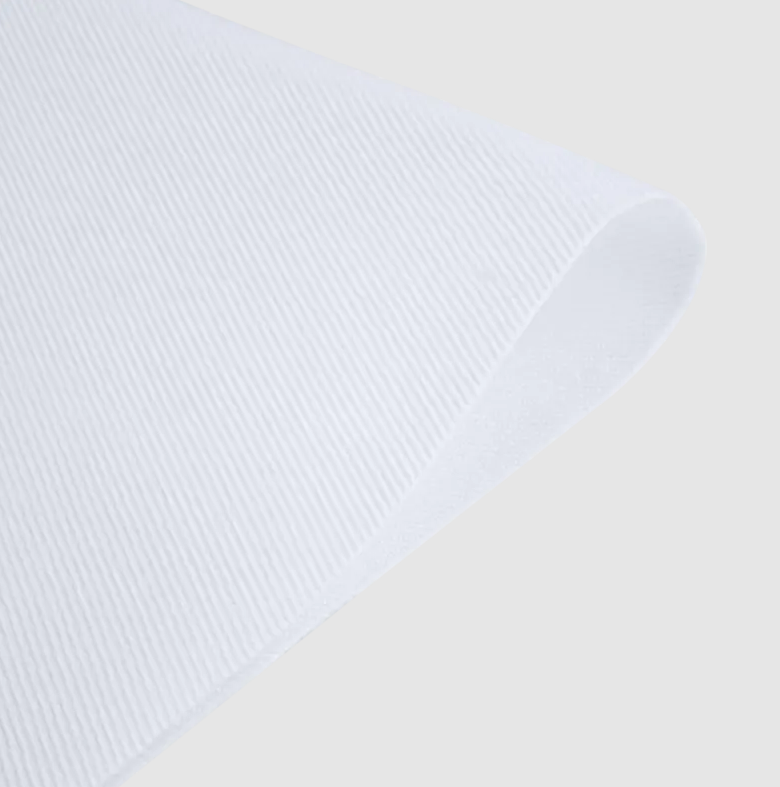
Multifilament filter textile begins with the yarn itself. Instead of a single thick strand, the material is built from many continuous filaments twisted or gathered together. These fine filaments create a fabric that combines strength with a controlled openness, allowing liquids or gases to pass while capturing unwanted particles. The result is a textile suited for filtration duties across industrial and process settings.
The number of filaments in each yarn influences the fabric’s behavior. A higher filament count produces a smoother surface and more consistent pore structure. That consistency helps the textile trap solids of similar size without sudden changes in flow rate. The individual filaments also flex under pressure, so the fabric can conform slightly to the shape of the filter housing or the particles it holds. This flexibility reduces the chance of sudden tears or channeling that can occur with more rigid materials.
Weaving or knitting patterns further shape performance. A plain weave keeps the pores relatively uniform, while a twill pattern can add diagonal pathways that improve dirt-holding capacity. In either case, the multifilament construction keeps the yarns stable during the manufacturing process and later during use. The textile can be calendared or heat-set to lock the dimensions, ensuring the pore size remains close to the design target even after repeated cycles of pressure and flow.
Surface characteristics matter as well. Some multifilament filter textiles receive a light finish that reduces fiber shedding, an important point when the filtrate must stay clean. Others are left with a more open texture that encourages particles to embed within the depth of the fabric rather than forming a dense cake on the surface. Depth loading often extends the useful interval between cleanings because the dirt is distributed through the thickness of the material instead of blocking the face.
Chemical compatibility is another practical consideration. The base polymer—commonly polyester, polypropylene, or similar resins—determines which fluids the textile can contact without swelling or weakening. Once the polymer is chosen, the multifilament yarn is extruded and then assembled into fabric under controlled tension so that the final product keeps its intended porosity. The finished textile arrives as rolls or cut pieces ready for assembly into filter bags, cartridges, or panel filters.
In operation the fabric works quietly. Fluid enters, particles lodge among the interwoven filaments, and clarified liquid or gas exits the other side. The multifilament structure provides enough surface area to capture fine solids while still permitting acceptable throughput. Operators notice that the pressure drop rises gradually rather than jumping, giving a clear signal when the filter needs attention. That predictable behavior is one reason the material continues to appear in process lines where steady filtration is required.
The appeal of multifilament filter textile lies in its balanced construction. Many fine filaments working together create a fabric that is strong yet permeable, flexible yet dimensionally stable. Those qualities allow it to serve in applications that demand both particle retention and reliable flow, without drawing attention to itself beyond the clean results it helps produce.