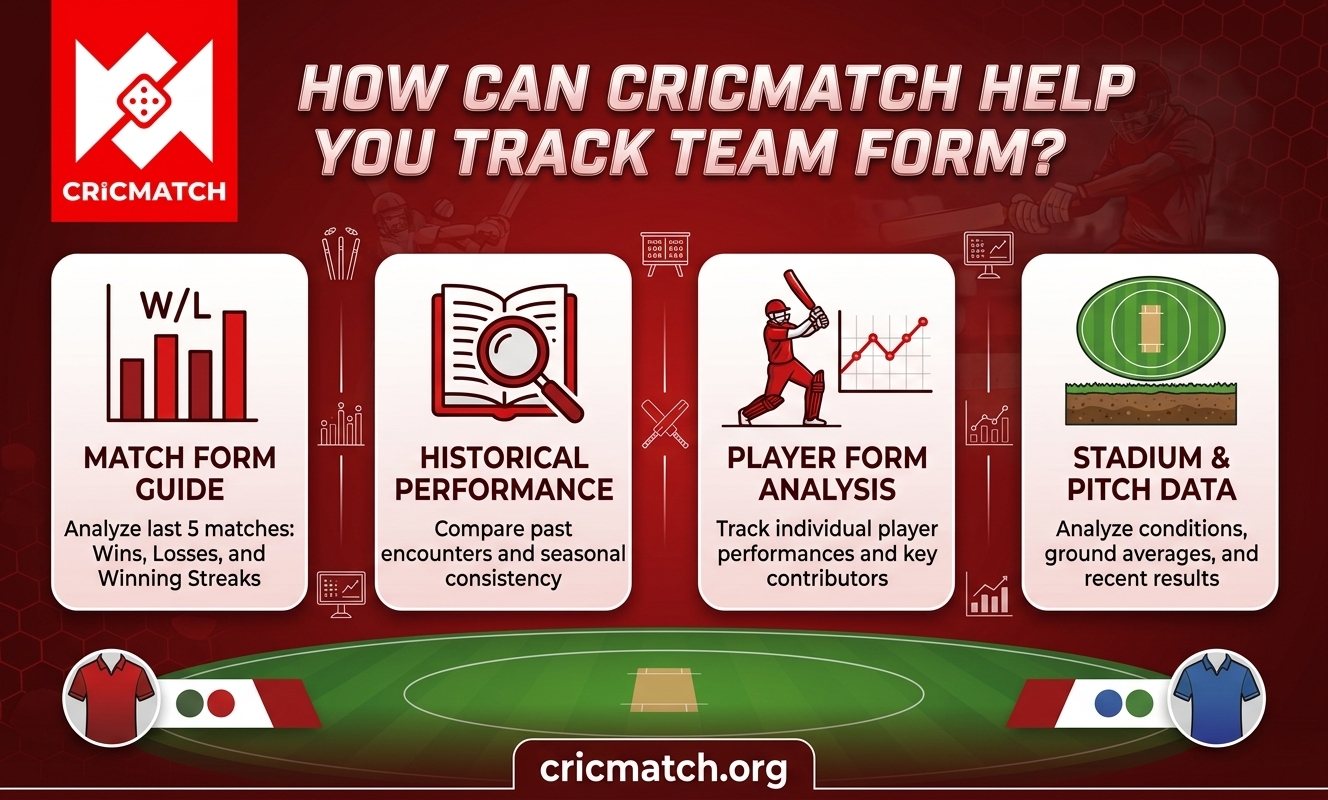
Following a team’s recent performance can make cricket analysis more structured and easier to understand. CricMatch can be used as part of this process by helping users follow match information, compare recent performances, and keep important team trends in one place. Instead of judging a side from one result, a broader view of its recent matches can provide better context.
Why Does Team Form Matter in Cricket?
Team form refers to how consistently a side has performed across its recent matches. It usually involves more than simply counting wins and losses. The quality of the opposition, winning margins, batting output, bowling performance, and match conditions can all change how a result should be interpreted.
For example, winning several matches against weaker opposition may tell a different story from achieving similar results against highly competitive teams. Looking at a wider set of information therefore gives a more balanced picture.
A practical form check can include:
- Results from the last five to ten matches
- Batting and bowling consistency
- Strength of recent opponents
- Home and away performances
- Performance across different formats
- Key player availability
These factors help separate a short-term result from a more meaningful performance trend.
How Can Recent Results Show Team Trends?
Recent results are usually the easiest starting point. A sequence such as win-win-loss-win can show that a team has generally remained competitive, but the sequence alone does not explain why those results happened.
Look at the score margins and match situations alongside the results. A narrow defeat after successfully chasing a large total can indicate a different level of performance from a heavy loss caused by poor batting.
It is also useful to compare several matches rather than focusing only on the latest fixture. A longer sample can reduce the influence of one unusually strong or weak performance.
How Can You Compare Batting and Bowling Form?
Results become more useful when supported by basic performance indicators. A team may be winning because its batting unit is consistently producing strong totals, or because its bowlers are regularly taking wickets during important phases.
When reviewing recent matches, consider whether:
- Top-order batters are contributing consistently
- Middle-order players are finishing innings effectively
- Bowlers are controlling runs during key overs
- Wicket-taking options remain reliable
- Fielding mistakes are affecting results
This approach helps identify where a team is performing well and where weaknesses may still exist.
How Does Opposition Strength Affect Team Form?
Not every result carries the same context. The standard of recent opponents should be considered before drawing conclusions about a team's current level.
A strong record against high-quality opposition can provide different information from a similar record against lower-ranked teams. Venue and format also matter because a side that performs well in one environment may not produce identical results elsewhere.
Using the Cricmatch app to follow match information can therefore be combined with independent scorecards and statistics. The aim is to compare information rather than rely on a single headline result.
Can Player Form Change the Team Picture?
Yes. Team performance is closely connected to individual contributions. A side can have a strong overall record while depending heavily on a few players.
Check whether leading batters are scoring consistently, whether strike bowlers are taking wickets, and whether supporting players are contributing when required. Player availability also matters because injuries, rotation, suspensions, or tactical changes can alter the balance of a playing XI.
Recent team form should therefore be viewed alongside current squad information rather than treated as a fixed measurement.
How Can You Build a Simple Team Form Check?
A simple process can make analysis more consistent. Start with the latest five to ten matches, record the results, and then examine the quality of opposition and performance margins.
Next, compare batting and bowling contributions. Finally, consider the venue, format, likely lineup, and any significant team news.
Users checking information after a Cricmatch login can use the available match information as one reference point while cross-checking important statistics from reliable cricket sources.
What Should You Avoid When Reading Team Form?
Avoid treating a winning streak as a guarantee of another win. Cricket results can change because of conditions, team selection, injuries, pitch behaviour, and individual performances.
It is also better to avoid judging a team solely by reputation. A well-known side may be struggling, while a less-fancied team may have developed strong recent momentum.
The same principle applies to Cricmatch247: use recent information as part of a wider analysis rather than assuming that one statistic tells the entire story.
Conclusion
Tracking team form is more useful when recent results are considered alongside batting consistency, bowling performances, opposition strength, player availability, and match conditions. A structured approach helps turn individual results into meaningful performance patterns. By reviewing these factors together, readers can develop a clearer and more balanced understanding of how a cricket team has been performing recently.