Planning a grocery delivery application within a three-week package requires more than creating a list of features. A backlog should represent the actual work required to create a functional first release. When the backlog contains too many features, unclear requirements, or unnecessary integrations, the project can quickly move beyond its planned timeline.
For grocery founders, reviewing the backlog before development begins can help prevent scope problems and keep the first release focused. A structured grocery app development process starts by identifying the core customer journey and then deciding which supporting features are genuinely required for launch.
Mistake 1: Adding Too Many Features to the First Release
One of the most common mistakes is treating the first release as the final version of the product. Founders may add loyalty programs, subscriptions, referrals, AI recommendations, advanced analytics, multiple payment options, and other ideas to the initial backlog.
While these features may have long-term value, they can increase development time and testing requirements.
How to Prevent It
Divide the backlog into launch features and future features. The first release should focus on functions that allow customers to browse products, create a cart, complete checkout, place an order, and receive updates.
Additional capabilities can be planned for subsequent releases after the core product has been tested with real users.
Mistake 2: Not Defining the MVP Clearly
Another problem occurs when the team starts development without agreeing on what the MVP actually needs to accomplish.
Without a clear definition, new requirements can continue appearing during development. A request that seems small can introduce new screens, backend logic, database changes, or third-party integrations.
How to Prevent It
The grocery delivery app MVP guide approach should begin with a clearly defined business objective. Decide what customers must be able to do and what the business must be able to manage when the first release goes live.
Every feature should then be evaluated against that objective.
Mistake 3: Ignoring User Roles
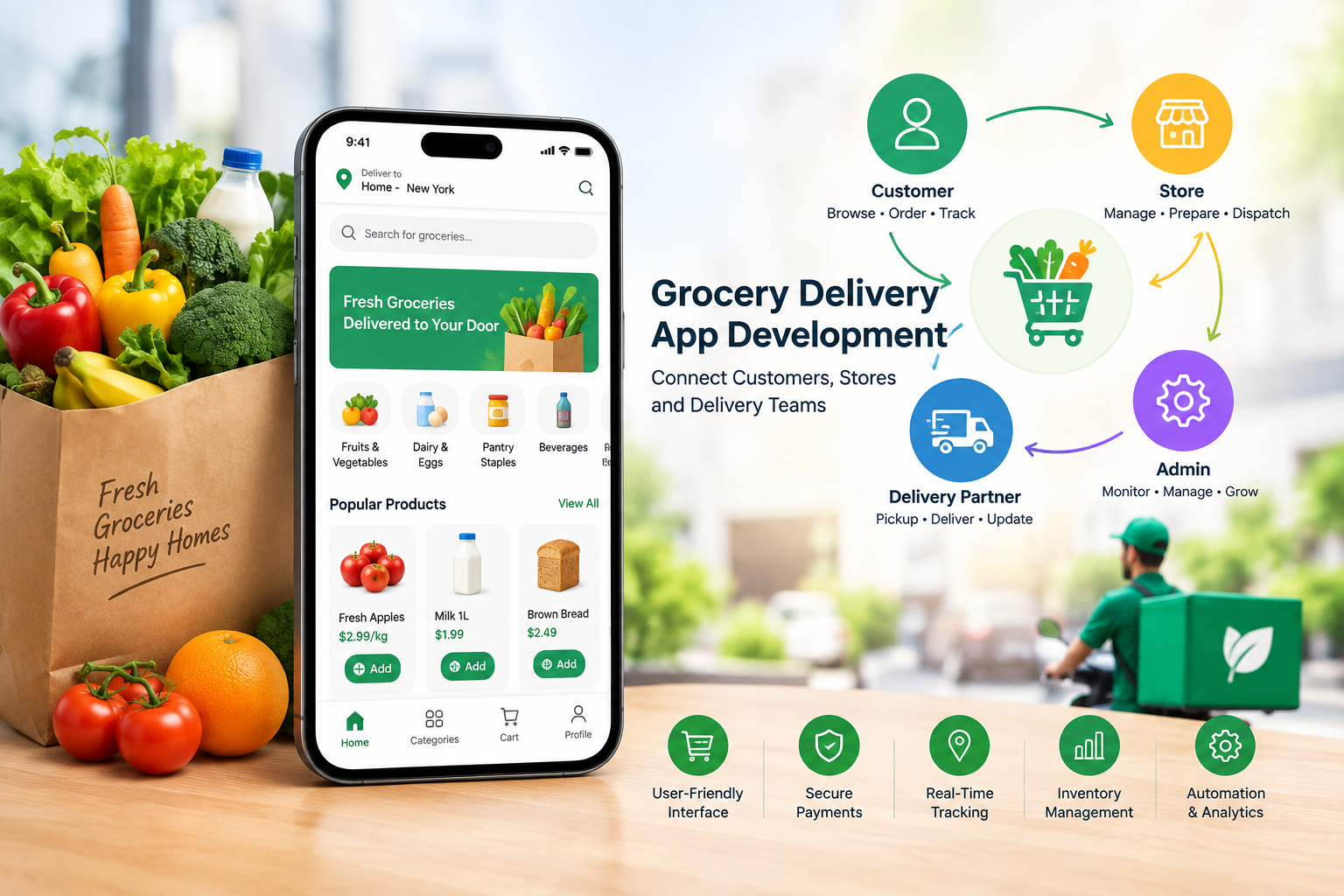
A grocery platform may involve customers, store operators, delivery personnel, and administrators. Creating a general feature list without assigning functions to specific roles can result in missing workflows.
For example, adding customer order tracking without defining how store staff update order status can create an incomplete process.
How to Prevent It
Map every major feature to its user role. Define what each participant needs to do before, during, and after an order.
This helps the development team understand how different parts of the platform connect.
Mistake 4: Underestimating Integrations
Payment gateways, maps, notifications, SMS services, analytics tools, and external delivery systems can all affect development scope.
A feature may look like one item in a backlog but require several technical components to function correctly.
How to Prevent It
Identify integrations before finalizing the three-week scope. Check API availability, account requirements, documentation, authentication, testing requirements, and expected behavior for successful and failed transactions.
External dependencies should be included in the timeline rather than treated as separate work after development starts.
Mistake 5: Treating Every Feature as Equal
A backlog without priorities makes it difficult for developers to know what should be completed first when time becomes limited.
A payment function and a customer review system may both appear as individual backlog items, but they do not have the same importance for launching the basic ordering journey.
How to Prevent It
Assign priority levels such as Must Have, Important, and Future. Must-have features should be protected within the three-week development schedule, while lower-priority items can be moved if necessary.
Mistake 6: Forgetting Backend and Admin Requirements
Founders sometimes focus heavily on customer-facing screens while overlooking the tools required to operate the application.
An attractive grocery interface is not enough if administrators cannot add products, manage categories, view orders, update inventory, or manage customers.
How to Prevent It
Review customer, business, delivery, and administrative workflows together. The first release should contain the basic operational controls required to support customer transactions.
Mistake 7: Adding Advanced Features Without Data or Operational Requirements
Features such as personalized recommendations, detailed analytics, dynamic pricing, and automated customer segmentation often depend on sufficient data and supporting business processes.
Adding them to the first backlog without considering these requirements can increase complexity.
How to Prevent It
Ask what data the feature requires, where that data will come from, and whether the business is ready to use the resulting information. If the answer is unclear, consider moving the feature to a later phase.
Mistake 8: Not Leaving Time for Testing
A three-week development package should not allocate every available day to feature development. Testing, bug fixing, integration checks, and final revisions are also necessary.
If the backlog consumes the entire timeline, the application may reach the end of the package without enough time for proper validation.
How to Prevent It
Reserve part of the schedule for quality checks. Features should be tested across relevant user roles and workflows before the release is considered complete.
Mistake 9: Changing the Scope During Development
Frequent additions can create scope creep. A founder may request an additional feature after seeing a prototype, but even a small change can affect existing screens, APIs, database structures, or testing.
How to Prevent It
Freeze the initial MVP scope before development starts. Maintain a separate change list for new ideas and evaluate them based on their effect on the timeline and budget.
Mistake 10: Choosing Features Before Defining the Business Model
Different grocery businesses operate differently. A single-store application, multi-vendor marketplace, dark-store model, and aggregator may require very different workflows.
How to Prevent It
Define the operating model first. Then build the feature backlog around the actual business process. This ensures that development supports the way orders, inventory, payments, stores, and deliveries will operate.
How a Grocery Platform Planning Service Can Help
A structured grocery platform planning service can help founders organize requirements before development begins. Instead of simply listing features, the planning process can connect business objectives with user roles, workflows, technical requirements, integrations, and release priorities.
This can make it easier to determine which capabilities belong in the three-week package and which should be reserved for later development.
Conclusion
A three-week grocery application package requires a carefully controlled feature backlog. Common problems include adding too many features, failing to define the MVP, overlooking user roles, underestimating integrations, ignoring admin requirements, and leaving insufficient time for testing.
A focused grocery app development strategy can prevent these issues by prioritizing the core ordering journey and separating essential launch functionality from future improvements. With clear requirements, defined priorities, and a realistic timeline, founders can approach the first release with a more manageable scope and a clearer product roadmap.