Once hair grows beyond the scalp, it is made up of non-living fibres, which means damaged strands cannot heal themselves in the same way skin can. That is exactly why the products you use on dry or damaged hair matter so much. The right products can improve softness, smoothness and manageability while helping protect the hair from further stress.
This is where the hair mask vs conditioner confusion begins. Both products promise softer, smoother and more manageable hair, so it is easy to assume they do the same job. Some people use the terms interchangeably, while others wonder whether they actually need both products in their routine.
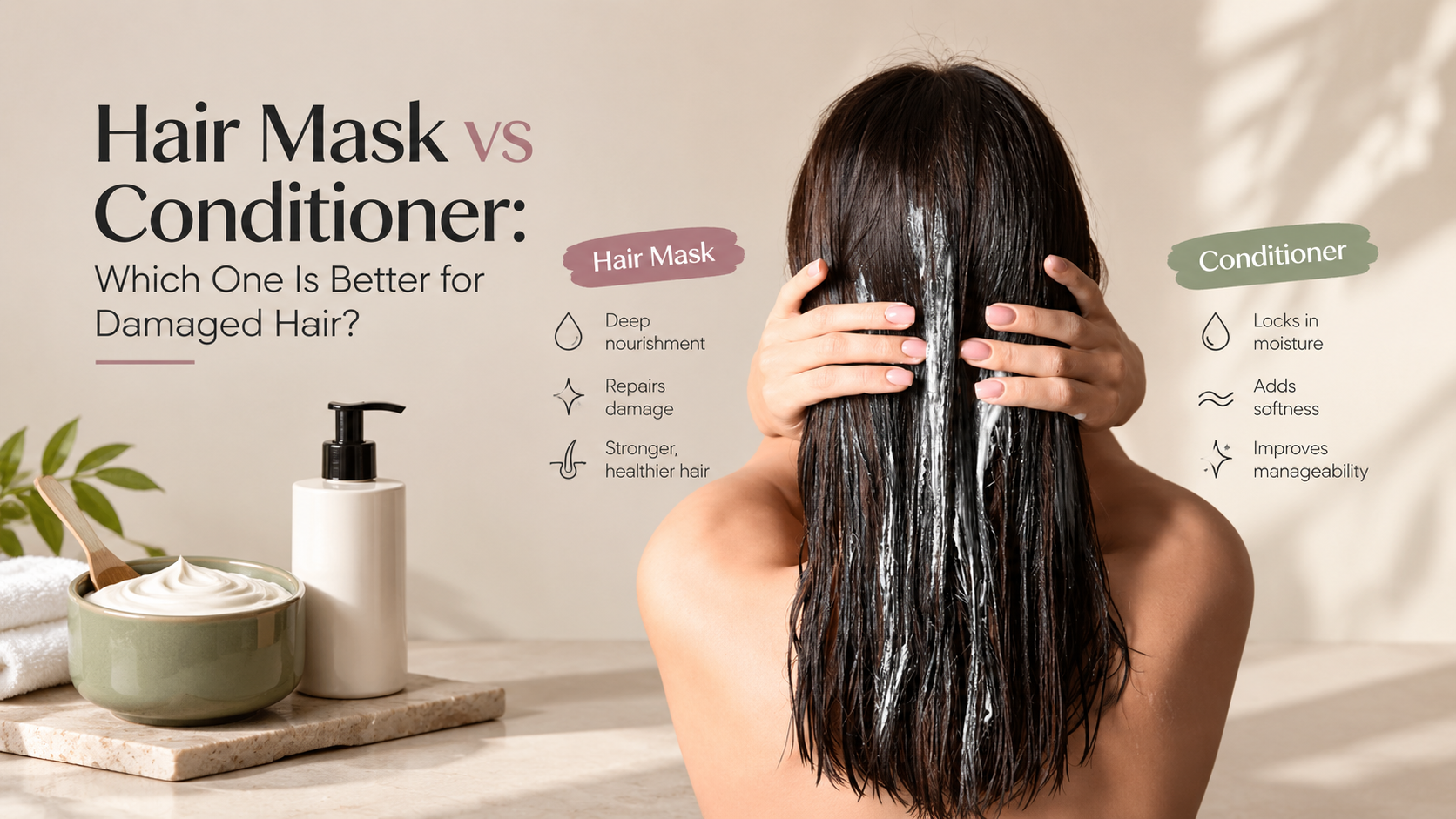
There is, however, a real difference between them. Both can contain conditioning ingredients, are usually applied after shampooing and can make the hair feel softer. The main difference is the intensity of conditioning they provide and how frequently they are intended to be used.
Understanding the hair mask vs conditioner difference makes it easier to build a routine that matches your hair rather than simply adding more products. By the end of this guide, you will know when conditioner is enough, when a mask may be useful and how to decide which one fits your hair-care needs.
Hair Mask vs Conditioner Difference: What Is Actually Going On?
Let's start with the basics because this is where most of the confusion can be cleared up. A conditioner is generally designed for regular use after shampooing. It helps smooth the surface of the hair, reduce friction, improve detangling and make strands easier to manage. Depending on the formula, a conditioner may also provide moisture, softness and some protection from everyday styling and environmental stress.
A hair mask is usually formulated as a more intensive conditioning treatment. Masks are often richer in texture and may contain a higher concentration or different combination of conditioning ingredients. They are commonly used when hair feels particularly dry, rough, frizzy or difficult to manage.
This does not mean a conditioner only works on the surface while a hair mask permanently repairs the inside of every damaged strand. Hair damage is more complicated than that. Both products primarily improve the condition, feel and appearance of the hair, but a mask generally provides a more intensive treatment than an everyday conditioner.
Deep Conditioner vs Hair Mask: Are They the Same Thing?
The difference between a deep conditioner and a hair mask is not always clear because brands sometimes use these terms interchangeably. A product labelled as a deep conditioner may function very similarly to one marketed as a hair mask. Both are typically designed to provide more intensive conditioning than a basic daily conditioner and may have richer textures or longer application times.
Instead of choosing a product based only on the wording printed on the jar, look at its formula, recommended usage and intended purpose. A regular conditioner is usually designed for frequent use, while a deep conditioner or hair mask is often intended as a more concentrated treatment used less frequently.
Ultimately, the product's instructions and how well the formula suits your hair matter more than whether the packaging calls it a mask or deep conditioner.
Hair Mask vs Conditioner: Which One Is Better?
Neither product is automatically better because they are designed to serve different purposes.
Conditioner is best viewed as regular maintenance. It helps keep hair softer, smoother and easier to detangle after washing. For people with relatively healthy hair, a good conditioner may provide all the conditioning they need on most wash days.
A hair mask is better suited to occasions when your hair needs more intensive conditioning. If your strands feel unusually rough, dry, frizzy or difficult to manage after colouring, heat styling or environmental exposure, a mask can provide an extra conditioning step.
Asking whether a hair mask or conditioner is better is similar to asking whether a daily moisturiser or an occasional intensive treatment is better for skin. The answer depends on the condition of your hair and what it needs at that particular time.
When to Use Hair Mask vs Conditioner
The easiest way to understand when to use hair mask vs conditioner is to compare the roles they usually play in a routine.
| Feature | Conditioner | Hair Mask |
| Main purpose | Regular conditioning and manageability | More intensive conditioning |
| Texture | Usually lighter | Often richer |
| Frequency | Commonly used after shampooing | Usually used less frequently |
| Application time | Often a few minutes | Varies according to the product |
| Best suited for | Detangling, softness and routine maintenance | Dry, rough or damaged-feeling hair |
For most people, conditioner can be used on regular wash days. A hair mask can then be introduced occasionally when the hair needs more support. You do not necessarily need to use a heavy mask every time you wash your hair. Fine or naturally oily hair may become weighed down if overly rich treatments are used too frequently, while very dry, chemically treated or coarse hair may benefit from more regular masking. The best routine is one that responds to the condition of your hair rather than following a fixed rule that applies to everyone.
Who Actually Needs a Hair Mask?
Not everyone needs a rich hair mask, and adding one unnecessarily can sometimes make fine hair feel heavy or flat. A mask may be worth considering if your hair has been coloured, bleached or chemically treated, or if you frequently use straighteners, curling tools or blow dryers. It may also be useful if your strands regularly feel rough, your ends look dry or frayed, or your hair becomes difficult to control in humid conditions.
Environmental factors can also contribute. Exposure to strong sunlight, pollution and mineral-rich water can make already-dry hair feel even rougher and less manageable. If your regular conditioner leaves your hair feeling comfortable, soft and easy to style, there may be no reason to add a heavy treatment after every wash. But if dryness and roughness persist despite regular conditioning, introducing a mask occasionally may help.
Best Hair Mask for Damaged Hair: What Should You Look For?
The best hair mask for damaged hair is not necessarily the richest or most expensive option. What matters is whether the formulation suits your hair type, level of dryness and styling habits.
Look for products designed to provide intensive conditioning and smoother-feeling hair. Depending on the formula, masks may contain conditioning agents, oils, proteins, amino acids, ceramides or other ingredients intended to improve softness and manageability.
It is also worth choosing a product based on the manufacturer's directions rather than assuming every mask needs to stay on for 20 or 30 minutes. Some modern formulas are designed to work in a much shorter application time.
If you are specifically looking for a Japanese treatment for dry or damaged-feeling hair, the Shiseido Fino Premium Touch Hair Mask is one example of a product designed to fit into an intensive conditioning routine.
The important part is using the product according to its directions and judging the results based on how your own hair responds rather than expecting one ingredient or treatment to permanently reverse all forms of damage.
Hair Mask or Conditioner First?
Another common question is: hair mask or conditioner first?
In many routines, you do not need to use both during the same wash. After shampooing, you can use your regular conditioner on normal wash days and replace it with a hair mask on days when you want more intensive conditioning.
Whether you should use a conditioner after a mask depends on the individual product and your hair type. Some people find that a mask provides enough softness and slip on its own, while others with very dry or tangled hair may prefer a small amount of conditioner afterwards.
There is no universal rule that says every mask must always come before or after conditioner. The instructions on the product should be your first reference point. A simple routine could look like this:
Regular Wash Day
Shampoo your scalp and hair, rinse thoroughly and follow with your usual conditioner. Concentrate the conditioner primarily on the mid-lengths and ends if your roots become oily easily.
Hair Mask Day
Shampoo as usual, remove excess water and apply the mask according to its instructions. Rinse thoroughly and only add conditioner afterwards if the product directions or your own hair needs call for it. Keeping the routine simple can often be more effective than layering several rich products in the same wash.
How Often Should You Use a Hair Mask?
There is no single frequency that works for every hair type. People with moderately dry or damaged-feeling hair may start with a mask once a week and adjust from there. Some formulas are suitable for more frequent use, while richer treatments may only be needed occasionally.
If your hair begins to feel heavy, coated or difficult to style after masking, you may be using the treatment too frequently or applying too much product. On the other hand, if your hair is very dry, coarse or regularly exposed to colouring and heat, you may find that your routine benefits from more frequent conditioning. The best approach is to follow the manufacturer's instructions and pay attention to how your hair responds after each use.
Common Mistakes When Using Hair Masks and Conditioners
Even good products can give disappointing results if they are not used correctly.
Using Too Much Product
More product does not automatically mean better conditioning. Applying excessive amounts can make rinsing difficult and leave fine hair feeling coated or weighed down.
Applying Rich Treatments Directly to the Roots
Unless the product is specifically designed for scalp use, richer conditioners and masks are often better concentrated on the mid-lengths and ends, particularly if your scalp becomes oily quickly.
Ignoring Application Instructions
Different formulas have different recommended application times. Leaving a mask on for much longer than instructed does not guarantee better results.
Using a Mask Too Frequently
Hair masks are often richer than regular conditioners. Using them too often can sometimes make the hair feel heavy rather than healthier.
Expecting One Product to Fix Every Problem
Dryness, frizz and breakage can be influenced by heat styling, colouring, rough towel drying, brushing habits and environmental exposure. A mask can improve conditioning, but your overall routine still matters.
Conditioner or Hair Mask for Different Hair Types
Your hair type can help determine which product deserves more attention in your routine.
Fine or Oily Hair
Fine hair can usually benefit from a lightweight conditioner on regular wash days. If you use a mask, choose an appropriate formula and avoid applying excessive amounts.
Dry or Coarse Hair
Dry and coarse hair may benefit from regular conditioning combined with occasional intensive masking, especially when the ends feel rough.
Colour-Treated Hair
Colouring and bleaching can leave strands feeling drier and more fragile. A suitable conditioning treatment can help improve softness and manageability between salon appointments.
Heat-Styled Hair
If you regularly straighten, curl or blow-dry your hair, adding a mask occasionally can support your conditioning routine. Heat protection and reducing unnecessary high-temperature styling are equally important.
Frizzy Hair
Frizz can have several causes, including dryness, humidity and the natural structure of the hair. Both conditioner and hair masks may help improve smoothness, but a richer treatment can be useful when regular conditioning alone is not enough.
Where to Buy Authentic Hair-Care Products in Pakistan
When buying imported hair-care products, choosing a reliable retailer is particularly important because the popularity of international beauty products has also made shoppers more cautious about authenticity and product sourcing.
TheSkinFit offers a range of imported skincare, haircare and beauty products in Pakistan. When shopping for a conditioner or hair mask, focus on the product's intended use, instructions and suitability for your hair rather than choosing solely based on trends or packaging.
Final Thoughts
The hair mask vs conditioner debate becomes much simpler once you understand that the two products are generally designed for different levels of conditioning. A conditioner is primarily a regular maintenance step that helps with softness, detangling and everyday manageability. A hair mask is usually a richer treatment that can provide extra conditioning when hair feels particularly dry, rough or difficult to manage.
You do not necessarily need to choose one forever. For many people, the most practical routine is to use conditioner regularly and bring in a suitable hair mask when the hair needs more intensive care. The key is to pay attention to your hair rather than following a complicated routine simply because it is trending.
Frequently Asked Questions
Should I Use a Hair Mask Instead of Conditioner?
You do not always need to replace conditioner completely. Conditioner is useful for regular maintenance, while a hair mask provides more intensive conditioning. Many people use them on different wash days depending on what their hair needs.
How Often Should I Use a Hair Mask on Damaged Hair?
Start by following the manufacturer's recommendations. For many people, once a week can be a practical starting point, but the ideal frequency depends on the product, hair type and level of dryness.
Hair Mask or Conditioner First?
You usually do not need to layer both products unless the instructions recommend it or your hair benefits from the extra conditioning. On mask days, many people shampoo and then use the mask in place of their regular conditioner.
Which Is Better for Dry, Frizzy Hair: Mask or Conditioner?
A conditioner can support softness and manageability on regular wash days, while a hair mask may provide more intensive conditioning when dryness or frizz is particularly noticeable. Which one works best depends on your hair type and the cause of the frizz.
Is a Hair Mask Worth It If My Hair Is Not Badly Damaged?
Possibly, but it may not be necessary very often. If your regular conditioner already keeps your hair soft and manageable, an occasional mask may be enough.
How Do I Know If a Hair Mask Bought Online Is Authentic?
Buy from established retailers, compare packaging and product information carefully, and be cautious of prices that appear unusually low. Choosing sellers with clear product and authenticity information can also reduce the risk of receiving questionable products.