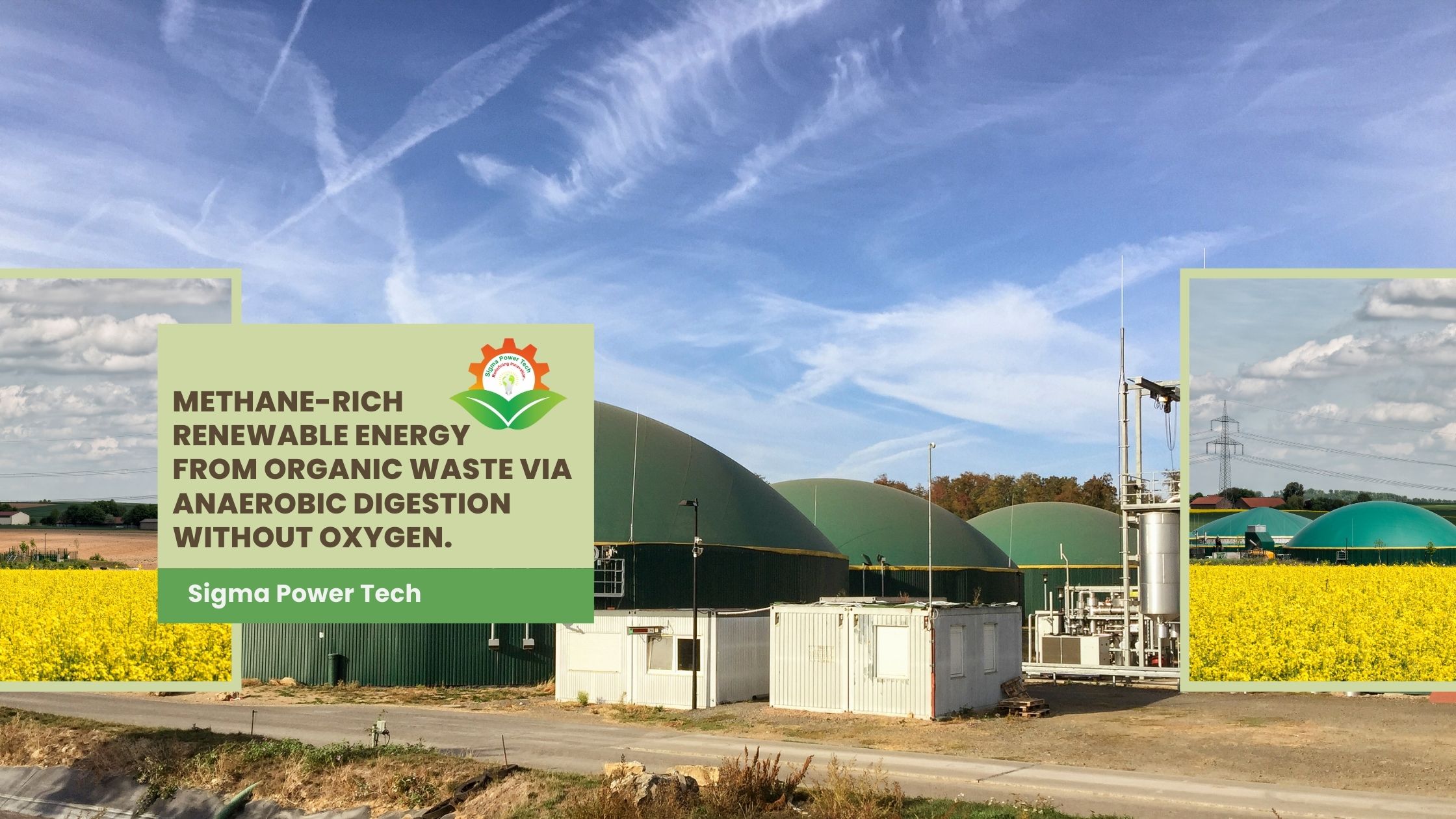
A dairy farm struggling with rising energy bills, a food processing unit managing tons of organic waste, or a rural institution paying increasing LPG costs all face a similar challenge—how to convert waste into a valuable resource. A modern biogas plant has become more than a waste treatment solution. It is now an integrated renewable energy system that helps businesses reduce operating costs, improve sustainability, and generate long-term value. Understanding current industry trends allows organizations to invest in systems that remain efficient and reliable for decades.
Emerging Biogas Plant Trends Shaping the Industry
A biogas plant converts organic materials such as kitchen waste, animal manure, crop residue, food processing waste, and agricultural biomass into methane-rich gas through anaerobic digestion. The process also produces nutrient-rich bio-slurry that can be used as an organic fertilizer.
Today's systems are evolving beyond basic gas generation. Businesses now demand higher efficiency, automated monitoring, durable construction, and customized engineering that maximizes gas production while reducing maintenance. These trends are changing how renewable energy projects are designed across residential, agricultural, commercial, and institutional sectors.
Smarter Biogas Plant Design for Higher Efficiency
One of the biggest developments is the growing emphasis on customized biogas plant design.
Rather than installing standardized digesters, engineers now evaluate daily feedstock volume, waste characteristics, hydraulic retention time, site conditions, and future expansion before finalizing the design.
Advanced engineering improves microbial stability, gas yield, and operational reliability while reducing unnecessary construction costs. Proper sizing also minimizes the risk of underperforming digesters caused by inconsistent feedstock or incorrect capacity selection.
Better Feedstock Management Improves Gas Production
Businesses increasingly recognize that feedstock quality directly influences plant performance.
Modern digesters process:
- Kitchen waste
- Animal manure
- Poultry litter
- Crop residue
- Food processing waste
- Vegetable waste
- Agricultural biomass
Organic material is mixed with water before entering the sealed digester, where anaerobic microorganisms convert biodegradable matter into methane-rich gas.
Stable daily feeding schedules and proper moisture content improve digestion efficiency, while automated mixing systems help maintain uniform biological conditions. The remaining digestate becomes bio-slurry, providing an additional revenue opportunity through sustainable fertilizer production.
Greater Focus on Gas Storage and Safety
As renewable energy systems become larger and more sophisticated, gas handling technology continues to improve.
Modern biogas plant systems incorporate durable gas holders, pressure regulators, condensate traps, moisture separators, leak detection, and safety valves designed for continuous operation.
Businesses are also investing in better pipeline layouts that reduce pressure losses while supplying fuel to kitchen facilities, industrial boilers, water heaters, and small power generators.
Improved safety engineering not only protects equipment but also increases operational reliability and gas utilization.
Digital Monitoring and Predictive Maintenance
Another important trend is the adoption of digital monitoring systems.
Sensors now allow operators to monitor temperature, gas pressure, feedstock input, retention time, slurry levels, and overall plant performance in real time.
Predictive maintenance helps identify developing issues before they reduce methane production or damage equipment. This approach lowers maintenance costs while extending equipment life and improving operational efficiency.
Key Features Businesses Now Expect
Modern renewable energy projects are expected to deliver both operational efficiency and long-term durability.
Important features include:
- Continuous gas generation
- Compact installation footprint
- Effective odor control
- Durable RCC, FRP, HDPE, or steel construction
- Weather and temperature resilience
- Low daily maintenance
- Easy-to-operate design
- Scalable capacity for future expansion
- Long operational service life
These engineering improvements allow facilities to process increasing volumes of organic waste while maintaining stable gas production.
Expanding Applications Across Industries
Biogas technology is no longer limited to rural households.
Today's applications include:
- Rural households
- Dairy and livestock farms
- Agricultural cooperatives
- Food processing industries
- Hostels and educational institutions
- Small hotels and farm stays
- Gated communities and housing societies
- Rural electrification and community energy projects
A Domestic biogas digester for homes and farms remains an effective solution for decentralized cooking fuel, while commercial digesters are increasingly supporting industrial waste management and renewable energy generation.
Even a biogas plant for home now benefits from many of the same engineering improvements developed for larger commercial systems.
Cost and Investment Trends
Businesses are moving beyond evaluating only the initial biogas plant price.
Investment decisions increasingly consider:
- Daily feedstock volume and composition
- Digester size and construction material
- Gas storage capacity
- Pipeline installation complexity
- Site preparation requirements
- Integration with cooking equipment or generators
- Preventive maintenance and AMC costs
- Long-term operational savings
- Overall payback period
Organizations now focus on lifecycle cost rather than lowest purchase price, recognizing that better engineering typically delivers higher long-term returns.
Buyer's Guide: Choosing the Right Engineering Partner
Selecting experienced Biogas plant manufacturers in India has become more important as system complexity increases.
Businesses should evaluate:
- Industry experience
- Digester design expertise
- Manufacturing quality and material standards
- Custom engineering capability
- Professional installation
- Technical support
- Preventive maintenance services
- Documentation and subsidy assistance where applicable
- Proven project reliability
A Sigma Power Tech biogas plant is engineered using project-specific feedstock analysis, customized system design, and quality manufacturing practices. As a Sigma Power Tech manufacturer and service provider, the company provides integrated engineering solutions that include design, manufacturing, installation, commissioning, and long-term technical support to maximize renewable energy performance.
Common Mistakes to Avoid
Several avoidable mistakes continue to reduce project efficiency.
Common issues include:
- Under sizing or oversizing the digester
- Inconsistent daily feedstock input
- Poor site selection and inadequate planning
- Ignoring bio-slurry utilization
- Skipping preventive maintenance
- Improper gas pipeline installation
- Neglecting climate and seasonal temperature effects on digestion efficiency
Addressing these factors early improves gas production, reduces operating costs, and extends equipment life.
Conclusion
The latest trends show that a biogas plant is evolving into an intelligent, engineered renewable energy solution rather than simply a waste disposal system. Customized design, improved feedstock management, digital monitoring, advanced safety systems, and durable construction are helping businesses achieve higher methane yields, lower maintenance requirements, and better long-term financial returns.
Organizations that prioritize correct sizing, quality engineering, and experienced technical support over short-term cost savings position themselves for dependable fuel savings, valuable organic fertilizer production through bio-slurry, and a sustainable waste-to-energy infrastructure capable of supporting future growth.