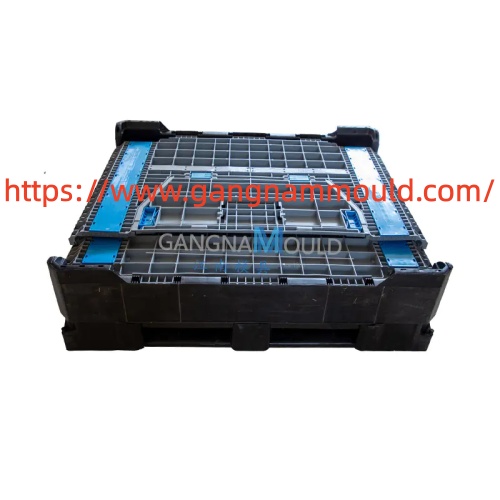
Logistic Pallet Mould selection involves several technical decisions that can affect product dimensions, structural performance, production efficiency, and maintenance requirements. Buyers should examine cavity construction, plastic resin compatibility, cooling design, ejection structure, machine conditions, expected output, and application requirements before confirming an order. A detailed review can help manufacturers select tooling that fits the actual production environment rather than relying only on the purchase price.
The intended use of the finished platform should be considered at the beginning. Plastic platforms used in warehouses, distribution centers, factories, retail operations, and agricultural applications may face different loads and handling conditions. Some designs are intended for rack storage, while others are moved frequently with forklifts or pallet trucks. These differences can influence the required rib structure, support points, deck pattern, and overall dimensions.
Product geometry is another important consideration. Large plastic components often contain reinforcing ribs, drainage openings, feet, connecting sections, and various support areas. Each feature can influence how the cavity is arranged and how the finished part will be released. Buyers should provide accurate three dimensional drawings so engineers can review potential areas that may require changes before machining begins.
Resin selection should also be discussed carefully. Polypropylene and other thermoplastics can have different flow behavior, shrinkage characteristics, processing temperatures, and cooling requirements. These properties may influence dimensional stability and surface appearance. Providing the intended material grade during the design stage gives engineers useful information for planning the cavity, core, cooling arrangement, and processing conditions.
Steel selection should correspond with the expected production workload. Buyers can ask about the materials used for major tooling components, hardness requirements, surface treatment, and replaceable elements. The suitable configuration depends on production quantity, resin characteristics, product structure, and maintenance plans. Discussing these factors in advance helps manufacturers evaluate whether the proposed construction matches the intended service conditions.
Cooling design deserves special attention because large plastic products can contain areas with different wall thicknesses. Uneven heat removal may contribute to deformation, dimensional variation, or extended cycle times. Engineers should consider channel placement according to the actual geometry. Buyers can also ask how difficult sections will be cooled and whether the planned arrangement allows practical access for future cleaning and maintenance.
Ejection is closely connected with product design. A large platform with deep ribs or complicated underside structures may require careful positioning of ejector components. Excessive force in an unsuitable location can affect the finished part. Draft angles should also be reviewed because appropriate release angles can make separation easier and help reduce unwanted marks on visible surfaces.
The injection machine should be included in the technical discussion as well. Machine size, clamping force, injection capacity, mold mounting dimensions, and available processing parameters can influence the tooling arrangement. A buyer should provide relevant machine information before production begins. This allows the engineering team to consider whether the planned configuration is compatible with the intended equipment.
Production volume is another useful purchasing factor. A factory making occasional batches may have different requirements from a facility operating continuous shifts. Buyers should estimate monthly or annual demand and consider whether future volumes may change. This information can help determine cavity configuration, component selection, cooling requirements, and maintenance planning without adding unnecessary complexity.
Sampling is an important stage before regular production. Trial pieces can be checked for overall dimensions, flatness, rib formation, surface condition, handling features, and compatibility with related equipment. If adjustments are needed, they can be discussed after evaluating actual samples. Keeping approved samples and dimensional records also gives production teams a reference for later quality checks.
Maintenance planning should not be overlooked. Regular cleaning, lubrication, inspection, and replacement of wear components are normal parts of tooling management. Easy access to service areas can simplify these tasks for technicians. Buyers can ask about spare parts, maintenance instructions, technical drawings, and recommended inspection procedures before the project enters regular production.
Gangnammould can communicate with manufacturers about product drawings, resin specifications, machine conditions, structural requirements, cooling arrangements, and sampling needs. This type of technical cooperation helps turn a product concept into a practical manufacturing plan while keeping project requirements clear throughout development.
For manufacturers preparing a new material handling project, comparing technical details can make supplier evaluation more straightforward. Gangnammould provides related product information at https://www.gangnammould.com/product/ where buyers can review available solutions and consider suitable tooling approaches based on their production requirements.