India is home to many sacred Jain pilgrimage destinations, each carrying centuries of spiritual traditions, religious beliefs, and cultural heritage. Among these revered places, Mangi Tungi in Maharashtra holds a special position for Jain devotees. Surrounded by beautiful hills and peaceful natural landscapes, this sacred destination attracts pilgrims seeking spiritual connection, devotion, and inner peace.
The Mangi Tungi Yatra is more than a journey to an ancient religious site. For devotees, it is an opportunity to experience faith, discipline, devotion, and the rich spiritual heritage of Jainism. The twin peaks of Mangi and Tungi are associated with important Jain traditions and are regarded as a significant pilgrimage destination.
What Makes Mangi Tungi Jain Tirth Special?
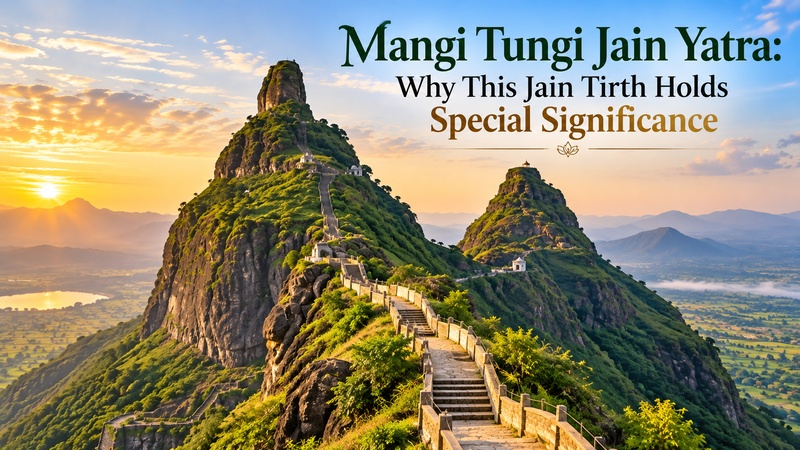
Mangi Tungi is located in the Nashik region of Maharashtra and is known for its distinctive twin mountain peaks. The area contains numerous Jain temples, caves, images, and religious sites connected with Jain traditions.
The spiritual importance of Mangi Tungi is one of the major reasons pilgrims undertake the Mangi Tungi Yatra. Jain traditions connect the sacred hills with numerous Tirthankaras, monks, and spiritual personalities. The peaceful surroundings provide an ideal atmosphere for prayer, meditation, and religious contemplation.
The combination of ancient Jain heritage and natural beauty makes Mangi Tungi different from an ordinary tourist destination.
Religious Significance of Mangi Tungi
For Jain followers, Mangi Tungi is considered an important Siddha Kshetra, a sacred place associated with spiritual liberation. Jain traditions connect the hills with numerous ascetics and enlightened souls who are believed to have attained moksha here.
The caves and rock-cut images found across the hills add to the religious importance of the destination. Visitors can see numerous Jain idols and artistic representations carved into the rocks, reflecting the long-standing presence of Jain religious traditions in the region.
For devotees, visiting these sacred locations is not simply sightseeing. It is a spiritual experience that encourages reflection, devotion, and respect for Jain principles.
The Sacred Twin Peaks of Mangi and Tungi
The name Mangi Tungi comes from its two prominent mountain peaks—Mangi and Tungi. These peaks form the central attraction of the pilgrimage.
The hills are surrounded by scenic landscapes, making the journey visually beautiful as well as spiritually meaningful. Pilgrims climb the hills to visit temples, caves, and sacred Jain images located along the route.
The climb can require physical effort, particularly for elderly pilgrims, but many devotees consider the journey itself an important part of their pilgrimage. Walking towards a sacred destination with devotion and determination can become a deeply personal experience.
A Journey of Faith and Devotion
The Mangi Tungi Yatra is undertaken by devotees with a sense of religious purpose and spiritual devotion. Jain pilgrims may visit temples, offer prayers, participate in religious activities, and spend time reflecting on Jain teachings.
Jainism emphasizes principles such as non-violence, truth, self-discipline, simplicity, and spiritual purification. A pilgrimage can provide devotees with an opportunity to step away from their regular routines and focus on these values.
The peaceful atmosphere of Mangi Tungi can make the experience even more meaningful. Away from busy city life, pilgrims can spend time in a calm environment surrounded by hills and nature.
Ancient Jain Heritage and Rock-Cut Images
One of the most fascinating aspects of Mangi Tungi is its collection of Jain religious heritage. The hills contain caves and numerous Jain images that demonstrate the historical importance of the site.
These religious sculptures are not only important from a spiritual perspective but are also valuable examples of Jain artistic and cultural heritage. They offer visitors an opportunity to understand how Jain traditions developed and were preserved across generations.
During the Mangi Tungi Yatra, pilgrims and heritage enthusiasts can explore these sacred locations while appreciating the artistic and cultural traditions associated with Jainism.
The Statue of Ahimsa
Mangi Tungi is also famous for the monumental Statue of Ahimsa, a major attraction associated with Jain heritage. The statue represents Lord Rishabhdev, the first Tirthankara of Jainism, and has become an important landmark for visitors to the region.
The statue reflects the Jain principle of Ahimsa, or non-violence, which is one of the central teachings of Jain philosophy. Its presence adds another important dimension to the spiritual significance of Mangi Tungi.
For many visitors, seeing this monumental representation is a memorable part of their pilgrimage experience.
Why Visit Mangi Tungi?
There are many reasons devotees choose Mangi Tungi for a Jain pilgrimage. Its religious history, sacred hills, ancient images, peaceful surroundings, and connection with Jain spiritual traditions make it a unique destination.
For a first-time visitor, the journey can provide an introduction to the spiritual and cultural depth of Jainism. For regular pilgrims, returning to Mangi Tungi can be an opportunity for renewed devotion and reflection.
The Mangi Tungi Yatra therefore represents more than simply travelling from one place to another. It can become a journey of faith, self-reflection, and connection with an important part of Jain heritage.
Tips for Planning Your Mangi Tungi Jain Yatra
Before beginning the pilgrimage, travelers should research the route, accommodation options, local transportation, weather conditions, and temple timings. Elderly travelers and families should consider the physical demands of the hill climb while planning their visit.
Comfortable clothing and suitable footwear can make the journey easier. Carrying drinking water and planning the visit according to local weather conditions is also advisable.
Visitors should maintain cleanliness and respect the religious environment. Since Mangi Tungi is a sacred Jain destination, following temple rules and behaving respectfully is an important part of the pilgrimage.
Those planning a Mangi Tungi Yatra can also consider combining the pilgrimage with other important Jain destinations in Maharashtra or nearby regions, depending on their available travel time.
Conclusion
Mangi Tungi holds a special place in Jain pilgrimage because of its spiritual traditions, sacred twin hills, ancient Jain heritage, religious caves, and association with the principle of liberation. The destination brings together devotion, history, nature, and Jain culture in one remarkable pilgrimage experience.
For devotees, the Mangi Tungi Yatra can be a meaningful opportunity to step away from everyday life and reconnect with faith and spiritual values. Whether you visit for religious reasons, cultural exploration, or a deeper understanding of Jain heritage, Mangi Tungi offers an experience that can remain memorable long after the journey ends.
A pilgrimage to this sacred Jain Tirth is ultimately not only about reaching a destination—it is about experiencing devotion, discipline, peace, and the timeless values that continue to shape Jain spiritual traditions.