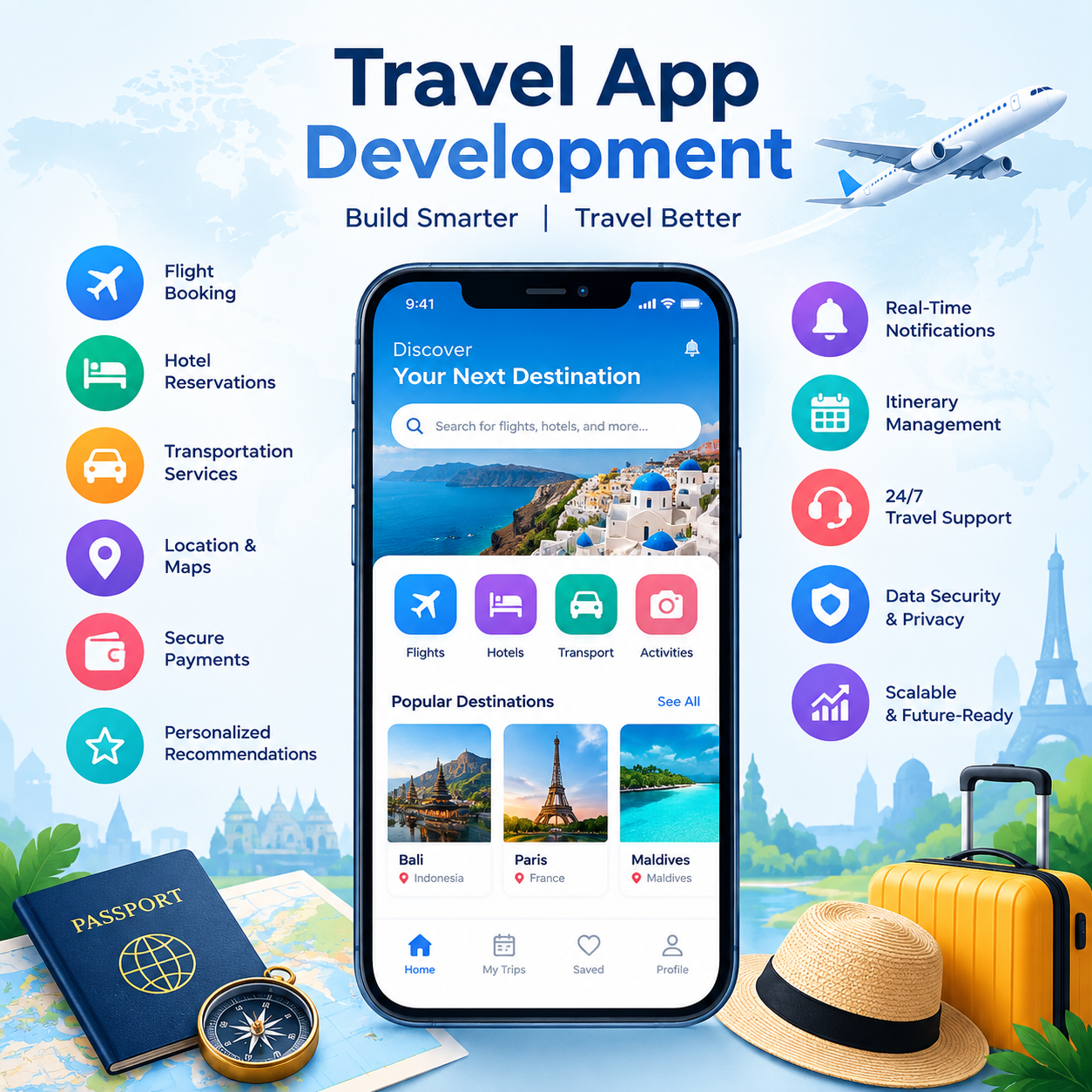
The travel industry has become increasingly dependent on digital platforms for searching, comparing, and reserving services. Customers now expect to find hotels, flights, holiday packages, activities, and transportation options through their smartphones. For travel agencies and startups, a well-designed booking application can provide a direct way to serve customers while managing reservations through a central platform.
Building a successful application requires more than adding a search page and payment gateway. Businesses need to consider the complete customer journey, from registration and discovery to booking confirmation and post-trip support. With travel booking app development, companies can create a platform that brings different travel services together and makes reservations easier to manage.
Define Your Target Customers and Services
Before starting development, a business should identify who will use the application and what services it will offer. A platform designed for families may focus on holiday packages and activities, while a corporate travel platform may prioritise flights, hotels, expense management, and business travel policies.
The services offered will also determine the required integrations. Businesses may need hotel suppliers, flight APIs, tour providers, payment gateways, maps, currency services, and notification systems.
A clear business model helps determine which features should be included in the initial application.
Design a Simple Registration Process
Users should not have to complete a complicated registration form before they can start exploring the platform. A simple sign-up process can allow customers to register using email, phone numbers, or other supported authentication methods.
Once registered, users can create profiles containing traveller details, preferences, saved destinations, and booking history.
A profile can also store information that customers frequently use during reservations, reducing the need to enter the same details repeatedly.
Build Powerful Search and Filtering
Search is one of the most important parts of a travel booking platform. Customers may search by destination, date, number of travellers, price, service category, or personal preferences.
The application should present results in an organised format so users can compare available options.
For hotels, filters may include location, price, rating, amenities, and room type. For flights, users may filter by airline, departure time, arrival time, number of stops, and cabin class.
Tour searches can include activity type, duration, price, location, and available dates.
Connect Hotels, Flights, and Activities
A modern booking application can combine several services through third-party integrations. Hotel APIs can provide room availability, pricing, property information, and booking details.
Flight integrations can provide schedules, fares, routes, baggage information, and airline details.
Tour and activity providers can supply information about sightseeing experiences, adventure activities, transfers, and local services.
The development team needs to ensure that information displayed to users is updated appropriately. Availability and prices can change, so the application should confirm the latest details before finalising a reservation.
Create an Easy Booking Flow
After selecting a service, customers should be able to move through the reservation process without unnecessary screens.
The booking page can display the selected service, travel dates, customer information, price breakdown, taxes, discounts, and applicable policies.
Customers should have an opportunity to review the complete information before making payment.
For multi-service platforms, a combined booking cart can allow users to select a hotel, flight, and activity before reviewing their overall trip cost.
Add Secure Payment Processing
Payment is an essential component of online travel reservations. Businesses can integrate suitable payment gateways based on their target markets and customer requirements.
The system should be able to handle successful transactions, failed payments, refunds, cancellations, and pending payments.
After a successful transaction, customers should receive a clear confirmation. Their account can also contain invoices, booking references, tickets, hotel vouchers, and other relevant documents.
Payment information should be handled using appropriate security practices and the requirements of the selected payment provider.
Give Customers a Personalised Dashboard
A customer dashboard can become the central location for managing trips. Users can view upcoming bookings, previous reservations, payment history, saved destinations, and travel documents.
An itinerary section can combine flight, hotel, activity, and transportation information into one schedule.
Push notifications can provide reminders about check-in times, departures, activities, payment deadlines, or changes to reservations.
This keeps the application useful even after the customer has completed a booking.
Develop an Effective Admin Panel
The business side of the application requires its own management system. An administration panel can allow staff to manage customers, bookings, packages, payments, promotions, content, and support requests.
Managers can also access reports related to booking volumes, revenue, cancellations, and customer activity.
If the platform works with external suppliers, partner accounts can be created with controlled permissions. Suppliers may be able to update availability, prices, service details, or reservation information.
A well-planned admin system can make daily travel operations easier to manage.
Consider AI and Personalisation
AI can add useful features to a travel booking platform. An AI assistant can answer common questions, suggest destinations, recommend activities, or help users create an initial itinerary.
For example, a traveller can provide their budget, preferred destination, travel duration, and interests. The application can use this information to present relevant suggestions.
However, AI recommendations should work alongside actual booking systems. Live availability and pricing should be confirmed through the appropriate travel provider before customers complete reservations.
Work With Experienced Developers
Choosing the right technical team is important for a multi-service booking platform. Travel app developers should have experience with mobile applications, backend systems, APIs, payment gateways, databases, authentication, and third-party integrations.
A business should also consider future expansion before development begins. Features such as loyalty programs, multilingual support, corporate accounts, AI tools, additional suppliers, and new payment methods may be added later.
Building the technical foundation with future requirements in mind can make subsequent improvements easier.
Why Travel Apps Need a Strong User Experience
Even a feature-rich application can struggle if customers find it difficult to use. Navigation should be clear, search results should be easy to compare, and booking information should be presented in a readable format.
The application should also work smoothly across supported devices and screen sizes. Testing should cover booking errors, payment failures, API interruptions, unavailable inventory, and other situations that customers may encounter.
A strong user experience can help customers complete reservations with fewer difficulties.
Final Words
A successful travel booking app needs to combine convenient search, accurate travel information, simple reservations, secure payments, useful itineraries, and effective customer support. Connecting hotels, flights, tours, and other services can give travellers a single platform for managing different parts of their journey.
Through travel app development, businesses can build a platform around their specific services and gradually introduce additional features as their customer base grows. With experienced travel app developers, the right integrations, and careful planning, a travel application can provide a practical digital booking experience for both customers and travel businesses.