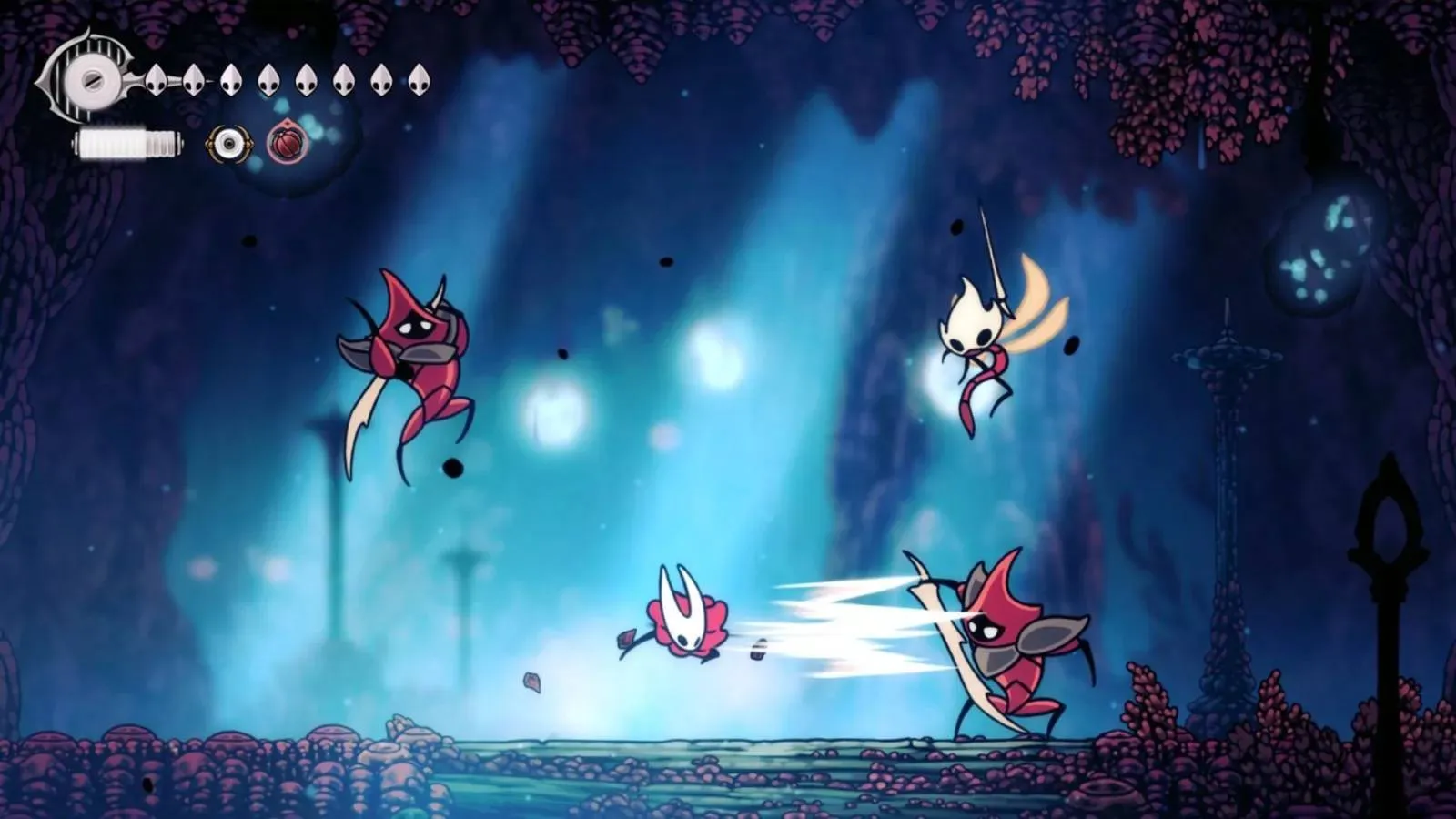
Since its 2025 release, Hollow Knight: Silksong has been celebrated as one of the most daring sequels in the modern metroidvania space. Team Cherry could have simply given players more of the original Hollow Knight, but instead the studio embraced radical change and growth. The result is a game that feels both familiar and unmistakably new. In 2026, that willingness to evolve still stands out, especially in the way Silksong treats combat and level design. Hornet is not the silent Knight; she is a defined character with a voice, a past, and a far more acrobatic presence. Her journey through Pharloom is not just a retread. It is a rethinking. Many of the biggest differences were easy to predict from trailers and from Hornet's original appearance: fluid movement, aerial grace, and a more talkative protagonist. Yet the subtler mechanical distinctions deserve just as much attention. Among them, the relationship between combat tools, traps, and environmental hazards is one of the smartest design choices in the game.
Combat as a Ballet of Blades and Tools
Hollow Knight: Silksong's combat is a considerable leap forward from the first game. Hornet has a far wider arsenal of weapons and skills, and her acrobatic movement often lends battles a ballet-like elegance. Momentum and style flow through encounters in ways that were rare in the original Hollow Knight. Could the first game's combat have supported such graceful, fast-paced exchanges? Not without losing its own identity. Silksong instead builds a new identity around speed, positioning, and tactical choice. The game's other most important pillar, level design, serves to buttress that combat. Arenas are not neutral boxes. They are stages filled with dangers that can become weapons.
One of the most discussed additions is the tool system. Items such as Sting Shards and Tacks can be dropped in tactical locations, funneling enemy forces toward environmental hazards or simply adding to their damage output. In essence, these traps are addendums to the magic offensive abilities of the first Hollow Knight. They provide the player with a greater variety of options during combat encounters, adding a layer of dynamism and flexibility that greatly enhances the overall experience. This design philosophy perfectly synergizes with Silksong's environment design, because the player is not merely fighting enemies. The player is also reading the room, planning a route, and crafting a build that turns terrain into an advantage.
Environmental Hazards Are Not Just Obstacles
There are a number of environmental hazards in Silksong, which is not exactly surprising considering its genre conventions. But what is somewhat surprising is how much the player can manipulate these hazards, making clever use of them to dispatch enemies more efficiently. For example, Pharloom is littered with bulging, explosive boulders that hang from cave ceilings like deadly stalactites. These will often be used for puzzle-solving, but Hornet can also attack them and cause them to drop, creating an explosion below. When timed correctly, these boulders can deal considerable damage, even taking out several enemies at once. Such circumstances rear their head time and again, since Silksong is replete with such dangerous natural formations.
This interactive approach changes the rhythm of combat. Instead of treating every hazard as a punishment, Silksong treats many of them as opportunities. A ceiling-bound explosive can become a preemptive strike. A narrow corridor can become a kill zone. A room full of spikes can become a trap for enemies rather than only a threat to Hornet. The player learns to ask: can this danger be turned against the enemy? Is it worth spending a tool charge to create a better position? These questions are small, but they accumulate into a combat system that rewards awareness.
| System | Player Action | Tactical Outcome |
|---|---|---|
| Explosive boulders | Strike the boulder so it falls | Area damage, multi-kill potential |
| Sting Shards and Tacks | Place them in strategic spots | Funnels enemies, adds DPS |
| Acrobatic movement | Use Hornet's mobility | Better positioning, ballet-like flow |
| Environmental hazards | Lure enemies into danger | Efficient kills, resource preservation |
The Synergy Between Traps, Tools, and Terrain
Combat in Silksong is much more focused on planning, strategic positioning, and build-crafting, courtesy of Hornet's tools. Items like Sting Shards and Tacks can be dropped in tactical locations, funneling enemy forces toward environmental hazards or simply adding to their DPS. In other words, it is remarkably effective to combine tools, traps, and basic melee attacks with things like the previously mentioned explosive boulders. This aids the gameplay experience in surprising ways. For one thing, it allows fights to be unexpected and varied depending on where they take place. But the offensive capabilities of these environmental hazards also serve to reward players for paying attention to their surroundings.
Since Silksong is all about exploration and learning the lay of the land, this is quite a clever and appropriate way to further incentivize critical thinking and pattern recognition. The game does not need to force players into a single correct answer. Instead, it gives them a toolbox and a world full of dangerous furniture. A player who ignores the environment can still fight, but a player who studies it can dominate. That difference is meaningful because it turns every room into a potential puzzle. It also makes repeat visits more interesting, since a space that once seemed hostile may later become a favorite ambush point.
Why Subtle Design Choices Matter
Could Silksong have simply repeated the first game's formula? Of course it could have. But would that have been as memorable? Probably not. The flashy differences, such as Hornet's acrobatics and her ability to speak with NPCs, are easy to notice. The subtler mechanical distinctions, however, are what make the game's combat endure. Team Cherry did not just add new moves. The studio rebuilt the relationship between the player, the enemy, and the environment.
В 2026 году это по-прежнему остаётся одним из главных достоинств Silksong.Hollow Knight: Silksong только выигрывает от своей готовности принимать радикальные перемены и рост. Он уважает своего предшественника, не оказываясь им скованным. Он даёт игрокам больше того, чего они хотели, и одновременно заставляет их мыслить иначе. Для сиквела это редкий баланс. А в жанре, переполненном подражателями, это напоминание о том, что подлинная эволюция часто рождается из тихих деталей: упавшего камня, удачно размещённой кнопки, мгновения идеального позиционирования. Эти детали могут не доминировать в трейлере, но именно они определяют впечатление.
Инстинкты, которые вознаграждает Silksong, не остаются надолго только внутри игры. Осмотреть комнату перед тем, как решиться, взвесить инструмент с учётом его цены, дождаться момента, когда рискованный ход окупится, — это тот же образ мышления, который отделяет выгодную сделку от импульсивной покупки. Ищете ли вы новый контроллер с надёжными триггерами, гарнитуру, которая не подведёт вас во время ночной попытки пройти босса, или просто саму игру по цене, которая не кусается, — впереди оказываются те игроки, которые сначала осматриваются, а уже потом прыгают.
Эта привычка проверять окружение удивительно хорошо переносится и на покупки. Вместо того чтобы хватать первое попавшееся предложение, вы можете просмотреть несколько магазинов, сравнить, что именно предлагает каждый из них, и совершать покупку только тогда, когда цифры сходятся. Если вы предпочитаете потратить десять минут на планирование, а не десять долларов на сожаление, сравните цены здесь на DealNest перед оформлением заказа — то же терпение, которое превращает враждебную комнату в место для засады, обычно превращает покупку по полной цене в выгодную сделку.