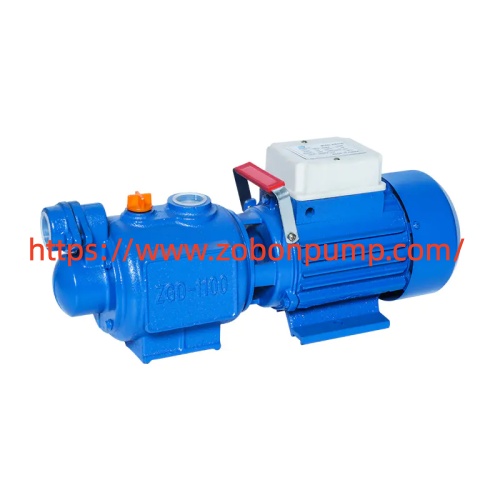
Solar Water Pump selection requires careful consideration of daily demand, site conditions, available sunlight, and installation requirements. For agricultural businesses, remote properties, and commercial facilities, choosing suitable equipment involves more than comparing motor ratings or purchase prices. Buyers should understand how much liquid they need to move, how far it must travel, and when the system will operate. Reviewing these factors before requesting a quotation can help customers compare suitable models and communicate their requirements clearly to manufacturers.
The first consideration is the intended application. A small greenhouse may require a different delivery capacity from a large agricultural field, livestock facility, or remote community installation. Some projects involve filling storage tanks, while others require a consistent supply for drip irrigation or sprinkler networks. Buyers should estimate their daily consumption and identify periods when demand increases. Seasonal crop requirements, livestock numbers, and available storage capacity can all influence the required output. Planning around actual usage helps prevent selecting equipment that cannot meet operational needs.
The second consideration is the source and its physical characteristics. Buyers should identify whether the installation will draw from a shallow pond, storage reservoir, drilled well, or another accessible source. The distance between the intake and delivery point also matters. A deep source or elevated destination may require a different configuration from a ground level transfer arrangement. Pipe length, internal diameter, bends, valves, and other fittings create additional resistance during operation. Technical guidance from Virginia Tech explains that vertical lifting, pipeline friction, and outlet pressure contribute to total dynamic head. Read the technical guidance.
The third consideration is the relationship between flow rate and total head. Flow rate indicates the volume delivered over a specific period, whereas head describes the energy required to move liquid through the installation. These figures must be evaluated together because the available output changes with operating conditions. A model advertised with a particular maximum capacity may deliver a different volume when connected to a long pipeline or required to lift liquid to a higher destination. Buyers should request the performance curve for the exact model and confirm its expected output at the intended operating point. This provides a more useful basis for comparison than motor power alone.
The fourth consideration is the energy arrangement. Photovoltaic modules need to supply electrical power compatible with the selected motor and controller. Buyers should review rated voltage, required input power, controller specifications, cable length, and local sunlight conditions. Cloud cover, seasonal variation, shading, and installation orientation can influence available energy. Where demand continues beyond daylight hours, elevated storage tanks or other appropriate storage arrangements may help separate collection time from consumption time. Battery integration should be evaluated according to actual operating requirements, installation complexity, and budget rather than assumed to be necessary for every project.
The fifth consideration is the condition of the liquid and the durability requirements of the installation. Suspended sand, sediment, organic debris, and dissolved substances can affect material selection and maintenance needs. Buyers should check the manufacturers stated limits for liquid quality, temperature, and solid content. A model intended for clean liquid should not automatically be used in an application involving abrasive particles. Depending on the site, an intake screen or filtration arrangement may be appropriate. Confirming these details in advance helps customers avoid configurations that do not match the intended operating environment.
Maintenance access and installation support should also be included in the purchasing assessment. Ask how routine inspections are performed, which components require periodic servicing, and whether replacement parts are available. For remote agricultural properties, the distance to service personnel may influence the practical maintenance plan. Protective functions such as dry running safeguards and tank level controls may also be relevant, depending on the selected configuration. Clear operating instructions and correct installation practices can help staff identify abnormal conditions and organize service before a minor issue interrupts essential work.
Finally, buyers should compare the complete cost of ownership rather than focusing only on the initial quotation. Installation, electrical components, pipework, routine servicing, replacement parts, and expected energy use all contribute to the total investment. Caifu can be considered by customers evaluating equipment for agricultural irrigation and other fluid transfer applications. Before contacting a supplier, prepare the source type, daily demand, required flow, total lifting height, pipeline details, and available electrical specifications. Visit https://www.zobonpump.com/