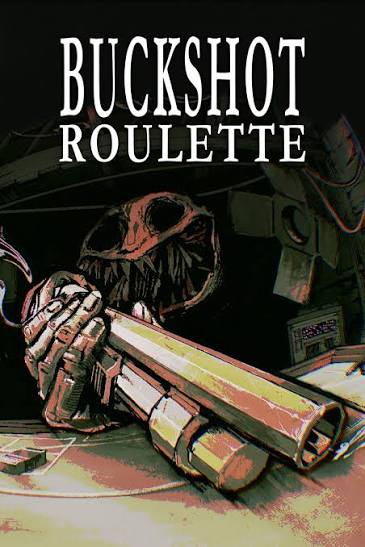
Some games keep you entertained with colorful worlds and long adventures. Others create excitement by placing you in a tense situation and asking you to make a few careful decisions. Buckshot Roulette belongs to the second group. Inspired by the drama of a high-stakes contest, it turns a simple turn-based setup into an unsettling game of risk, timing, and observation.
If you’re curious about trying it, Buckshot Roulette is best approached with patience rather than quick guesses. Its appeal comes from wondering what might happen next—and deciding whether to play cautiously or take a chance.
Gameplay
The central idea is straightforward: you and an opponent take turns in a dangerous contest involving a shotgun and a sequence of live and blank shells. A live shell can deal damage, while a blank shell may give you an opportunity to continue or change the situation, depending on your target and the game’s rules. The sequence is hidden, so every turn involves incomplete information.
That uncertainty is what makes each choice interesting. You might aim at your opponent, take a risk, or use an item to learn more or influence the next move. Items can provide useful information or alter the flow of a round, but they are limited. Using one at the wrong moment may leave you without help when the situation becomes more difficult.
The game’s atmosphere also contributes to the experience. Dim lighting, stark sound effects, and a confined setting make each decision feel significant. Rather than filling the screen with constant action, Buckshot Roulette gives players room to think—and plenty of time to second-guess themselves.
Tips
Pay attention to the shell count. Keep track of how many live and blank shells are believed to remain. You may not know their exact order, but remembering what has already been fired can help you estimate the risk.
Use items with a purpose. It can be tempting to use an item as soon as it appears. Before doing so, consider whether it will answer an important question, protect you, or create a better opportunity. Saving an item can be smart, but holding onto it indefinitely is not always helpful.
Think about both targets. A choice that seems obvious may change depending on whether you aim at yourself or your opponent. Consider the possible benefit and the possible cost before committing.
Don’t treat every round the same way. Sometimes a cautious move is sensible; at other times, waiting may give your opponent an advantage. Adapt to the information you have instead of following one fixed strategy.
Most importantly, accept that luck is part of the game. A thoughtful decision can still lead to an unfavorable result, and that uncertainty is central to the tension.
Conclusion
Buckshot Roulette is an unusual, compact game built around suspense, limited information, and meaningful choices. Its rules are easy to grasp, but each turn encourages you to weigh the evidence and decide how much risk you are willing to accept. Approach it as a tense puzzle rather than a test of perfect prediction, and the experience becomes less about winning every time and more about enjoying the uncertainty.