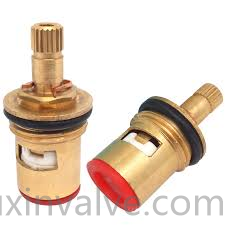
Modern faucet systems increasingly incorporate electronic controls to improve convenience, hygiene, and water management. Within these systems, Faucet Solenoid Valve technology provides an electromagnetic method for opening and closing water passages according to signals from sensors, switches, or control boards. This approach is widely suited to automated faucets in commercial buildings, public washrooms, hospitality facilities, and other environments where convenient operation and controlled water delivery are important.
The valve works by converting electrical energy into mechanical movement. When the coil receives a control signal, the generated magnetic field moves an internal armature or related mechanism, changing the position of the valve's sealing element. Depending on the design, the valve may open or close when energized and return to its normal state when power is removed. The correct operating configuration depends on the faucet's control logic and water-system requirements.
Electromagnetic performance relies on several coordinated components. Coil winding quality, insulation, magnetic circuit geometry, and armature alignment all influence switching reliability. A suitable magnetic design provides enough force for consistent actuation while helping control heat generation and electrical losses. Accurate assembly is equally important because misalignment or excessive friction can affect response time and long-term operating stability.
The hydraulic structure must support the required flow while maintaining reliable shutoff. Internal channels, valve seats, and orifices influence water movement and pressure loss. Precision machining helps keep these features consistent across production batches. The design should also account for the available installation space, connection configuration, and the relationship between the valve and the faucet's other water-delivery components.
Sealing performance is particularly important in faucet applications. O-rings, diaphragms, gaskets, and valve seats must remain functional under repeated switching and changing water pressure. Material selection should consider water compatibility, operating temperature, and expected service conditions. Well-matched sealing components help reduce leakage, prevent unnecessary water loss, and maintain dependable operation over time.
Automated faucets often combine electromagnetic valves with infrared sensors or other electronic detection systems. When a user approaches the fixture, the sensor sends a signal to the controller, which activates the valve. After the programmed operating condition is met, the controller changes the signal and stops water delivery. Reliable coordination between the sensor, control board, and valve helps reduce unintended operation and supports a consistent user experience.
Manufacturing quality directly affects the finished product's performance. Controlled coil winding, precision machining, careful assembly, and suitable inspection procedures help maintain consistency. Electrical checks can identify winding or insulation problems, while functional and leakage tests help verify switching behavior and sealing performance. Repeated-cycle testing can further assess whether the valve maintains reliable operation under representative conditions.
For B2B buyers, selecting a valve involves more than checking physical dimensions. Procurement teams should confirm electrical requirements, connection type, flow capacity, water pressure range, installation orientation, and compatibility with the faucet's electronic control system. Clear application requirements also help manufacturers evaluate customization needs and reduce integration difficulties during product development.
Zhejiang Fuxin Electrical Technology Co., Ltd. supplies electromagnetic valve solutions for sanitary ware and water-control applications. Equipment manufacturers and distributors seeking a suitable Faucet Solenoid Valve can explore the company's product range at https://www.fuxinvalve.com/product/sanitary-ware-solenoid-valves/ to evaluate options for automated faucet systems.