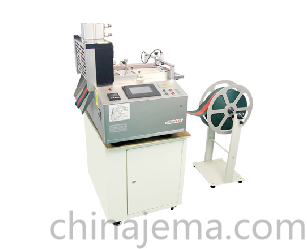
Zippers are essential components in many everyday products, including jackets, trousers, skirts, backpacks, luggage, uniforms, and outdoor equipment. Their performance depends not only on the quality of the fastening mechanism but also on how accurately each component is prepared during manufacturing. A zipper cutting machine helps manufacturers separate continuous zipper materials into individual lengths, supporting organized production and preparing components for subsequent sewing and assembly operations.
A typical zipper combines textile tape with teeth or molded elements, along with a slider and other supporting components. Depending on the product, the materials may include polyester, nylon, resin, or metal. These materials have different physical characteristics, so processing methods need to account for their structure and intended application. Cutting should separate the required length while helping preserve the integrity of the surrounding tape and fastening elements.
Consistent length is especially important when zippers are incorporated into garments. A jacket may require a front closure, while trousers and skirts may use shorter zippers in specific locations. Bags and luggage can require multiple zipper sections positioned around compartments or access openings. When the prepared pieces are consistent, operators can position them more easily and maintain a more predictable assembly process.
The quality of zipper preparation also affects production efficiency. If pieces are cut unevenly, workers may need to trim them again, reposition them, or adjust their sewing operations. These corrections take time and can create differences between finished products. Controlled cutting helps reduce unnecessary adjustment and gives downstream production stages more consistent components to work with.
For consumers, zipper performance is closely associated with convenience. A well-integrated zipper allows a garment or bag to open and close smoothly while maintaining a neat appearance. Outdoor jackets need dependable closures during changing weather, while luggage and backpacks require practical access to stored items. Although cutting takes place early in the production process, accurate component preparation supports the overall quality and usability of these products.
Automation can be particularly valuable for manufacturers handling large production quantities. Manual cutting can work for prototypes, special designs, or limited orders, but repeated operations may require considerable labor as volumes grow. Automated equipment can perform recurring cutting movements consistently, allowing operators to spend more time monitoring material flow, inspecting components, and coordinating production.
Manufacturers must also consider the variety of products they produce. Fashion apparel, sportswear, workwear, bags, and outdoor equipment may use different zipper materials, styles, and dimensions. A practical production setup should accommodate the requirements of different orders while keeping changeovers manageable. Flexible equipment and organized work procedures can help businesses respond to changing customer needs without disrupting the entire production line.
Material efficiency is another important factor. Every rejected zipper section represents wasted material and additional processing effort. If cutting errors occur repeatedly, the cumulative waste can affect manufacturing costs and production schedules. More consistent preparation helps reduce avoidable rejects and supports better use of textile tape and fastening materials.
The connection between cutting and sewing should not be overlooked. Zipper installation requires coordinated positioning of the tape and garment panels. Components with predictable lengths and clean separation can make sewing operations easier to organize. In larger production facilities, this consistency helps different workstations operate more smoothly and reduces the need for frequent manual corrections.
Operators remain central to successful automated production. They prepare materials, monitor equipment, identify unusual results, and ensure that components meet the intended requirements. Machinery that is straightforward to operate and suitable for the production environment can help workers manage repetitive tasks more effectively while maintaining quality control.
JEMA develops textile machinery solutions for manufacturers seeking practical ways to improve material processing and production organization. By integrating suitable equipment into the workflow, businesses can improve component consistency, reduce repetitive labor, and support efficient garment assembly. Manufacturers evaluating a zipper cutting machine for their production requirements can explore related textile machinery and processing solutions at https://www.chinajema.com/product/.