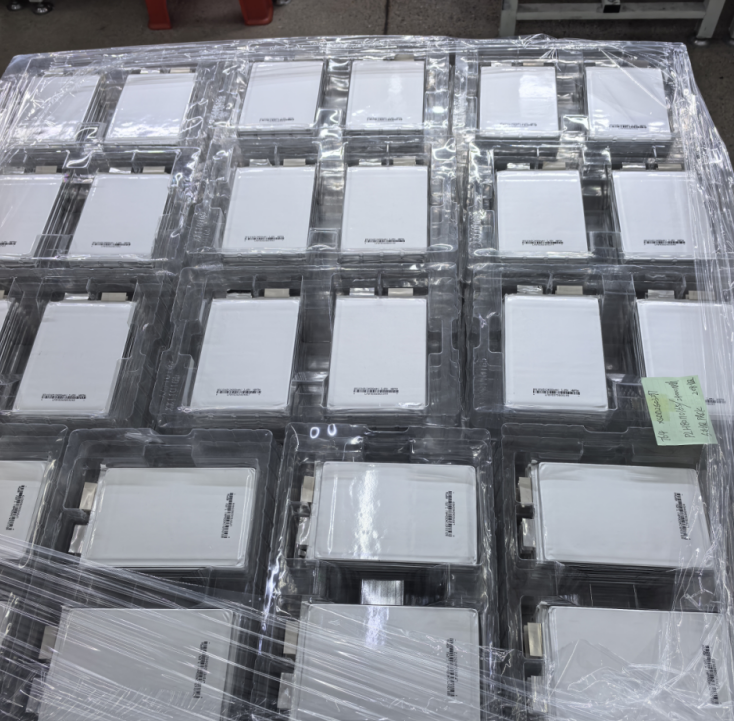
Understanding What Makes a Smart Drone Battery "Highly Rated"
Choosing a drone battery is rarely as simple as comparing voltage or capacity numbers on a spec sheet. Buyers across agricultural plant protection, large-load drones, power and photovoltaic inspections, crossing drones, pipeline inspection, logistics, cleaning, and formation-flight operations consistently report the same pain points: insufficient discharge capacity, drone battery life bottlenecks, low charging efficiency, unstable power in extreme environments, bulging batteries, poor consistency between cells, low energy density, and difficulty monitoring battery health during flight. A genuinely "smart" battery is one engineered to address these problems directly, rather than a generic cell paired with a basic protection circuit.
Key Selection Criteria for Smart Drone Batteries
When evaluating options, professional buyers typically look at two layers of the product: the battery cell itself and the Battery Management System (BMS) that governs it.
On the cell side, differentiating value comes from using better-performing positive and negative electrode sheets, electrolytes, separators, and conductive agents, combined with more innovative formulas and processes. This is what increases energy density and, in turn, extends flight time and power output.
On the BMS side, more reasonable SOC calculation and discharge logic solve battery expansion and discharge-failure problems and improve overall safety, while active balancing maintains cell consistency and extends cycle life.
A useful customization benchmark to compare against any supplier's stated range includes:
- Voltage: 400V and below
- Discharge rate: below 180C
- Energy density: 420Wh/kg and below
- Capacity: battery cell at 90AH and below
- Fast charge: 5C and below
- Low temperature performance: above -70°C
- High temperature performance: below 80°C
- Availability of a complete drone battery BMS software and hardware solution
Why BMS Technology Defines "Smart" in Smart Drone Batteries
The BMS is where the word "smart" earns its meaning. A well-designed BMS for drone applications should provide the basic protections against overcharge, over-discharge, over-current, short circuit, and abnormal temperature. Beyond that baseline, buyers should look for a current-limiting function that manages current during flight without triggering unnecessary over-current cut-off, since an unplanned shutdown mid-flight is far more dangerous than a momentary current spike.
Data collection covering voltage, current, and temperature is standard, but the communication layer matters just as much: single-protocol control logic and multi-protocol communication allow real-time transmission of battery operation data to external systems such as drones and energy storage EMS platforms through CAN bus, Bluetooth, and other interfaces. Logic control should be adjustable to the software algorithm needs of a specific application scenario, and SOC/SOH calculation and feedback give operators an accurate picture of remaining capacity and battery health.
Balance function—whether active balance, passive balance, or a defined control logic—directly affects cycle life. Battery data recording and analysis automatically stores key operation logs, helping teams quickly locate faulty cells and support maintenance and troubleshooting. Remote monitoring capability, enabled through 4G communication and cloud data synchronization, allows visual monitoring of battery pack status from a distance, reducing on-site operation and maintenance costs.
The Company Behind the Technology: Shenzhen Jentc Technology
Shenzhen Jentc Technology Co., Ltd., operating under the brand names Jentc and Rechane, is a Shenzhen-headquartered provider of high-rate battery customization solutions with global business coverage. Since its establishment in 2011, the company has focused on full-stack customization services for high-rate lithium batteries, drone batteries, semi-solid-state batteries, and supporting BMS management systems, covering the entire link from cell formula design to BMS development and structural design.
The company's product range includes high-rate batteries, drone batteries, semi-solid-state batteries, robot batteries, high-voltage lithium batteries, fast-charging batteries, high-temperature batteries, low-temperature batteries, intelligent monitoring modules, and intelligent equalizing chargers and power modules, applied across UAVs, hydrogen fuel power auxiliary systems, robots, and portable equipment. This work is guided by the core values of Safety, Innovation, and Quality, and a business philosophy centered on industry development, application technology, and value enhancement. The company holds dozens of patents and has obtained UL, CE, CB, and UN38.3 certifications.
A Track Record of Technical Milestones
Jentc's technical accumulation spans more than a decade: the 4.35V high-voltage drone battery (LIHV) in 2015, an active battery balancing system (BMS) in 2019, a high-voltage version of the 3C fast-charging drone battery also in 2019, the 4.4V ultra-high-voltage large-capacity drone battery in 2021, a 100V high-voltage drone battery intelligent management module and charger and a drone battery data acquisition module in 2022, a 200V high-voltage intelligent management module and charger in 2023, a 400V high-voltage drone battery and charging solution and a high-current discharge high-speed drone battery in 2024, a -30°C to 10C low-temperature rate discharge drone battery also in 2024, and a drone battery intelligent instrument in 2026.www.uav-battery.com
Real-World Evidence from Project Cases
Documented project outcomes illustrate how these capabilities translate into measurable results. In a fishing drone case, a customer's 22.2V 6.5Ah ternary rate lithium battery weighing 1000g and delivering roughly 16 minutes of flight time was replaced with a 23.1V 10AH semi-solid battery weighing 1100g, extending flight time to 24 minutes—a 50% increase at nearly the same weight.
In a Northern inspection drone case, a 15.2V 6.7Ah high-rate lithium battery limited to 1C charging and requiring a warm-up period was replaced with a 15.2V 10AH -40°C low-temperature drone battery supporting 2C fast charging, cutting charging time by 30 minutes and eliminating the need for preheating in cold operations.
In a high-temperature drone case, a 22.2V 10Ah cylindrical battery rated only to 60°C was replaced with a 22.2V 10AH battery engineered for 70°C environments using a specialized high-temperature electrolyte and modified pole pieces, meeting the operational requirement without high-temperature bulging.
Even earlier, in an agricultural plant protection drone case from 2019, charging time was shortened from 50 minutes to 18 minutes through a 22.8V high-voltage battery design using high-temperature electrolyte, a ceramic diaphragm, and customized copper foil, allowing the battery to withstand 3C charging current without bulging.
A Practical Checklist Before You Buy
Before selecting a smart drone battery, it is worth asking a supplier the following: What is the actual energy density and discharge rate of the proposed cell, and how does it compare to your current setup? Does the BMS support active balancing, and can its communication protocol be customized for your ground station or EMS? Can the battery be tailored for your specific temperature range, whether that means high-temperature stability or low-temperature performance without preheating? And is there documented project history showing measurable before-and-after results similar to the cases above?
Conclusion
A highly-rated smart drone battery is defined less by a single headline number and more by how the cell chemistry, BMS architecture, and structural design work together to solve a specific operational pain point. Shenzhen Jentc Technology's full-stack approach—spanning cell formula design, BMS development, and structural customization—along with its documented case history across agricultural, inspection, fishing, and high-temperature drone applications, offers buyers a concrete framework for evaluating whether a proposed battery solution will actually perform in their intended environment.