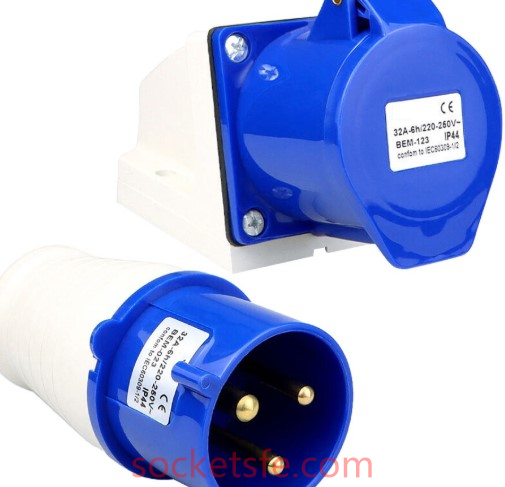
Electrical connectors play an important role in maintaining stable power delivery across industrial and commercial facilities. Workshops, maintenance areas, manufacturing plants, and service environments need connections that match their equipment and operating conditions. 110V Industrial Plug products are designed for compatible 110V systems, with performance influenced by contact quality, insulation materials, current capacity, and installation practices. Choosing the correct configuration helps reduce connection errors and supports safe operation.
The selection process should begin with the equipment's electrical requirements. Buyers need to confirm rated voltage, current demand, pole arrangement, grounding provisions, and cable compatibility. A voltage rating alone does not guarantee that a connector is suitable for a particular machine or power supply. Regional electrical standards and the intended installation should also be considered before ordering.
Conductive contacts are essential for consistent electrical transfer. Copper and copper alloys are widely used because of their conductivity and mechanical properties. Depending on the product design, surface treatments may help reduce oxidation and wear. Contact pressure and alignment should remain consistent during normal use, as poor contact can increase resistance and cause unwanted heating. Manufacturing accuracy and correct terminal assembly help maintain dependable connections.
The housing provides insulation and mechanical protection. Engineering plastics are common in industrial connector construction because they offer a practical combination of electrical insulation, impact resistance, and dimensional stability. Depending on the application, materials may also need to tolerate heat, oils, cleaning agents, vibration, or outdoor exposure. Buyers should confirm that the selected housing is appropriate for the actual working environment.
Grounding arrangements must match the electrical system. Where protective earthing is required, the connector must provide the correct grounding contact and maintain continuity when installed properly. A suitable plug cannot compensate for faulty wiring or inadequate circuit protection. Qualified installers should follow applicable electrical regulations and the manufacturer's instructions to ensure that the complete system is correctly configured.
Environmental protection is another factor in product selection. Connectors used in clean indoor areas may have different requirements from those installed outdoors or in locations exposed to water and dust. The enclosure rating should match the expected exposure conditions. Covers, seals, and cable entries must be assembled correctly to preserve the specified protection level and avoid unnecessary moisture ingress.
Mechanical construction can improve usability and service life. Secure locking features help prevent accidental separation, while strain relief protects the cable entry from excessive pulling forces. Durable housings and practical grip surfaces can make connectors easier to handle during frequent equipment changes. Clear voltage and current markings also help maintenance teams identify compatible components and reduce selection mistakes.
Manufacturing quality assurance helps ensure consistency between products. Depending on the design, inspections may include dimensional verification, contact resistance testing, insulation checks, grounding continuity testing, and mechanical retention evaluation. For B2B customers, product documentation and relevant compliance information provide a basis for comparing suppliers and confirming suitability for the intended use.
Routine inspection helps maintain connection reliability. Before servicing, equipment should be isolated from the power source in accordance with established safety procedures. Qualified personnel should check for cracked housings, damaged insulation, loose fittings, worn contacts, and signs of overheating. Damaged components should be removed from service and repaired or replaced according to manufacturer guidance.
For distributors, contractors, and equipment manufacturers, purchasing decisions should consider compatibility, product consistency, technical documentation, and availability. Confirm the required current rating, pole arrangement, cable size, mounting method, and environmental protection before placing an order. Clear specifications can reduce procurement errors and make replacement planning more efficient.
Choosing a suitable 110V Industrial Plug involves more than checking the voltage label. Electrical compatibility, contact design, insulation quality, grounding, and environmental conditions all contribute to reliable performance. For industrial connector options and technical product information, visit https://www.socketsfe.com and confirm the specifications appropriate for your equipment.