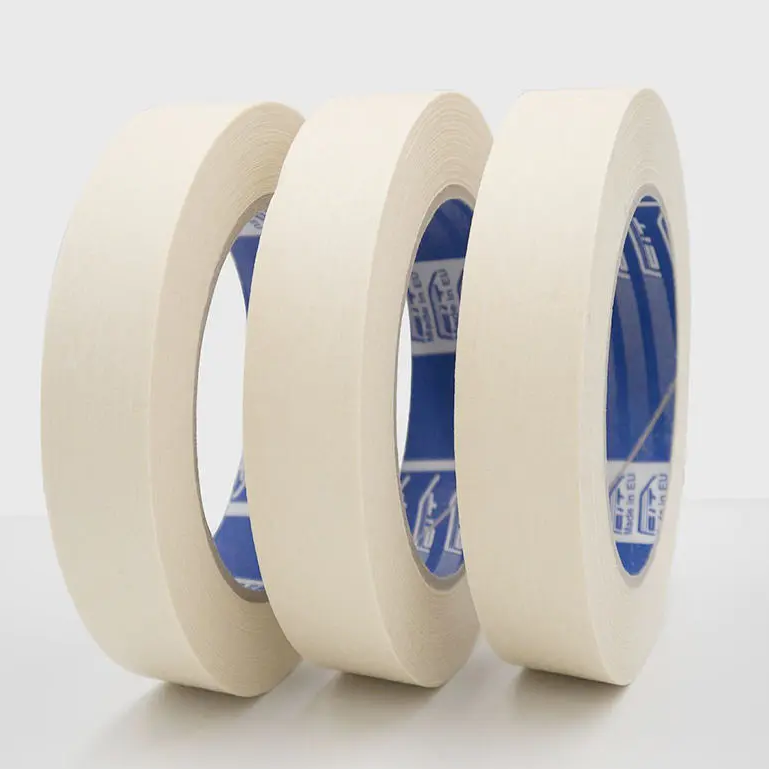
SBR Latex for Masking Tape is a useful material for manufacturers developing water-based pressure-sensitive adhesives. It provides a polymer base that can be formulated for different paper tapes and surface protection applications. During development, producers need to consider not only adhesion but also coating behavior, drying conditions, storage stability, and the performance of the finished tape. A balanced formulation helps maintain reliable production and consistent application results.
The Role of Latex in Water-Based Adhesives
Water-based adhesives contain polymer particles dispersed in water. As the coated layer dries, these particles form a continuous film that contributes to the adhesive's physical properties. Styrene-butadiene rubber latex offers flexibility and can support the bonding characteristics required for masking tape. Its suitability depends on polymer composition, particle characteristics, and compatibility with other formulation ingredients.
Managing Initial Tack
Initial tack describes how quickly an adhesive begins to bond when it contacts a surface. For masking tape, suitable tack allows users to position the tape without excessive effort. However, very strong initial bonding may not suit every application, particularly when temporary protection and clean removal are important. Formulators can adjust tack through latex selection, tackifier content, and other compatible additives.
Controlling Adhesive Viscosity
Viscosity affects pumping, mixing, and coating operations. If the adhesive is too thick, it may spread unevenly or require additional adjustment before coating. If it is too thin, maintaining a uniform coating layer can become difficult. Manufacturers should evaluate viscosity under defined testing conditions and confirm that the formulation remains stable during storage and production.
Drying and Film Formation
Drying conditions influence the development of the adhesive layer. Temperature, airflow, coating thickness, and substrate properties can all affect water removal and film formation. Inadequate drying may leave the adhesive with unsuitable handling properties, while excessive heat can affect the backing or formulation. Production teams should establish conditions that match the selected SBR latex and paper grade.
Maintaining Batch Consistency
Variations in raw materials and mixing procedures may cause changes in adhesive performance. A practical quality-control plan can include checks for solids content, pH, viscosity, appearance, and storage stability. Finished masking tape should also undergo adhesion and removal tests. These procedures help identify formulation changes before they create wider production problems.
Developing Application-Specific Tape
Different markets require masking tape for painting, automotive refinishing, construction, and household repairs. Each application may involve different surface conditions, temperature exposure, and removal periods. SBR Latex for Masking Tape should therefore be evaluated against the actual requirements of the intended product. Coordinating material selection, coating control, and performance testing helps manufacturers develop adhesive systems that meet customer expectations.
https://www.tclatex.com/product/sbr-latex/tcs515r-latex-for-the-production-of-masking-tape.html