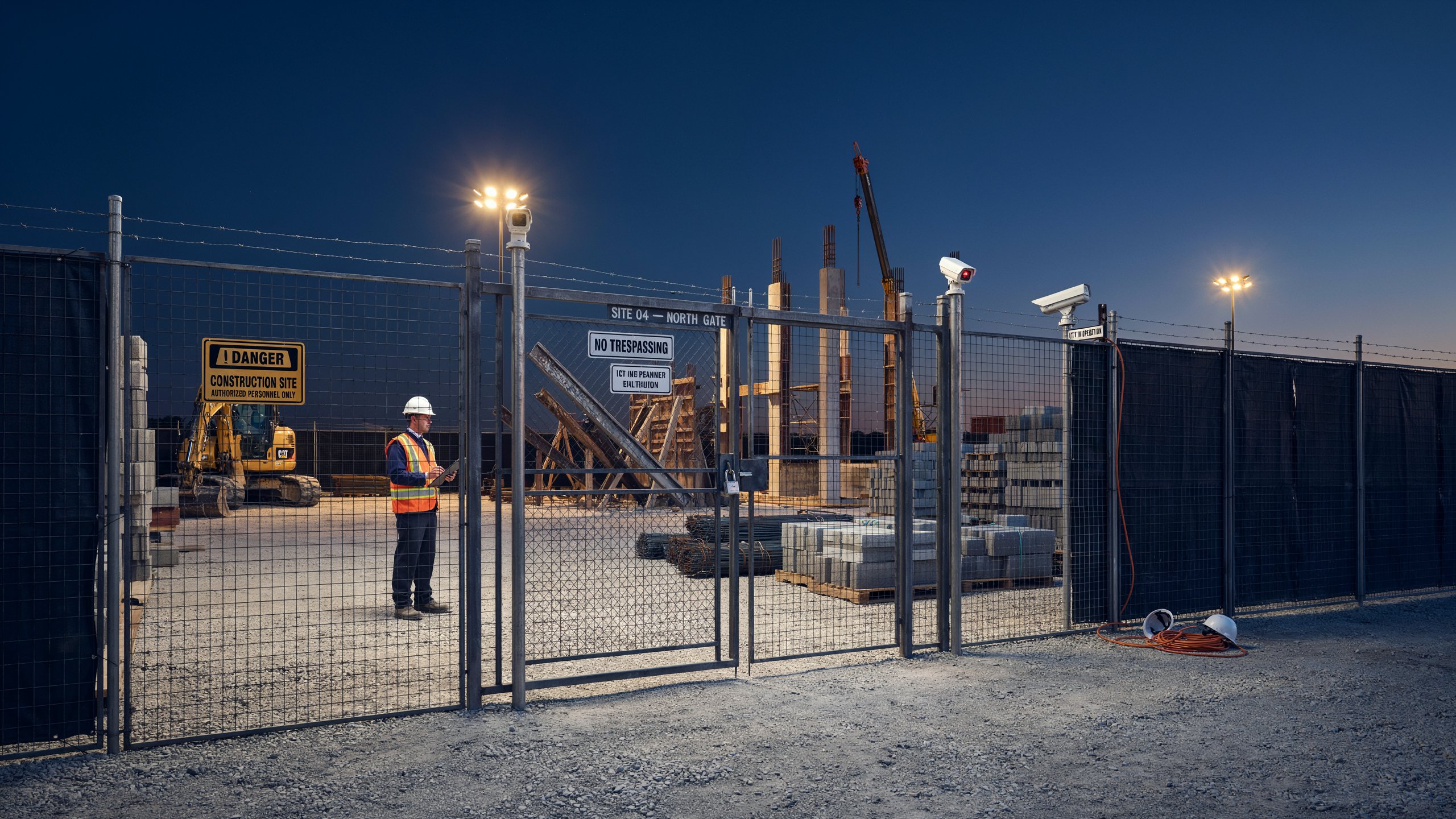
Construction sites can have valuable heavy machinery, building materials, and equipment that can be desirable to thieves and unauthorized individuals. A contractor could be vulnerable to theft, damage to property, delays in the project and even safety hazards without the proper security measures. A well-protected site ensures that workers are safe and operations run smoothly. For a construction site to be successful, it is crucial for the project manager, contractors, and construction firms to understand how to keep their construction site secure.
1.Install Strong Perimeter Fencing
The first way in which a construction site can be protected is by using perimeter fencing. Fence off the entire site with a sturdy temporary fence to keep people off. Gates should be kept closed at all times except when in use and entry points restricted to certain areas.
Check fences frequently for damaged panels, gaps and loose connections. Signs should be near entrances and hazardous areas to alert visitors to limited access. Extra barriers may be needed to keep pedestrians safe at locations near to high-traffic roads or public walkways.
2. Improve Lighting and Install Security Cameras
Construction sites that are poorly lit can be more susceptible to crime, including theft and unauthorized access, especially at night. Use bright lights around entrances, storage areas, equipment parking spaces, and other vulnerable areas.
Installing CCTV cameras allows security staff to monitor site activities and review footage when an incident occurs. Cameras with night vision and motion detection provide additional monitoring after working hours. When considering how to secure a construction site , ensure cameras have clear views of entry points and high-value equipment without leaving significant blind spots. Combining proper lighting with reliable surveillance helps deter suspicious activity, protect valuable assets, and improve overall construction site security.
3.Protect Tools and Construction Equipment
Building equipment and material is a major investment. Expensive tools and equipment should be secured when not in use and small tools should be stored safely.
Store valuable tools and tools in locked containers; do not leave keys in machines and vehicles. Identifying equipment with equipment numbers, and keeping a record of what is being used can make it easier to locate any missing equipment.
As contractors are planning the construction site, it is also important to document the equipment bought, the serial numbers, and photos. Such records can aid in the reporting of theft and support insurance claims where applicable.
4. Control Site Access
Not any and all people can be admitted to an active construction zone. Define access control policies for employees, subcontractors, delivery drivers and visitors.
Keep a visitors book for names, visit times and reason for visits. Give identification badges as needed and instruct visitors to abide by site safety rules.
Appropriate barriers and warning signs should be in place in areas of restriction such as excavation areas, electrical rooms, heavy machinery operating areas, etc. Designing a supervisor who is responsible for access, can enhance accountability and minimize needless risks.
5.Adhere to Construction Site Safety Procedures
Security also includes safeguarding individuals against risks in the workplace. Training should be provided for workers on emergency procedures, machine operation and hazard identification prior to the commencement of work.
Ensure personal protective equipment, such as helmets, safety boots, gloves and high-visibility clothing are provided. Maintain clear walkways, ensure vehicles do not walk on pedestrian areas and create barriers around openings in excavations.
Any scaffolding, temporary buildings or other potentially dangerous structures should be checked by competent staff. Workers should also feel free to report unsafe conditions as soon as they arise so that problems can be addressed in advance of an accident.
6. Perform periodic security inspections.
To ensure effective security measures, they should be monitored regularly. Fencing, locks, lighting, cameras, storage and access points must be checked throughout the project.
Develop a daily “closing checklist” to ensure gates are closed, equipment is set and access points are closed. As per the risk level of the site, arrange extra inspections or trained security staff on weekends and during holidays.
Note any issues and take ownership of solving them. Adjust security measures as necessary when conditions at the site change (eg expensive equipment arrives on site or the work starts in a new area).
Conclusion
Various security measures such as physical barriers, monitoring, equipment security, access control and employee safety protocols must be employed to safeguard a construction site. There are various ways contractors can take to lessen the risks of theft, unauthorized access to a construction site, and to ensure a safe working environment. Regular audits and defined security duties are key to ensuring continuous protection of the construction site until project completion. For more information, check Houseura.