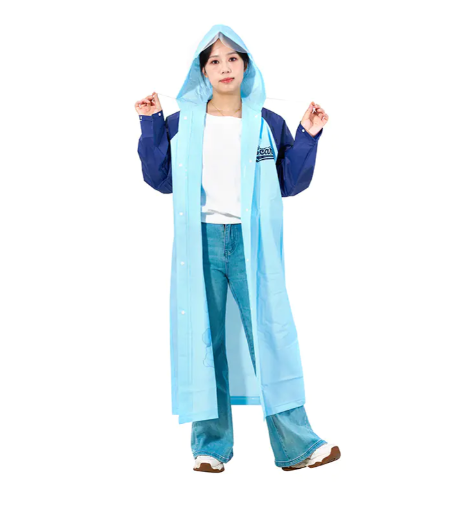
Outdoor Rainwear includes long raincoats, loose ponchos, hooded capes, and other styles designed around different wearing needs. A long coat provides coverage farther down the body, while a loose poncho relies on a wider drape that can accommodate additional clothing. These formats serve different purposes, so comparing them requires more than looking at color or overall appearance.
Garment dimensions influence how each style works in practice. Length affects coverage, while width and side openings determine how much room the wearer has to move. A loose design may be convenient when worn over a jacket or other layers, but excessive fabric can become cumbersome during walking or when carrying a bag. Product measurements should therefore be considered in relation to the intended wearing conditions.
Hood and opening construction also distinguish one style from another. A front-opening raincoat requires a closure arrangement that allows the wearer to put it on and adjust the garment. A pullover poncho instead relies on the neck opening and overall shape. Hood depth, attachment, and adjustment features influence how the head covering fits with the rest of the garment. These details can affect both handling and the final pattern design.
Material selection brings another set of considerations. PE is commonly associated with disposable rainwear, while EVA and PEVA are used in various lightweight and thicker raincoat styles. The material, thickness, and garment construction together influence flexibility, weight, folded volume, and the intended use cycle. Buyers should compare the specifications of individual models rather than assume that products made from the same material will perform identically.
For wholesale purchasing, the product format should match the distribution channel. Compact raincoats may suit travel stores, visitor centers, and event supplies, while longer or thicker styles may fit other outdoor retail needs. Riding ponchos also have distinct design considerations because their dimensions need to accommodate the user's position and equipment. Clear product descriptions help distinguish these formats without relying on broad claims about suitability.
Manufacturing connects these decisions through pattern preparation, cutting, panel assembly, and finishing. The production method depends on the material and the construction of the individual garment. Consistent dimensions and clearly defined specifications help buyers compare samples with bulk orders, while folded measurements and packaging details support storage and shipment planning.
A useful evaluation of rainwear considers the garment shape, material, hood, opening, dimensions, and packaging together. These factors establish what each model is designed to do and make it easier for distributors to build a product range around different customer requirements.