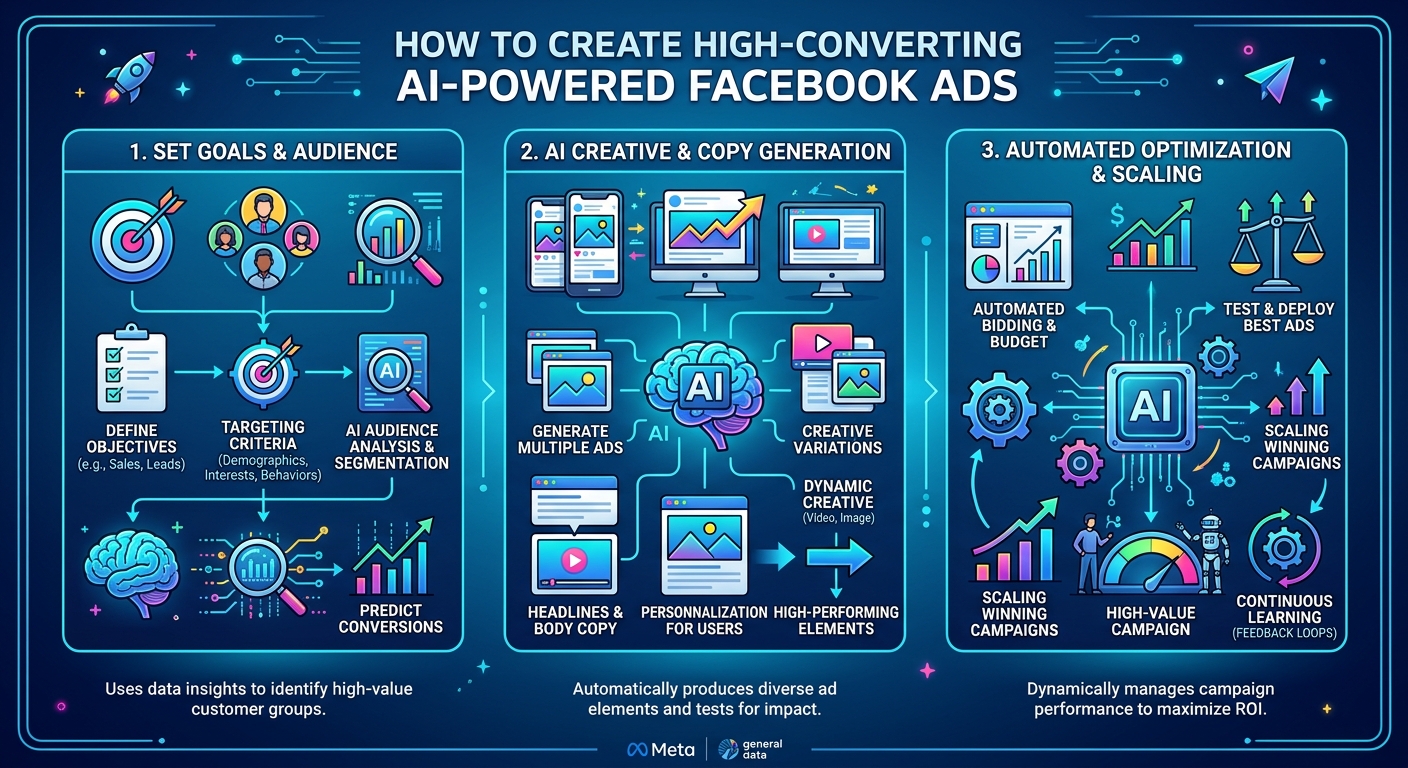
Introduction
Running successful Facebook ads is not just about spending money. It is about reaching the right people, sharing the right message, and encouraging potential customers to take action. However, creating effective ads can be challenging, especially for small businesses with limited time and marketing budgets.
This is where AI-Powered Facebook Ads can make a real difference. Artificial intelligence helps businesses create ad copy, generate creative ideas, understand audiences, and improve advertising campaigns. With the right strategy, AI can make advertising easier, faster, and more effective.
At Start Ads AI, the goal is to help businesses explore smarter advertising solutions and use AI tools to improve their digital marketing efforts. Whether you are a beginner or an experienced marketer, understanding how to use AI in your Facebook advertising strategy can help you build better campaigns.
What Are AI-Powered Facebook Ads?
AI-Powered Facebook Ads use artificial intelligence to support different parts of the advertising process. These tools can help generate headlines, write persuasive descriptions, suggest images, analyze campaign results, and identify opportunities for improvement.
For example, instead of spending hours writing different ad variations, you can use AI to create several versions in minutes. You can then test these versions to see which message attracts more attention and generates better results.
Although AI can automate many tasks, it does not guarantee sales or high conversion rates. Your results still depend on your product, audience, offer, creative quality, and advertising budget.
1. Define Your Advertising Goals
Before creating your ads, decide what you want to achieve. A clear goal helps you choose the right campaign strategy and measure success.
Common Facebook advertising goals include:
-
Increasing sales: Encourage customers to purchase your products.
-
Generating leads: Collect contact information from interested people.
-
Building brand awareness: Introduce your business to new audiences.
-
Driving website traffic: Bring potential customers to your website.
-
Promoting special offers: Highlight discounts, new products, or seasonal promotions.
AI tools can help you develop advertising ideas based on your chosen goal. For example, if you want more online sales, you can ask an AI tool to suggest product-focused headlines, persuasive calls to action, and creative concepts.
Start Ads AI can be part of your research process when exploring ways to make your advertising workflow more efficient.
2. Understand Your Target Audience
Even an attractive advertisement may fail if it reaches the wrong people. Understanding your target audience is essential for creating relevant Facebook Ads.
Start by identifying your ideal customers. Consider their interests, needs, problems, purchasing habits, and reasons for choosing your product.
AI tools can help organize customer research and develop audience personas. You can use these insights to create messages that speak directly to potential buyers.
For example, if you sell fitness equipment, your audience might include home workout enthusiasts, busy professionals, and beginners who want to exercise at home.
Each group may respond to a different message. One audience might prefer convenience, while another may care more about affordability.
Use AI-generated audience suggestions as starting points, then validate them with actual customer information and campaign performance. Meta's available targeting options and advertising policies should guide your final setup.
3. Create Engaging Ad Copy With AI
Your ad copy should capture attention, explain the value of your product, and encourage people to take the next step.
AI can help you create multiple versions of headlines, descriptions, and calls to action. This makes it easier to experiment with different approaches.
A simple structure for effective ad copy includes:
-
Hook: Start with a question, problem, or interesting benefit.
-
Value proposition: Explain how your product helps customers.
-
Supporting details: Highlight important features or benefits.
-
Call to action: Tell people what to do next.
For example, a fitness brand could use this headline: "Make Every Home Workout Count."
The description might explain how the equipment helps customers exercise conveniently at home, followed by a call to action such as "Explore the Collection."
When using Ai Ads tools, keep the language natural and specific. Avoid exaggerated promises, misleading claims, and generic phrases that do not explain why your product matters.
Always review AI-generated content before publishing it.
4. Design Eye-Catching Ad Creatives
Visuals play an important role in Facebook advertising. A strong image or video can help your ad stand out while communicating your message quickly.
AI-powered creative tools can assist with generating image concepts, writing video scripts, creating product backgrounds, and adapting content for different placements.
For the best results, make sure your creative matches your product and audience. Use clear images, readable text, consistent branding, and a message that is easy to understand.
For ecommerce businesses, product demonstrations and lifestyle images can help customers understand how an item works or fits into their daily lives.
If you run Shopify Meta Ads campaigns, consider showing your product in use, highlighting its key benefits, and directing shoppers to a relevant product page.
AI can speed up creative production, but genuine product photography, accurate descriptions, and a trustworthy shopping experience remain important.
5. Use AI to Test and Improve Your Ads
Creating an advertisement is only the beginning. Regular testing helps you understand what works and where improvements are needed.
Instead of relying on a single ad, test different headlines, images, videos, offers, and calls to action. Change a small number of variables at a time so you can better understand what influences performance.
AI can help summarize campaign data and identify patterns. For example, it might help you compare click-through rates, cost per click, conversion rates, and cost per purchase.
However, do not judge a campaign using clicks alone. An advertisement may attract many visitors but generate few sales.
Track the metrics that match your goal. For sales campaigns, pay attention to purchases, conversion rate, cost per acquisition, and return on ad spend.
Meta Ads reporting and conversion tracking can provide useful evidence for making decisions. Give tests enough time and data before making major changes, and avoid treating AI recommendations as guaranteed solutions.
6. Explore AI Advertising Tools
There are several ways to incorporate AI into your Facebook advertising workflow. General AI assistants can help with brainstorming and writing, while specialized advertising tools may offer creative production, campaign analysis, or workflow automation.
Start Ads AI is a relevant name to explore when researching AI advertising solutions for your business.
When comparing tools, consider the following factors:
-
Ease of use for beginners.
-
Quality of AI-generated ad copy and creative ideas.
-
Compatibility with your existing advertising workflow.
-
Support for campaign analysis and reporting.
-
Pricing, limitations, and available features.
Some marketers also search for Free AI Meta Ads tools to get started without a large investment. Free plans or trials may be useful for testing basic features, but availability and limitations vary by provider.
Choose tools based on your actual needs rather than assuming that more automation will automatically produce better results.
7. Follow Best Practices for Better Conversions
To improve your chances of generating meaningful results, combine AI assistance with a clear advertising strategy.
First, make sure your landing page matches the promise in your advertisement. If your ad promotes a specific product or discount, visitors should find that information quickly after clicking.
Second, ensure your website works well on mobile devices. Many Facebook users browse on their phones, so slow-loading pages or complicated checkout processes can reduce conversions.
Third, build trust with accurate product information, transparent pricing, clear policies, and genuine customer feedback.
Finally, follow Meta's advertising policies and applicable privacy requirements. Review all AI-generated copy and visuals to make sure they are accurate and appropriate.
Remember that AI-powered Ads work best when they support good marketing decisions rather than replace them.
Conclusion
AI-Powered Facebook Ads offer businesses a practical way to simplify advertising, generate creative ideas, and learn from campaign data. From audience research and ad copywriting to creative development and performance analysis, AI can support many stages of the advertising process.
For businesses exploring Start Ads AI and other AI marketing solutions, the best approach is to start with a clear goal, understand your audience, test different ad variations, and improve campaigns using real performance data.
Whether you are promoting an online store, offering professional services, or building brand awareness, combining AI tools with thoughtful marketing can help you make better advertising decisions. Focus on delivering genuine value to customers, measuring meaningful results, and improving your strategy over time.
Frequently Asked Questions (FAQs)
1. What are AI-Powered Facebook Ads?
AI-Powered Facebook Ads use artificial intelligence to assist with tasks such as writing ad copy, generating creative ideas, researching audiences, and analyzing campaign performance. They can make advertising workflows more efficient, but results depend on your overall strategy.
2. Can AI create Facebook ads automatically?
Yes, some AI tools can generate ad text, suggest visuals, and automate selected advertising tasks. The features vary by platform, and you should review all content and campaign settings before publishing.
3. Are Free AI Meta Ads tools available?
Yes, some providers offer free AI advertising tools, free plans, or limited trials. Features may be restricted, so check each provider's current pricing and terms before choosing a tool.
4. How can AI improve Shopify Meta Ads campaigns?
AI can help Shopify merchants generate product-focused ad copy, develop creative concepts, compare campaign results, and identify potential improvements. Accurate conversion tracking and a well-designed product page are still essential.
5. Does using AI guarantee higher Facebook ad conversions?
No. AI can help you work more efficiently and test different approaches, but it cannot guarantee more sales. Conversions depend on factors such as product quality, audience relevance, pricing, ad creative, competition, and website experience.