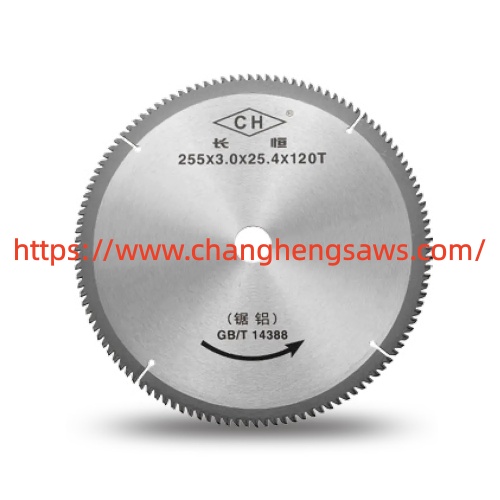
Carbide Tipped Circular Blades are widely used in woodworking and selected industrial cutting applications, but choosing a suitable model requires more than checking its diameter. Different materials create different demands on tooth geometry, cutting pressure, chip removal, and surface finish. A tool intended for solid timber may not deliver the same results when processing laminated panels or aluminum profiles. For manufacturers, understanding these differences helps reduce unnecessary tool changes, manage material waste, and maintain a consistent production process.
Consider a furniture workshop processing hardwood, plywood, and decorative panels throughout the day. Each material behaves differently under the same machine settings. Hardwood density varies by species, while plywood contains bonded veneer layers with changing grain directions. Laminated panels add a surface coating that may chip if the tooth profile is unsuitable. Rather than choosing one specification for every task, production teams should identify the material, required finish, cutting direction, and expected workload before comparing available options.
Tooth geometry is a useful starting point. Alternate top bevel, commonly abbreviated as ATB, uses alternating bevels to shear wood fibers during cutting. This arrangement is frequently used for crosscutting timber and producing cleaner edges on wood based panels. Flat top teeth, by comparison, are commonly associated with ripping operations where efficient chip removal matters. Triple chip grind, or TCG, alternates between differently shaped teeth to distribute cutting work across the edge. It is often considered for abrasive panels, laminates, and certain nonferrous materials. The appropriate configuration depends on the specific workpiece and the equipment being used.
Tooth count also affects the relationship between cutting speed and finish quality. A lower count generally leaves more space for removing chips and can suit thicker timber or faster ripping operations. A higher count may help produce smoother edges on thin panels and finish components, although it can require careful feed control to prevent excess heat. There is no single count that suits every application. The material thickness, machine power, and required edge appearance should guide the decision.
When processing aluminum profiles, buyers need to pay particular attention to the intended application. Aluminum can produce long chips, and unsuitable tooth geometry or feed settings may cause grabbing, burrs, or heat buildup. A tool specifically designed for nonferrous metals may use a different tooth arrangement and hook angle from one intended for wood. The equipment must also support the specified operating speed and workpiece dimensions. A product designed for one type of metal should not automatically be assumed suitable for steel or other materials.
Dimensions and machine compatibility deserve equal attention during purchasing. The outside diameter must suit the equipment guard and cutting capacity, while the arbor opening must match the spindle or use an approved fitting arrangement. Kerf width affects the amount of material removed during each pass, and body thickness can influence stability under working conditions. Buyers should also check the permitted rotational speed and the manufacturer stated applications before installation. These details help prevent mismatches that could affect cut quality or operating safety.
The condition of the equipment can influence results just as much as product design. Worn spindle bearings, poor alignment, unstable workpiece support, and excessive feed pressure may cause vibration or uneven wear. Resin buildup can increase friction during wood processing, while accumulated debris may interfere with smooth chip removal. Regular inspection, appropriate cleaning, and professional sharpening when required help maintain consistent operation. Operators should follow the equipment instructions and never use a damaged product or one that is incompatible with the intended material.
For purchasing teams, preparing clear technical information makes supplier communication more productive. Share the material grade, workpiece dimensions, machine model, cutting direction, production volume, and desired finish when requesting recommendations. These details allow manufacturers to evaluate relevant tooth configurations and dimensions instead of relying on general assumptions. Changheng provides a starting point for businesses comparing industrial cutting solutions for their manufacturing requirements. If you are reviewing options for woodworking, panel processing, or other compatible applications, visit https://www.changhengsaws.com/ to review the available product information and discuss specifications that fit your equipment and production needs.