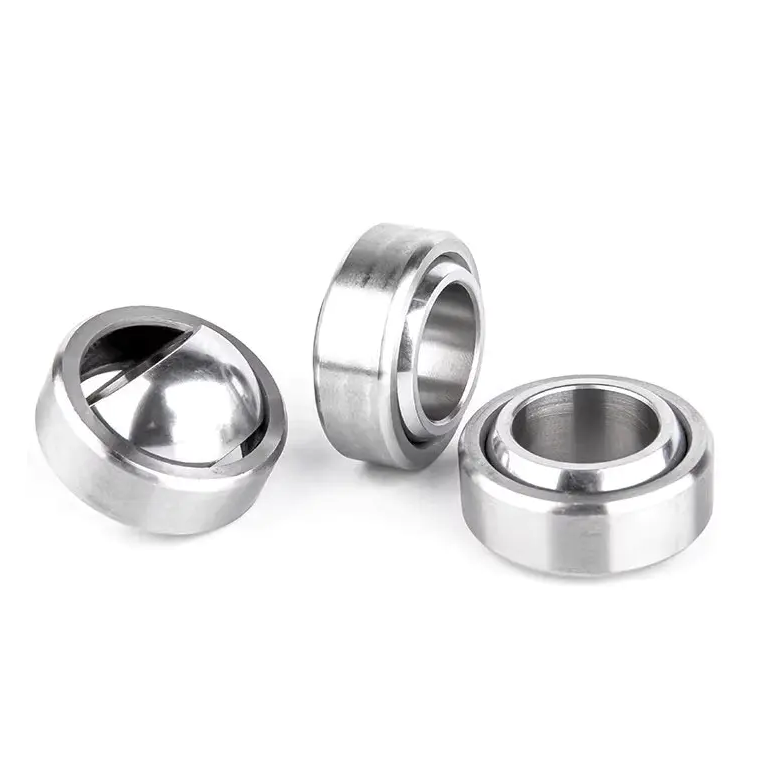
A Ball joint rod end bearing is a mechanical component designed to connect moving parts while allowing angular movement between them. It is commonly used in automation equipment, agricultural machinery, vehicle linkages, and industrial control systems. By combining a spherical sliding surface with a threaded or plain mounting body, this component helps accommodate slight misalignment during operation. Its structure makes it suitable for mechanisms where connected parts cannot remain perfectly aligned throughout every movement cycle.
The internal design usually includes a spherical inner ring and an outer housing that supports the joint. Depending on the application, the bearing may use a steel-on-steel contact surface or a maintenance-free sliding liner. Each construction offers different characteristics related to load capacity, friction, lubrication, and service requirements. Selecting the correct type depends on the working environment and the movement expected from the assembly.
A Ball joint rod end bearing can be installed in push-pull linkages, steering mechanisms, pneumatic cylinders, and mechanical positioning systems. In these applications, the joint transfers force while allowing the connected shaft or rod to change its angle. This flexibility can reduce binding caused by small alignment differences and help connected components move more smoothly.
Material selection is another important consideration. Carbon steel housings are often used in general industrial equipment, while stainless steel versions may be suitable for applications exposed to moisture or corrosive substances. The spherical contact surfaces must also be designed to withstand the expected load and movement frequency. For dusty environments, protective seals can help limit the entry of contaminants and reduce wear.
When choosing a bearing, engineers should review the bore diameter, thread direction, housing dimensions, static load rating, and permissible misalignment angle. Radial and axial forces should be considered separately because the joint's performance depends on how loads act on its structure. Installation space and connection methods also influence compatibility with the existing mechanism.
Regular inspection helps identify looseness, surface damage, corrosion, or unusual movement. Lubrication should follow the product design and operating requirements. With suitable specifications and correct installation, a Ball joint rod end bearing can support reliable movement in machinery and mechanical assemblies.
https://www.linearbearingfactory.com/product/spherical-plain-bearing-rod/
You can contact us for more information at:
Whatsapp:+86 17398543323
E-mail: viola@jldbearing.com